
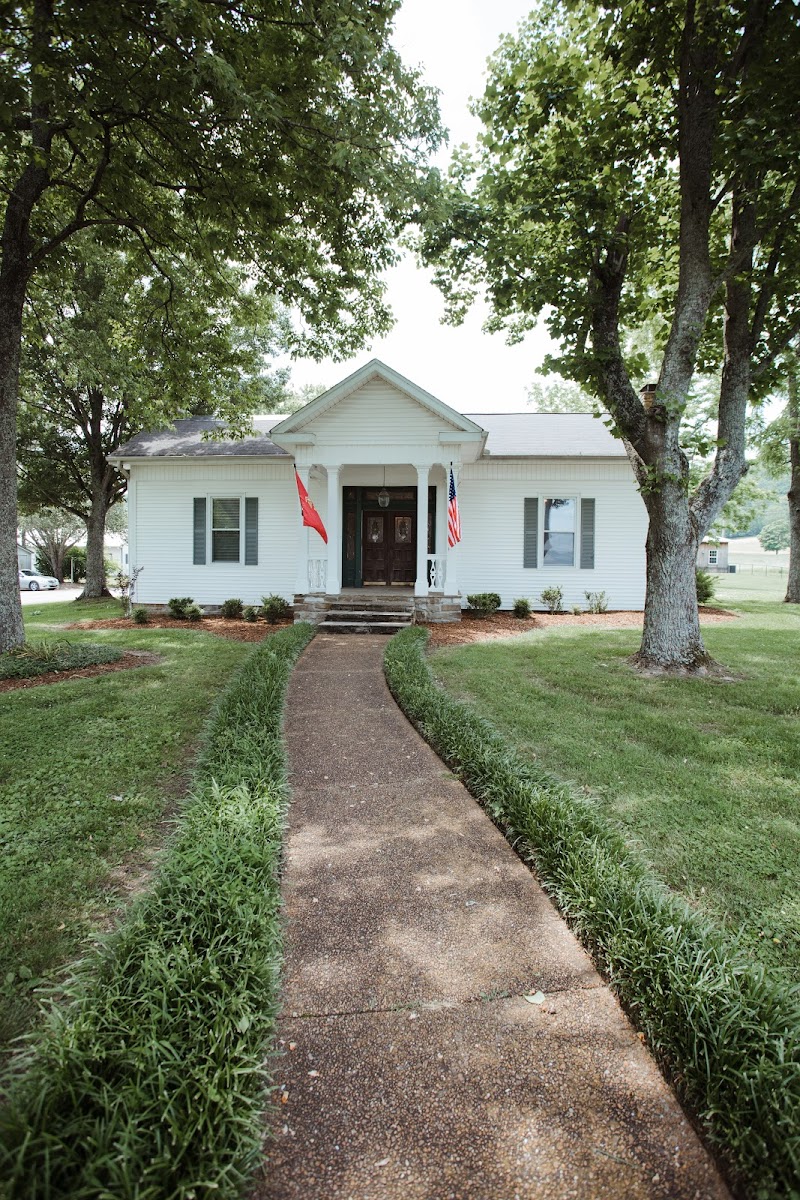
You leave Franklin heading south on rural two-lane roads, past white fences that stretch for miles and the kind of rolling pastureland that makes Middle Tennessee look like a postcard. About fifteen minutes out, just when the houses thin out and the land starts to rise and fall in gentle swells, you turn onto Arno-Allisona Road. The entrance to Battle Mountain Farm appears almost casually — a gravel drive that opens up to reveal what is, by any measure, one of the most quietly spectacular properties in Williamson County. Two hundred and thirty-four acres of working farmland spread across a peaceful valley. Rolling hills covered in native grasses and wildflowers. A tranquil lake that reflects whatever mood the Tennessee sky happens to be in. There is a white historic farmhouse with a deep front porch, the kind of structure that looks like it has been standing there forever. An authentic horse barn with wide-plank doors and the scent of hay and leather. And then, set back near the tree line, the 4,000-square-foot event barn — climate-controlled, spacious, and equipped with the kind of modern amenities that make a reception flow smoothly while maintaining the rustic soul of the place. This is not a venue trying to be a farm. This is an actual farm that happens to host exceptional weddings.
About Battle Mountain Farm
Battle Mountain Farm is a working farm first and a wedding venue second, and that distinction matters in ways both practical and aesthetic. The 234 acres are not manicured like a golf course — they are pastoral, softly wild, with meadows that bloom in native wildflowers come spring and summer. The property sits in the heart of Williamson County’s rural corridor, roughly ten miles outside Franklin and about thirty miles south of Nashville, making it accessible for city guests while feeling genuinely removed from urban sprawl. College Grove itself is not so much a town as an unincorporated community — a scattering of farms and country homes where the landscape still dictates the pace of life.
The farm’s structures tell the story of Tennessee agricultural heritage with remarkable authenticity. The historic farmhouse, with its white clapboard siding and black shutters, dates back generations. It has been carefully maintained, not renovated into oblivion, so it still feels like a home rather than a museum. Inside, you will find a full kitchen, a bridal suite with natural light and farmhouse charm, and a grooms suite that offers comfortable space for the other half of the wedding party to get ready. Upstairs, a private apartment sleeps six — one of several on-site lodging options that allow couples and their closest guests to stay on the property. The guest house accommodates twelve, and a log cabin sleeps four, bringing the total on-site capacity to 22 overnight guests. This is not a detail to overlook: the ability to wake up on the property, take coffee on the farmhouse porch, and watch the morning light move across the hills transforms a wedding day from an event into an experience.
The horse barn is the real deal — working stalls, tack hanging on iron hooks, and the kind of weathered wood that only decades of use can create. Many couples use this space for cocktail hour, and the juxtaposition of formal attire against the authentic barn setting creates a relaxed, uncontrived atmosphere. The event barn, by contrast, is a modern structure designed specifically for celebrations. At 4,000 square feet with climate control, it can comfortably seat 250 guests for dinner or accommodate up to 300 for a standing reception. The interior strikes a balance between rustic and refined: exposed beams, neutral walls, and farm tables that come standard with the venue rental. The space is intentionally understated, providing a blank-enough canvas for couples to layer in their own vision without the venue dictating a specific aesthetic.
The covered gazebo sits at the edge of the lake, offering both weather protection and one of the most serene ceremony backdrops in Middle Tennessee. Water reflection, gentle breezes through the surrounding trees, and the kind of quiet that only exists in genuinely rural places — it is a ceremony location that requires very little enhancement. Beyond the gazebo, the property offers multiple outdoor ceremony sites across the rolling hills, each with its own character and view.
Logistically, Battle Mountain Farm is refreshingly flexible. The venue does not require exclusive caterers or restrict florists, a significant advantage for couples (and their florists) who value creative control. Couples can bring in their own alcohol as long as a licensed bartender is present. Day-before access for decorating and setup is included, which is critical for florists who need time to install larger pieces or create layered designs. The property’s rural location means ample parking, no noise restrictions, and the kind of privacy that allows a celebration to unfold at its own pace. For our team delivering and installing Battle Mountain Farm wedding flowers, the spacious grounds and accessible load-in points make setup straightforward, and the venue staff — while not explicitly detailed in our database — tends to operate with the easygoing professionalism common to well-run farm venues in Tennessee.
Event Spaces & Floral Opportunities
Climate Controlled Event Barn
Capacity: 250 seated (up to 300 standing)
Setting: The event barn is where the evening shifts into celebration mode — a 4,000-square-foot space with soaring ceilings, exposed beams, and a neutral palette that allows florals and lighting to do the narrative work. The climate control is no small detail in Tennessee, where summer humidity and unpredictable spring weather can turn an un-air-conditioned barn into a sauna. The barn comes outfitted with long farm tables and chairs (both indoor and outdoor options), so the bones of the reception are already in place. The neutral walls and wood tones provide a versatile backdrop: you can go maximalist with color and texture, or keep things refined and minimal. The high ceilings are this space’s greatest asset from a floral design perspective, offering vertical real estate that is rarely available in traditional ballrooms.
Floral approach: The ceiling beams are ideal for suspended installations — think 15-to-20-foot garlands of smilax, Italian ruscus, and silver dollar eucalyptus interspersed with clusters of Café au Lait dahlias, Quicksand roses, and trailing jasmine vine. These overhead installations create a canopy effect that makes the space feel intimate despite its size. For the farm tables, we favor either long, low runners (a continuous bed of textured greenery and blooms that stretches the length of each table) or a series of clustered arrangements in varying heights using wood risers, vintage crocks, and galvanized vessels. Café au Lait and Blush dahlias, Juliet and Patience garden roses, white ranunculus, and spirea create a palette that feels abundant without being precious. At the entrance to the barn, a pair of large-scale arrangements in whiskey barrels or metal washbasins signals the transition from cocktails to dinner. The neutral backdrop means you can also lean into bold, saturated color — jewel-tone dahlias, burgundy amaranthus, and plum scabiosa would be stunning here. Avoid fussy, symmetrical designs; this space rewards organic, gathered-from-the-field arrangements that feel like they could have grown in the meadow just outside.
Horse Barn
Capacity: Flexible, depending on layout
Setting: The horse barn is smaller, more intimate, and undeniably authentic. This is not a faux-rustic Instagram set — these are working stalls with latches, feed buckets, and the patina of daily farm life. Many couples use this space for cocktail hour, setting up a bar along one wall and encouraging guests to explore the stalls and outdoor areas. The lighting is softer here, often supplemented with string lights or lanterns, and the scent of hay and old wood gives the space a grounded, earthy quality.
Floral approach: Lean into the barn’s authenticity with arrangements that feel spontaneous and unstructured. Mason jars and galvanized buckets filled with wildflower-style mixes (black-eyed Susans, goldenrod, Queen Anne’s lace, purple coneflower, and grasses) work beautifully here. Arrangements can be tucked into the stalls, clustered on hay bales, or lined along the bar. For a slightly more elevated approach, use antique milk cans or vintage watering cans as vessels, and incorporate locally sourced blooms like zinnias, sunflowers, and cosmos. Hanging installations are also an option — suspend simple bundles of lavender, yarrow, and wheat from the rafters to add vertical interest without overwhelming the space. The key is to avoid anything too polished or formal; this space demands a loose, organic touch. If you are hosting cocktail hour here, consider a small installation at the entrance — an asymmetrical arrangement on a wooden crate or barrel filled with greenery and seasonal blooms that welcomes guests into the barn.
Historic Farmhouse
Capacity: Not applicable (prep and lodging space)
Setting: The historic farmhouse is where the day begins for most couples — hair, makeup, the buttoning of the dress, the pinning of boutonnieres. The bridal suite has good natural light, white walls, and enough space for a small bridal party to get ready without feeling cramped. The grooms suite offers a separate, equally comfortable area. The front porch, with its white columns and view across the property, is a classic Southern detail that photographs beautifully.
Floral approach: Keep the florals here simple and intentional. A welcome arrangement for the bridal suite — perhaps a small compote of blush roses, white lisianthus, and seeded eucalyptus — sets a thoughtful tone without cluttering the getting-ready space. Loose stems in a vintage glass bottle or a few blooms floated in a shallow dish provide just enough beauty for detail shots without overwhelming the room. For the front porch, consider a pair of arrangements flanking the door — low urns or weathered wooden boxes filled with white hydrangeas, garden roses, and trailing greenery. If the farmhouse will be part of the reception flow (for example, if guests will pass by it on their way to the ceremony or barn), a larger installation here makes sense. Otherwise, restraint is your friend; this is a space for quiet, intimate moments, not floral grandeur.
Gazebo Overlooking Lake
Capacity: Flexible, typically 100-150 guests for ceremony seating
Setting: The covered gazebo sits at the edge of a tranquil lake, offering sweeping water views and natural shade. The structure itself is simple — wood posts, a pitched roof, and an open design that allows for 360-degree views. The lake provides a serene backdrop, with cattails, water grasses, and the occasional heron creating a scene that feels effortlessly pastoral. The covered roof is a practical advantage in Tennessee, where afternoon thunderstorms can roll in without much warning.
Floral approach: The gazebo’s posts are the natural anchor point for floral design. Wrap each post with garlands of smilax and seeded eucalyptus, interspersed with clusters of white hydrangea, Sahara roses, and spray roses. The goal is to enhance the structure without obscuring the lake view. A ceremony arch placed within or just in front of the gazebo can be adorned with a lush, asymmetrical arrangement — imagine one side heavily weighted with Café au Lait dahlias, white peonies (if in season), and trailing jasmine, with the other side kept more minimal to create movement and visual interest. For the aisle, simple arrangements in low baskets or galvanized buckets at every third or fourth row keep the focus on the couple and the view beyond. The lake itself offers a unique opportunity: floating floral arrangements (small clusters of blooms and greenery on floating bases) can be placed on the water to create a subtle, magical detail that guests will notice during the ceremony. Keep the color palette soft and natural — whites, creams, soft blush, and plenty of green — to complement the serene water and surrounding landscape.
Outdoor Ceremony Sites
Capacity: Flexible, depending on site and setup
Setting: With 234 acres to work with, Battle Mountain Farm offers multiple outdoor ceremony locations, each with its own character. Some couples choose a hillside site with sweeping views of the valley below. Others prefer a meadow location surrounded by wildflowers and native grasses. The property’s rolling topography means that nearly every outdoor site offers elevation changes, natural sight lines, and the kind of expansive views that make Tennessee countryside weddings so visually compelling. The lack of formal landscaping is an asset here — the land feels wild and uncontrived.
Floral approach: When the backdrop is this naturally beautiful, the floral approach should enhance rather than dominate. A freestanding ceremony arch or arbor is the primary floral focal point — consider a wooden structure (the venue may provide, or you can source from a rental company) adorned with a wild, organic arrangement of locally sourced blooms and foliage. Think white and blush garden roses, local wildflowers, grasses, branches, and lots of textured greenery. The arrangement should feel asymmetrical and unstructured, as though it grew out of the hillside itself. For the aisle, simple shepherd’s hooks with hanging arrangements (small vessels of blooms and greenery) at every other row create visual interest without blocking views. Alternatively, loose petals scattered along the aisle offer a soft, romantic touch that requires minimal setup. The key with outdoor hillside ceremonies is to work with the land’s natural contours — place arrangements where they will be visible but not intrusive, and always consider the guest sightlines from multiple angles. A single large installation at the ceremony site (the arch) paired with minimal aisle treatments is often more impactful than trying to decorate every square foot.
Wedding Flower Ideas for Battle Mountain Farm
Meadow & Wildflower
This design concept leans into the farm’s natural landscape with a palette pulled directly from Tennessee’s native wildflowers and meadow blooms. Black-eyed Susans, purple coneflowers, goldenrod, Queen Anne’s lace, wild asters, and local grasses form the foundation, supplemented with cultivated blooms like café au lait dahlias, white cosmos, and Amnesia roses for added structure and romance. Vessels are intentionally rustic — galvanized buckets, vintage milk cans, weathered wooden boxes, and simple mason jars. Arrangements feel loose and unstructured, as though they were gathered from the fields that morning. This palette is especially stunning for spring and summer weddings and works beautifully in both the horse barn (for cocktail hour) and the event barn, where long garland runners of wildflowers and grasses can stretch the length of farm tables. The outdoor ceremony sites are also ideal for this concept — a wildflower-covered arch against the rolling hills creates a seamless visual connection between the florals and the landscape.
Southern Garden Romance
This concept draws from the classic Southern garden tradition, with a palette of blush, cream, ivory, and soft peach accented by dusty greenery. Garden roses (Juliet, Patience, Keira), white hydrangeas, blush ranunculus, spray roses, and lisianthus create a lush, romantic foundation, while silver dollar eucalyptus, seeded eucalyptus, and Italian ruscus add texture and movement. Vessels lean toward vintage and refined — aged stone urns, ceramic compotes, milk glass vases, and antique brass candlesticks. This palette works beautifully in the historic farmhouse (for getting-ready details and porch arrangements), the gazebo (where the soft colors complement the lake’s serene atmosphere), and the event barn, where elevated centerpieces in mixed-height vessels create visual interest without blocking conversation. The key to this concept is abundance tempered by restraint — the arrangements should feel full and luxurious, but the color palette keeps everything feeling soft and timeless rather than overpowering.
Modern Farmhouse Luxe
This is a contemporary take on rustic elegance, pairing clean lines and sculptural blooms with organic, textured elements. The palette is restrained — white, cream, soft champagne, and deep green — with architectural flowers like white anemones, ranunculus, hellebores, and Phalaenopsis orchids providing structure, and textured foliage like ferns, eucalyptus, and olive branches adding movement. Vessels are a mix of modern and natural: matte white ceramic cylinders, concrete planters, geometric brass frames, and natural wood risers. This concept works particularly well in the climate-controlled event barn, where the clean, neutral backdrop allows the sculptural florals to take center stage. Consider a suspended installation of white orchids and eucalyptus garlands running the length of the reception space, paired with low, lush centerpieces in matte white vessels. For the ceremony, a minimalist arch draped in asymmetrical greenery with clusters of white blooms creates a modern, refined focal point. This palette is seasonless and elegant, ideal for couples who want a sophisticated, understated aesthetic that feels current but not trendy.
Seasonal Considerations
Tennessee’s four seasons each bring distinct weather patterns, bloom availability, and logistical considerations that shape how we approach Battle Mountain Farm wedding flowers.
Spring (March - May): Spring in Middle Tennessee is glorious but unpredictable. Temperatures range from the 50s to the 70s, with frequent rain showers and the occasional late-season cold snap. The property comes alive with wildflowers — dogwoods, redbuds, and native blooms carpet the hillsides. Locally available flowers include tulips (early spring), peonies (late spring, though Tennessee’s heat can make their season brief), ranunculus, anemones, and an abundance of flowering branches like dogwood and cherry blossom. Spring is one of the most popular wedding seasons here, and for good reason — the landscape is at its most vibrant. The unpredictability of spring weather makes the covered gazebo and climate-controlled barn particularly valuable. From a floral perspective, this is the season to lean into soft, romantic palettes and take advantage of peonies while they last. April and May are ideal months for outdoor ceremonies, with comfortable temperatures and lower humidity than summer.
Summer (June - August): Tennessee summers are hot and humid, with temperatures regularly climbing into the 90s and afternoon thunderstorms a near-daily occurrence in July and August. The rolling hills turn deep green, and the wildflower meadows reach their peak. Locally available blooms include zinnias, sunflowers, dahlias (mid-to-late summer), cosmos, and black-eyed Susans. Summer weddings at Battle Mountain Farm benefit greatly from the climate-controlled barn — outdoor ceremonies are still possible, but we recommend late afternoon or early evening timing to avoid the worst of the heat. From a floral standpoint, summer requires hardy blooms that can withstand heat and humidity. Dahlias, zinnias, and sunflowers are all excellent choices. Avoid delicate blooms like sweet peas or garden roses with thin petals, which can wilt quickly in the heat. Hydration is key — flowers should be kept in water until the last possible moment, and ceremony arrangements should be installed as close to the start time as possible. June and September (technically early fall) are the most comfortable summer months.
Fall (September - November): Fall is arguably the most spectacular season at Battle Mountain Farm. The rolling hills transform into a patchwork of gold, rust, and crimson as the native grasses and trees change color. Temperatures are mild — 60s and 70s during the day, cooler in the evenings — and the humidity finally breaks. Locally available blooms include dahlias (at their absolute peak), marigolds, chrysanthemums, sunflowers, and asters, plus an abundance of seasonal foliage, berries, and dried grasses. Fall color palettes can range from warm amber, rust, and burgundy to softer creams, blush, and taupe. The natural landscape does so much of the visual work in fall that florals can be more restrained, allowing the views to take center stage. October is the most popular month for weddings here, and it books quickly. From a floral logistics perspective, fall is ideal — cooler temperatures mean blooms last longer, and the comfortable weather makes outdoor ceremonies a joy.
Winter (December - February): Winter weddings at Battle Mountain Farm are less common but offer a unique, serene beauty. The hills take on a muted, golden-brown palette, and the bare trees reveal sight lines that are hidden during other seasons. Temperatures range from the 30s to the 50s, and while snow is possible, it is not guaranteed. The climate-controlled barn becomes essential, and most couples opt for indoor ceremonies in the barn or a brief outdoor moment followed by a quick retreat indoors. Locally available blooms are limited in winter, so most flowers will be sourced from domestic and international growers. Winter florals can lean into evergreens, berries, hellebores, amaryllis, and anemones, with a palette of deep greens, burgundy, cream, and white. Winter arrangements often feel more structured and formal, with a focus on greenery and texture rather than abundant blooms. For couples willing to embrace the season’s quieter beauty, winter offers lower venue rates and a more intimate atmosphere.
Poppy’s Expert Take
Access the day before, and use it. Battle Mountain Farm allows day-before decorating access, which is a significant advantage for floral installations. Use this time to set up the ceremony arch, install any suspended garlands in the event barn, and prep centerpieces so that day-of setup is streamlined. The more you can accomplish the day before, the calmer your wedding morning will be. Coordinate with your florist about what can be installed early (greenery, structural pieces) and what needs to wait until the last moment (delicate blooms in hot weather).
Let the landscape inform your floral choices. With 234 acres of rolling hills, wildflower meadows, and a tranquil lake, the property itself is doing serious aesthetic work. This is not a venue that needs heavy floral decoration to feel special. Focus your floral budget on key moments — the ceremony focal point, the reception centerpieces, and personal flowers — rather than trying to decorate every corner. The outdoor ceremony sites, in particular, benefit from a “less is more” approach. A single stunning arch and minimal aisle treatments will feel more intentional than over-decorating a space that is already naturally beautiful.
The horse barn is a mood-setter, not a formal space. If you are using the horse barn for cocktail hour, embrace its authenticity. This is not the place for tall, formal arrangements or precious vessels. Go rustic and organic — mason jars, galvanized buckets, wildflower-style mixes, and arrangements that look like they were just gathered from the field. The barn’s charm is in its realness, and your florals should reflect that. This is also a great space to incorporate non-floral elements like lanterns, hay bales, and vintage farm tools, which add to the atmosphere without requiring a large floral investment.
Plan for weather contingency, especially in spring and summer. Tennessee weather can be unpredictable, particularly in spring (rain) and summer (heat and afternoon storms). The covered gazebo offers weather protection for outdoor ceremonies, but have a plan B for extreme heat or heavy rain. The climate-controlled barn can accommodate an indoor ceremony if needed. From a floral perspective, always ask your florist about contingency plans — can ceremony arrangements be moved indoors quickly if weather shifts? Are the blooms chosen hardy enough for heat and humidity? These conversations prevent last-minute stress.
Take advantage of on-site lodging for morning-of details. With accommodations for up to 22 guests on the property, you have the unique opportunity to wake up on the farm and start your day in a relaxed, unhurried way. From a floral perspective, this means welcome arrangements for guest rooms, getting-ready bouquets for the bridal suite, and porch arrangements for the historic farmhouse can all be part of the floral design. These smaller, personal touches create a cohesive visual story and make the experience feel more immersive for you and your closest guests.
Coordinate with your photographer on ceremony timing and light. The rolling hills and open sky at Battle Mountain Farm mean golden hour is spectacular here — the light turns warm and amber, and the landscape practically glows. If you are having an outdoor ceremony, work with your photographer to time it so that the ceremony ends just as golden hour begins, allowing for portraits in that stunning light. From a floral standpoint, this timing also means your ceremony arrangements will be photographed in the best possible light, and delicate blooms will have cooled down from the afternoon heat.
Consider the drive time for guest experience. At 30 miles south of Nashville and about 15 minutes outside Franklin, Battle Mountain Farm is accessible but not close. Make sure your guests have clear directions (GPS can be spotty in rural areas), and consider the timing of your ceremony and reception to account for the drive. If you are having a late-evening reception, some guests may opt to leave earlier rather than make the drive back to Nashville or Franklin late at night. This is where on-site lodging becomes a real asset — encourage your closest friends and family to stay on the property so they can enjoy the full celebration without worrying about the drive.
What Poppy Couples Spend on Flowers Here
While we have not yet had the pleasure of designing for a wedding at Battle Mountain Farm, we work regularly with couples planning celebrations at similar barn and farm venues throughout the Nashville area. Based on our experience with properties of this size and style, here is what couples typically invest in Battle Mountain Farm wedding flowers.
$3,500 - $5,500 | The Essentials — This tier covers the core floral needs for a Battle Mountain Farm wedding: bridal bouquet, bridesmaid bouquets (4-5), boutonnieres and corsages for the wedding party, a ceremony focal point (arch or altar arrangement with organic greenery and seasonal blooms), and reception centerpieces for 15-20 guest tables using a combination of low arrangements and bud vases. At this level, we recommend focusing your floral investment on the ceremony arch (which will be photographed extensively and serves as the visual anchor for the ceremony) and keeping reception centerpieces simple but abundant — clusters of blooms in galvanized buckets or mason jars work beautifully in the event barn and align with the farm’s rustic aesthetic. Personal flowers can include garden roses, ranunculus, and seasonal blooms in a cohesive palette. This budget works well for couples having an outdoor ceremony at one of the hillside sites with a reception in the climate-controlled barn.
$5,500 - $8,500 | The Full Picture — This mid-tier investment allows for more comprehensive floral coverage and elevated design. In addition to everything in the Essentials tier, this budget accommodates larger, more lush arrangements — think taller centerpieces in varied vessels, a more substantial ceremony installation (a fully adorned arch with trailing greenery and abundant blooms, plus aisle arrangements), and additional floral moments like cocktail hour arrangements for the horse barn, an installation at the event barn entrance, and welcome arrangements for the historic farmhouse. You can also incorporate more premium blooms like café au lait dahlias, garden roses, and peonies (when in season) and add suspended installations or garland runners for the farm tables in the event barn. This tier is ideal for couples who want a cohesive, designed floral presence throughout the property without going extravagant. It is also the sweet spot for couples hosting 100-150 guests and using multiple spaces throughout the day.
$8,500+ | The Full Experience — This level is for couples who want florals to be a defining feature of their Battle Mountain Farm wedding. At this investment, we can create truly show-stopping installations: a ceremony arch densely packed with premium blooms and trailing greenery, long garland runners stretching the length of farm tables in the event barn, suspended installations from the barn’s ceiling beams, large-scale arrangements flanking the barn entrance and at the bar, and lush, abundant centerpieces in varied heights and vessels for every guest table. We can also incorporate floral moments throughout the property — arrangements lining the pathway from the farmhouse to the ceremony site, installations in the horse barn, floating florals on the lake, and welcome arrangements for all on-site guest lodging. This budget allows for premium blooms (garden roses, dahlias, peonies, orchids, and specialty foliage), custom vessels, and the kind of abundance that creates a fully immersive floral environment. For couples hosting 200+ guests or wanting to make a significant design statement, this tier delivers a cohesive, luxurious floral experience that complements the farm’s natural beauty without competing with it.