
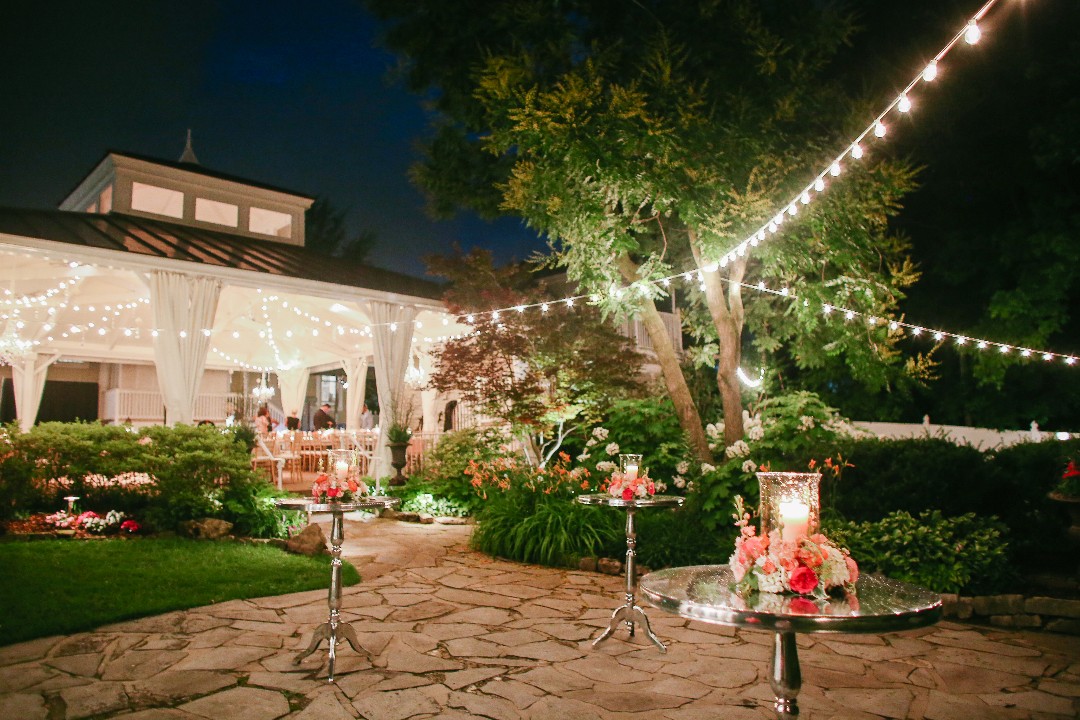
You turn off Franklin’s Main Street onto 3rd Avenue North, leaving behind the steady stream of tourists photographing the Civil War monuments and browsing boutique windows, and within two blocks the streetscape shifts. Historic homes line the quiet residential street. Then a discreet driveway opens between two properties, and you slip through what feels like a secret passage. Suddenly the noise drops away. The air changes — cooler, damper, green. You hear water before you see it: a gentle cascade over stacked stone, the soft burble of a fountain. The driveway opens into a mature Southern garden where koi drift lazily through lily pads, where a white gazebo stands centered among Japanese maples and magnolias, where stone pathways meander through boxwood and hydrangea as if they have been here for a century. This is CJ’s Off the Square, a venue that occupies the rare intersection of downtown accessibility and true garden seclusion. It sits two blocks from America’s Favorite Main Street, but it feels like another world entirely — quieter, slower, greener. Poppy has designed CJ’s Off the Square wedding flowers for 7 celebrations here, and every time our delivery van turns off 3rd Avenue into that tree-shaded driveway, we think the same thing: this garden has earned its reputation honestly.
About CJ’s Off the Square
CJ’s Off the Square holds distinctive ground in the Nashville wedding market — an all-inclusive garden venue tucked into Franklin’s historic downtown, just 15 miles south of Music City but worlds away in temperament and aesthetic. Franklin has earned the moniker “America’s Favorite Main Street” through a combination of meticulously preserved 19th-century architecture, independent boutiques and restaurants that escaped the chain-store blight, and genuine Southern hospitality that manages not to feel performed. The town’s Main Street is walkable, charming, and legitimately historic — this is where one of the Civil War’s bloodiest battles was fought in 1864, and the downtown core has been carefully maintained rather than renovated into unrecognizability. CJ’s sits on 3rd Avenue North, a residential street exactly two blocks from Main Street’s commercial heart, which creates an ideal wedding geography: close enough that guests can walk to dinner the night before or brunch the morning after, far enough that the ceremony itself feels private and removed from tourist foot traffic.
The property comprises three interconnected elements that together create a complete wedding experience. The Garden — the venue’s soul and primary ceremony location — is a mature Southern landscape built around water features, established plantings, and that photogenic white gazebo that appears in virtually every CJ’s wedding album. This is not new construction attempting to look old. These are decades-old trees with substantial trunks and established root systems. The boxwood hedges are dense and perfectly shaped. The koi pond supports actual thriving koi, not decorative fish struggling in an ornamental water feature. It is the kind of garden that requires patience and consistent care to achieve, which is why it feels authentic rather than staged. The Pavilion — an open-air covered structure — serves as the primary reception space for up to 135 guests and doubles as the rain backup ceremony site. It features a dramatic chandelier as its centerpiece, with twinkle lights strung throughout the beams and perimeter posts creating that romantic glow once daylight fades. The Historic House, a beautifully renovated structure at the property’s front entrance, provides air-conditioned comfort for wedding party preparations, including separate dressing suites and the Wine Cellar gathering space downstairs.
What distinguishes CJ’s operationally is its all-inclusive model. The venue provides eight hours of property access, comprehensive event coordination, in-house catering with customizable menus, complete bar service and setup (couples provide their own alcohol but pay no markup or corkage fees, and the venue handles all service logistics), and a curated Creative Partners directory of approved vendors. Unlike some venues that allow DIY decorating or amateur arrangements, CJ’s requires professional vendors for florals and design work — not out of snobbery but because the garden’s existing beauty deserves complementary work that enhances rather than competes. As a Franklin wedding florist with seven completed celebrations here, Poppy appreciates this standard. The venue’s event coordination team is organized, communicative, and experienced at managing the day’s complex choreography. Load-in proceeds through a dedicated vendor entrance with straightforward access to both garden and pavilion spaces. The timeline naturally flows from garden ceremony to garden/pavilion cocktail hour to pavilion reception without complicated room flips or awkward transitions.
From a Nashville regional perspective, Franklin occupies prime territory. It delivers the destination wedding feeling — distinctive location, charming accommodations, weekend-worthy experience — without requiring guests to navigate remote rural roads or arrange extensive ground transportation. Downtown Franklin offers boutique hotels within walking distance of CJ’s, including the Harpeth Hotel and several bed-and-breakfast properties with genuine personality. The surrounding area features farm-to-table restaurants, wine bars, antique shops, and the kind of Main Street strolling that makes wedding weekends feel like actual experiences rather than just logistical obligations. For Nashville-based couples and their local guests, Franklin represents an escape to somewhere more refined and less honky-tonk, with better light, quieter streets, and frankly superior food. For out-of-town guests flying into Nashville airport, the drive south on I-65 takes 30 minutes and delivers you to a completely different aesthetic than Broadway’s neon chaos.
Our delivery teams make the Franklin drive regularly, and CJ’s ranks among our smoothest venue logistics. Parking accommodates vendor vehicles. The coordination staff maintains clear communication about setup timing and vendor access. The garden’s layout allows us to install ceremony flowers without disrupting cocktail hour setup in the pavilion. And critically for a Franklin wedding florist working in Tennessee’s humid climate, the venue understands that flowers have temperature and timing needs — they provide shade and water access during summer installations and work with us on optimal setup schedules.
Event Spaces & Floral Opportunities
The Garden
Capacity: 135 seated for ceremony
Setting: The Garden is CJ’s reason for being. You enter through a wooden gate and follow stone pathways that meander rather than march — past hostas and ferns in shaded beds, around mature boxwood hedges shaped by years of patient pruning, toward the focal point: a classic white gazebo with clean lines and lattice detailing. The structure sits slightly elevated, creating natural sightlines from multiple vantage points. Water features punctuate the landscape: a small waterfall cascading over stacked Tennessee fieldstone, a koi pond where substantial orange-and-white fish surface between lily pads to investigate their reflections. Mature trees — Southern magnolias with glossy leaves, Japanese maples with delicate foliage, dogwoods that explode with white blooms each April — create overhead canopy and dappled shade. The garden reads as established rather than installed, with that layered complexity that only decades of growth can achieve. Seasonal plantings rotate through the beds — tulips and pansies in spring, impatiens and begonias in summer, mums and ornamental kale in fall — but the bones remain constant. This is not a blank slate. This is a setting with strong opinions about itself, and CJ’s Off the Square wedding flowers must respect that personality.
Floral approach: The gazebo demands thoughtful restraint. We have executed everything from minimal swags of Italian ruscus and seeded eucalyptus draped across one side to substantial asymmetrical installations that wrap three-quarters of the structure with Keira garden roses, Quicksand spray roses, white lisianthus, and trailing jasmine vine. The structure’s white paint accepts any color palette gracefully, but the surrounding garden’s established greenery and seasonal color mean that overly bright or saturated florals can feel jarring rather than harmonious. We consistently recommend softer, more nuanced tones here: blush, champagne, cream, dusty rose, soft peach, lavender, sage green. For aisle treatments leading to the gazebo, less is genuinely more. The stone pathway is beautiful on its own — centuries of Southern gardens have proven that well-laid stone needs minimal decoration. Simple clusters of blooms in aged concrete or weathered terra cotta vessels at every third or fourth row feel appropriate and allow the pathway’s natural beauty to remain visible. Lining every single row reads as excessive and blocks guests’ sightlines through the garden’s layers. The koi pond and waterfall areas present opportunities for subtle accent work during cocktail hour: a low arrangement of white hydrangea and leather leaf fern near the waterfall’s base, or a small cluster of floating ranunculus in pale pink and cream drifting among the lily pads (coordinated with the venue, as koi can be curious about new additions to their territory). The garden’s existing landscape accomplishes seventy percent of the aesthetic work. Your florals provide the final thirty percent that transforms lovely into unforgettable.
The Pavilion
Capacity: 135 seated for reception
Setting: The Pavilion is an open-air covered structure with a solid roof that provides weather protection while maintaining the garden party atmosphere. The space features a smooth concrete floor suitable for dining and dancing, structural posts and beams finished in crisp white, and a statement chandelier suspended from the center point of the ceiling. Twinkle lights are strung throughout the overhead beams and wrapped around perimeter posts, creating thousands of small points of light once evening arrives. The structure opens on all sides to garden views — every table has sightlines to mature trees, plantings, and that particular quality of dappled light filtering through leaves. During daytime and late afternoon celebrations, natural light floods the space. At twilight and into the evening, the combination of chandelier glow, string lights, and strategically placed uplighting creates an enchanted quality. Because the Pavilion serves double duty as both primary reception space and rain backup ceremony location, its design must accommodate either function gracefully.
Floral approach: The chandelier represents the single highest-impact floral investment opportunity in this space, and approximately ninety percent of Poppy couples include some treatment here. Our signature installation is a generous halo that wraps the chandelier’s base with layered greenery — Italian ruscus for foundational structure, seeded eucalyptus for silvery texture, silver dollar eucalyptus for substantial round leaves — studded with abundant blooms: Juliet garden roses in that perfect peachy-blush tone, Quicksand spray roses in champagne, white ranunculus, cream lisianthus, with trailing jasmine vine or smilax creating downward movement. This installation appears to float above the dance floor, photographs beautifully from every angle, and provides a focal point visible from each guest table. For more dramatic impact, we add cascading elements — longer tendrils of jasmine or smilax dropping 18-24 inches from the halo, creating vertical interest without obstructing sightlines or feeling heavy. Table centerpieces must account for the twinkle light canopy overhead. Once the sun sets, those lights create magical atmosphere, and arrangements that rise too tall or spread too wide block the light and feel visually heavy. We favor two approaches: either low, lush compote arrangements (6-8 inches in height, overflowing with garden roses, ranunculus, and textured foliage in ceramic or brass vessels) or elevated designs on clear glass risers that lift the blooms 18-20 inches above table level, creating vertical interest while keeping the conversation zone clear. The Pavilion’s white structural posts can be wrapped with garland for an abundant, romantic treatment — particularly stunning for late fall and winter weddings when you want to introduce more organic texture. We use a base of mixed greenery (Italian ruscus, seeded eucalyptus, boxwood) with flowers tucked at intervals rather than continuously, creating rhythm rather than solid coverage. At the Pavilion’s entrance from the garden — the threshold where cocktail hour transitions to dinner — a pair of substantial arrangements in tall urns flanking the opening signals the shift and creates that frame-worthy moment for photographers capturing guests’ first glimpse of the reception space.
The Historic House
Setting: The Historic House anchors the property’s street presence on 3rd Avenue North, a beautifully maintained structure with the architectural details that define Franklin’s downtown character: high ceilings with original crown molding, hardwood floors with the wear patterns of genuine age rather than distressed finish, tall windows with wavy antique glass that admits generous natural light. Multiple rooms serve as dressing suites for wedding parties, with the Wine Cellar suite downstairs providing a particularly comfortable gathering space complete with flat-screen television, blackjack table, plush seating, and blessed air conditioning. The front porch — featuring traditional columns, ceiling fans for air circulation, and a direct view down 3rd Avenue toward downtown Franklin’s church steeples — serves as the grand exit location at evening’s end.
Floral approach: The Historic House functions primarily as preparation space, which means floral needs are strategic rather than abundant. A statement arrangement in the entry hall accomplishes multiple purposes: it welcomes the wedding party, establishes the day’s aesthetic tone, and provides a beautiful backdrop for detail photography of invitations, rings, jewelry, and accessories. We typically design a generous urn arrangement here — 24-30 inches tall, featuring a mix of focal flowers (garden roses, peonies in season, hydrangea), textural elements (flowering branches, architectural foliage), and flowing components (trailing jasmine, Italian ruscus, smilax) in a substantial brass or ceramic vessel. In the bridal suite itself, a smaller arrangement on the vanity or dressing table adds polish without interfering with hair and makeup logistics. This should be low (under 10 inches) and pretty but not precious — perhaps the bride’s favorite blooms in a silver julep cup or vintage glass compote. The front porch is where floral investment truly matters. This is your send-off moment, captured by photographers from multiple angles and distances, often the final image in your wedding album. We recommend flanking the front door with substantial matching arrangements — large urns (28-32 inches tall) overflowing with a celebration-worthy mix: tall branches (curly willow, flowering quince, dogwood in spring) for height and drama, abundant roses and hydrangea for volume and color, trailing greenery (smilax, ivy) for movement, and seasonal accent flowers (dahlias in fall, tulips in spring, peonies in early summer) for personality. These arrangements need to read as generous and joyful from 20-30 feet away, which means anything too restrained or modest will disappear in photographs.
The Wine Cellar
Setting: The Wine Cellar occupies the Historic House’s lower level, offering climate-controlled comfort during Tennessee’s humid summers. The space includes comfortable seating, entertainment (television with sports and music channels, blackjack table for groomsmen who think they are card sharks), and most importantly, reliable air conditioning. This is where groomsmen gather before the ceremony, where fathers of the bride escape the getting-ready chaos upstairs, where everyone appreciates being somewhere cool and relatively quiet.
Floral approach: Minimal by intention. A single small arrangement on the bar or side table provides a touch of polish without reading as fussy or overly decorated. Simple white blooms — roses, lisianthus, perhaps stock for texture — with clean greenery in a straightforward ceramic or glass vessel. This space photographs occasionally during getting-ready coverage but is not a primary floral moment. Budget allocated here is better spent elsewhere.
The Front Porch
Setting: The Historic House’s front porch serves as the wedding day’s final chapter. After dancing concludes in the Pavilion, guests gather here for the send-off — sparklers creating rivers of light, ribbon wands streaming color, flower petals showering the couple, or a vintage getaway car idling at the curb. The porch’s architectural details — columns that frame the doorway, wide-plank flooring, that particular Southern proportion of ceiling height to floor space — create an elegant backdrop. The location facing the street rather than the garden provides ceremonial weight to the departure.
Floral approach: This moment deserves hero florals. We design large-scale flanking arrangements that read as celebratory, abundant, and worthy of the final photographs. Tall urns (26-32 inches in height) positioned on either side of the front door, overflowing with generous quantities of flowers and foliage: structural branches for height and drama, substantial blooms (garden roses, hydrangea, peonies, dahlias depending on season) for visual impact, textural elements (eucalyptus, oak leaves, flowering vines) for depth, and trailing components (smilax, ivy) that cascade over the vessel rim. The scale must be bold — these arrangements are photographed from significant distances, and anything too small or restrained will fail to register visually. If budget allows, adding a garland swag across the porch railing or wrapped around the columns amplifies the celebration atmosphere and creates even more frame-worthy impact. The goal is creating a floral frame for the couple’s exit that matches the significance of the moment: the last time they walk through a doorway as newlyweds on their wedding day, surrounded by everyone they love and a cascade of flowers.
Wedding Flower Ideas for CJ’s Off the Square
Southern Garden Romance
This design concept embraces the garden’s inherent soft, romantic quality with a palette that feels native to the Tennessee landscape. The foundation rests on blush and cream tones: Keira garden roses in that perfect pale peachy-pink, O’Hara garden roses in ivory with blush undertones, Quicksand spray roses in champagne, white ranunculus with their tissue-paper petals, blush astilbe adding feathery texture, and cream lisianthus providing substantial focal points. We layer in movement and depth with jasmine vine trailing through arrangements, smilax adding glossy green foliage, silver dollar eucalyptus contributing round silvery leaves, and seeded eucalyptus providing delicate branching structure. The overall effect is lush without feeling heavy, romantic without tipping into saccharine sweetness — like the garden itself decided to bloom in all the right places at exactly the right moment. For the gazebo, we design a loose, organic garland installation that drapes asymmetrically across one side of the structure, concentrated with roses and ranunculus at the base where the couple will stand, lightening to primarily greenery as it travels upward and around. Aisle markers remain simple: small clusters of blush roses, ranunculus, and eucalyptus in weathered concrete vessels placed every third row, allowing the stone pathway’s beauty to remain visible. The chandelier installation receives full treatment: a generous halo of mixed greenery abundantly studded with Keira roses, O’Hara roses, and ranunculus, with jasmine vine creating soft trailing movement. Table centerpieces sit in blush ceramic compotes, designed low and lush with an overflowing abundance of roses, ranunculus, and textured foliage spilling over vessel edges. This palette works beautifully from April through October and photographs with soft, timeless quality that will age gracefully in albums. It is particularly stunning at golden hour when warm late-afternoon light plays across the blush tones, creating that luminous quality that makes photographers reach for their cameras.
Tennessee Wildflower
For couples drawn to organic, less structured aesthetics, this concept takes inspiration from Middle Tennessee’s wildflower meadows and native plantings. The palette is varied and naturalistic, pulling from a broader spectrum: butter yellow, soft coral, lavender, peachy-pink, cream, and generous amounts of green in multiple tones. Flowers include cafe au lait dahlias in that perfect pale peachy-beige, Juliet garden roses in apricot, yellow ranunculus, butterfly ranunculus in mixed soft tones, lavender scabiosa with their distinctive pincushion centers, Queen Anne’s lace providing delicate white texture, and cosmos adding airy movement. Foliage leans textural and loose: maiden fern with its delicate fronds, oakleaf hydrangea foliage (not the blooms, just the distinctively shaped leaves), ornamental grasses, and locally foraged branches when available. Arrangements have an “just gathered from the field” quality — loose and slightly asymmetrical, with varied stem lengths and deliberate negative space that allows each element to be appreciated individually. The gazebo receives a more relaxed treatment: swaths of mixed greenery and grasses with flower clusters concentrated at the corners and base rather than continuous coverage, creating organic gathering points rather than formal garland. Aisle markers can be simple tied bundles of wildflowers and grasses attached to shepherd’s hooks. The chandelier installation is lighter and airier here, leaning more heavily on greenery with flower clusters appearing to emerge naturally from the foliage rather than being densely packed. Table centerpieces intentionally vary by table — some in vintage glass bottles, some in ceramic crocks, others in copper julep cups — creating that collected, unfussy aesthetic that feels personally gathered rather than professionally uniform. This palette sings loudest in late spring and summer when local dahlias reach peak availability and Tennessee gardens overflow with abundance. It works beautifully for daytime or afternoon celebrations and pairs naturally with the venue’s Southern comfort atmosphere rather than formal elegance.
Modern Southern Elegance
This concept takes the traditional Southern garden wedding vocabulary and refines it through a contemporary lens — cleaner lines, disciplined color restraint, and elevated materials. The palette is sophisticated and intentional: white, cream, the palest champagne blush, and deep burgundy foliage for contrast. Flowers are refined and substantial: white peonies (in season, typically late April through May), white O’Hara garden roses, champagne Quicksand roses, white lisianthus, white ranunculus, white butterfly ranunculus, and white majolica spray roses. Foliage skews architectural rather than soft: Italian ruscus providing structured greenery, silver dollar eucalyptus offering round leaves in dusty blue-green, and deep burgundy leucadendron foliage creating dramatic contrast against the pale blooms. Vessels are elevated rather than rustic: brushed brass compotes, white ceramic urns, clear glass cylinder risers that create the illusion of floating arrangements. The gazebo installation is symmetrical and structured — a formal swag centered precisely on the structure’s front, balanced identically on both sides rather than the asymmetrical loose garland of softer aesthetics. Aisle markers are minimal and refined: single perfect stems of peonies or roses in individual brass bud vases every other row, creating repetition without clutter. The chandelier receives a structured halo installation with blooms arranged in deliberate, visible pattern rather than randomly tucked into greenery. Table centerpieces follow strict visual rhythm: either uniformly tall (elevated on clear risers) or uniformly low (in matching brass compotes), creating intentional repetition across the reception space rather than varied heights. This palette photographs with crisp, editorial quality and feels particularly appropriate for black-tie or elevated celebrations. It works year-round since the core flowers maintain consistent availability across seasons, and it appeals to couples who appreciate the garden venue but prefer a more urban, refined aesthetic over traditional Southern romance.
Seasonal Considerations
Franklin sits in Middle Tennessee’s humid subtropical climate zone, which delivers four genuine seasons with distinct personalities and distinct floral implications. Understanding what works when at CJ’s Off the Square is essential, particularly since the garden itself transforms dramatically throughout the year.
Spring (March-May) arrives early in Franklin, often with daffodils and crocuses blooming by late February. By April, the garden reaches peak glory: dogwood trees overhead exploding with white and occasionally pink blooms, azaleas in the beds showing brilliant fuchsia and coral, tulips in organized rows, that particular fresh-green quality of new leaves unfurling. Spring weather in Tennessee is notoriously unstable — a 75-degree afternoon can shift to 50 degrees by evening, and late-season cold snaps sometimes surprise us through mid-April. Afternoon thunderstorms are common, brief but dramatic. For florals, spring offers the year’s most extensive selection: peonies (late April through May, if you are lucky enough to time it right), tulips in every conceivable color, ranunculus at their peak quality, anemones, hellebores, sweet peas, flowering branches (dogwood, cherry, quince, magnolia), and the season’s first garden roses. The garden’s existing spring color display — particularly if the azaleas are in full bloom — should directly inform your palette decisions. Competing with hot pink azaleas rarely ends well; complementing or contrasting intentionally always does. Our most successful spring palettes here lean soft and romantic: blush, cream, lavender, soft yellow, and generous white to harmonize with rather than fight the garden’s natural show. This is Tennessee’s absolute peak wedding season, which means both venue and florist booking requires significant advance planning. Practical consideration: if your wedding falls in early spring (March or early April), prepare for potentially chilly evenings. The Pavilion is covered but open on all sides, and guests will feel a 48-degree night. Consider renting patio heaters or providing pashminas.
Fall (September-November) is Franklin’s second prime wedding season, and deservedly so. The oppressive summer heat breaks by mid-September, daytime temperatures settle into comfortable 60s and 70s, evening air turns crisp, and the light takes on that golden quality that makes photographers weep with joy. By late October, the Japanese maples in CJ’s garden turn brilliant crimson, and the surrounding neighborhood trees begin their autumn color transformation. Fall is Tennessee’s most reliable weather season — less rain than spring, cooler than summer, not yet winter cold. For florals, fall delivers abundance: dahlias at their absolute peak (Tennessee growers harvest continuously through October), locally grown chrysanthemums in sophisticated tones (not just the orange grocery store pom-poms), roses in extraordinary variety, autumn foliage branches with actual color, ornamental kale and cabbage, privet berries, hypericum berries, and specialty items like chocolate cosmos. This is the season to embrace richer, deeper tones if you are so inclined: burgundy, plum, rust, burnt orange, terracotta, marigold, deep coral, and wine red. However, fall does not require autumn colors — cream, white, and blush florals against the garden’s changing leaves create stunning contrast. Cooler temperatures mean flowers last significantly longer, setup conditions are comfortable for florists and flowers alike, and ceremony timing is flexible (no avoiding midday heat). Our fall weddings at CJ’s typically pursue one of two distinct directions: either full autumn romance with burgundy, rust, and orange alongside textured foliage, or intentional contrast with soft, pale florals that pop dramatically against the season’s darker natural tones. Late November weddings risk genuinely cold evenings — temperatures can drop into the 40s after sunset — so consider adding patio heaters to the Pavilion or providing blankets and pashminas for guests.
Winter (December-February) is CJ’s quietest season, offering opportunities for couples who want off-peak celebrations and different aesthetic possibilities. The garden is dormant — deciduous trees bare, perennials cut back, the overall palette muted browns and grays with evergreen boxwoods providing the only substantial color. Winter weddings here rely heavily on the Pavilion’s twinkle lights and the Historic House’s interior spaces for atmosphere. Weather is genuinely variable: some January afternoons reach 60 degrees and feel like early spring, while others struggle to hit 40 and feel legitimately cold. Snow is rare but possible. For florals, winter means working with imported or greenhouse-grown blooms: amaryllis (dramatic and Christmas-appropriate), tulips (Dutch imports), anemones, ranunculus, roses, lisianthus, and abundant evergreen foliage (magnolia leaves, cedar, pine, boxwood, multiple eucalyptus varieties). Winter is the season to embrace floral abundance — the garden is not providing visual interest