
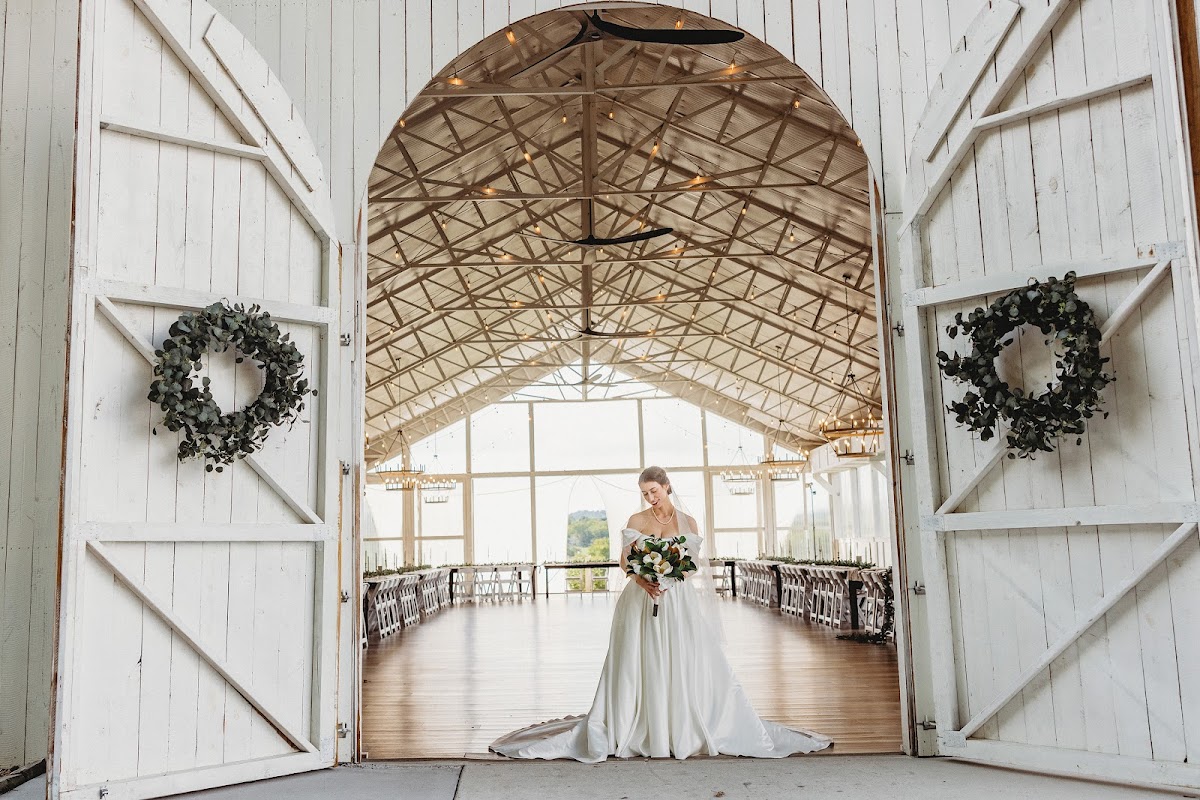
You take Highway 64 east from Nashville, and the city unravels quickly. Strip malls give way to farm stands. Traffic lights become fewer. By the time you reach Wartrace — an honest-to-goodness small town where Bell Buckle and Beechgrove converge — you have left behind the world of honky-tonks and hot chicken. Two minutes off the highway, down a country road that winds through horse pastures and century-old oaks, sits Beau Cheval. The name is French for “beautiful horse,” and that is not marketing poetry. The first thing you notice as you pull through the gates is the horses themselves — rescue horses grazing in the pastures, their presence gentle and unhurried against 78 acres of rolling Tennessee hills. Then the historic log farmhouse appears, all hand-hewn timber and weathered chinking, built in the 1800s by people who knew a thing or two about permanence. And finally, as you crest the hill, the full sweep of the property reveals itself: open fields, wooded backdrops, ponds catching the afternoon light, and that signature cross arbor standing against the sky like a promise. Poppy has received 7 inquiries for Beau Cheval weddings, and every time we scout this property or consult with a couple considering it, we understand the draw. This is not a venue trying to be rustic. It simply is — authentically, unpretentiously, and with a kind of generous beauty that makes designing Beau Cheval wedding flowers feel less like decorating and more like collaboration with the land itself.
About Beau Cheval in Wartrace
Beau Cheval operates as an all-inclusive working farm and wedding venue on 78 acres of Middle Tennessee countryside. The property centers around an original 1800s log farmhouse, meticulously preserved and now serving as both bridal suite and groom’s quarters, its thick timbers and wide-plank floors offering the kind of authenticity you cannot fake. The farm’s rescue horses — well-trained, photogenic, and remarkably patient — are available for complimentary portrait sessions, a detail that sets Beau Cheval apart from venues that simply have animals grazing in the background. These horses are part of the experience, not props, and couples serious about incorporating them should plan their timeline accordingly (the horses work best in the golden hour before sunset when the light is soft and they are relaxed after their afternoon routine).
The venue’s event spaces are distributed across the property in a way that creates natural progression: ceremony in one of several outdoor locations (the cross arbor site being the most popular), cocktails on the lawn or under the covered breezeway, and reception in the 5,000-square-foot indoor hall with its defining wall of windows. Unlike many rustic venues that feel cobbled together from repurposed barns, Beau Cheval’s reception hall is purpose-built and climate-controlled, which matters considerably in Tennessee’s humid summers and unpredictable spring weather. The venue operates with an in-house coordination team and includes access to the Adorn decor showroom, meaning much of the foundational design work — linens, table settings, signage, lounge furniture — is handled internally. For florists, this is a gift: we can focus on what we do best rather than sourcing farm tables and vintage chairs.
Logistically, Beau Cheval sits 45 minutes south of Nashville, just off Highway 64 near the intersection of Wartrace, Bell Buckle, and Beechgrove. It is close enough to Nashville to feel accessible for most guest lists, but far enough to genuinely escape the city. The drive is straightforward, the property has ample parking (including designated vendor parking with easy load-in access to the reception hall), and the venue team is organized about timing and setup logistics. They provide a detailed timeline, respect vendor setup windows, and understand that floral installations require uninterrupted access to ceremony sites and reception tables. The all-inclusive model means couples cannot bring in outside caterers, but florists and photographers have full creative freedom, and the venue actively encourages personalization through florals, stationery, and specialty rentals.
One note for Wartrace wedding florists: the property’s 78 acres mean significant distances between spaces. Bridal bouquets may be delivered to the farmhouse, ceremony florals installed at the cross arbor a quarter-mile away, and reception arrangements placed in the hall — all requiring multiple trips with a vehicle. Plan your setup timeline accordingly, build in extra time for transport between locations, and communicate clearly with your delivery team about the property’s layout. The covered breezeway, while stunning for photos, does not connect all spaces; you will still be loading arrangements in and out of vehicles.
Event Spaces & Floral Opportunities
Indoor Reception Hall
Capacity: 300 seated
Setting: The reception hall is a light-filled 5,000-square-foot space dominated by a wall of windows that spans one entire side, looking out onto pastures and tree lines. The interior palette is neutral barn wood, white shiplap, and exposed beams — rustic bones with enough refinement that it does not feel like you are eating dinner in an actual livestock barn. Modern chandeliers with Edison bulbs hang from the ceiling, providing ambient lighting that flatters both flowers and faces. The windows are the hero here, flooding the space with natural light during afternoon receptions and framing the sunset during evening celebrations. The room accommodates 300 guests comfortably with space for a dance floor, bar, and head table without feeling cramped.
Floral approach: The wall of windows dictates your centerpiece strategy. Anything too tall or too visually heavy at eye level competes with the view, and the view — particularly at golden hour — will win every time. We design low, lush arrangements in this space, mounded garden roses (Patience, Quicksand, and Juliet work beautifully in the neutral room), ranunculus, spray roses, and locally sourced greenery like seeded eucalyptus and dusty miller, all arranged in vessels that feel intentionally understated: wooden boxes, aged ceramic compotes, or galvanized buckets that nod to the farm setting without veering into hokey territory. For couples who want height, consider tall, slim arrangements on narrow stands that create vertical interest without blocking sightlines — think delphinium, snapdragons, and amaranthus cascading from iron stands at alternating tables. The head table is an opportunity for impact: a continuous low garland running the table’s length, woven with smilax, Italian ruscus, café au lait dahlias, and white lisianthus, creates a lush, organic installation that photographs dramatically against the windows. The bar area, often overlooked, benefits from a statement arrangement — something substantial in a vintage urn or oversized vessel that anchors the space and gives guests a focal point while waiting for drinks. Resist the urge to over-floral this room; its neutrality and natural light are assets, not voids to fill.
Outdoor Ceremony Sites
Capacity: 300 seated
Setting: Beau Cheval offers multiple outdoor ceremony locations across its 78 acres, but the cross arbor site is the signature space. The arbor itself — a substantial cross-shaped wooden structure — stands on a slight rise with rolling hills, pastures, and tree lines creating a panoramic backdrop. Other ceremony options include pond-side locations with water views and open field sites with long aisle possibilities. All locations are exposed to the elements, beautifully so, which means no architectural structures to compete with, but also no fallback if weather turns. Tennessee skies are famously changeable; have a plan.
Floral approach: The cross arbor’s unique shape offers creative opportunity beyond the standard arch treatment. Rather than fully covering the structure, consider asymmetrical clusters at the intersection point and base, using a mix of blooms and textures that create visual weight without obscuring the wood: Juliet and Patience garden roses, white larkspur, pale peach ranunculus, and trailing jasmine vine, all anchored with seeded eucalyptus and Italian ruscus. The cross shape naturally draws the eye upward; enhance that with garlands that follow the vertical line and cascade slightly at the ends. For aisle markers, forego the uniform shepherd’s hooks in favor of varied-height arrangements in galvanized buckets or wooden crates placed every other row, alternating sides, filled with wildflowers and grasses that move in the breeze — black-eyed Susans, Queen Anne’s lace, white yarrow, and ornamental grasses like fountain grass or feather reed grass. This approach feels organic and intentional rather than formulaic. At pond-side ceremony sites, use the water as a design element: low arrangements on shepherd’s hooks lining the aisle, positioned to catch reflections in the water, work beautifully. If the ceremony is in an open field with a long aisle, consider a statement urn arrangement flanking the couple’s position — something substantial enough to anchor the space given the expanse around you. One practical note: outdoor ceremonies here mean arrangements sitting in full sun (or full rain). Use water tubes generously, arrive as close to ceremony time as possible for installation, and choose hardy blooms. Hydrangeas wilt. Roses hold.
Historic Log Farmhouse Bridal Suite
Setting: The bridal suite occupies multiple rooms within the 1800s log farmhouse, offering vanity space, two full bathrooms, natural light through original wavy-glass windows, and the kind of historic character you cannot stage. The log walls are chinked and weathered, wide-plank floors creak in the right way, and the overall atmosphere is warm, intimate, and photogenic. This is where the bride and her party spend the morning, and where many of the getting-ready portraits happen. The covered breezeway connecting to other parts of the farmhouse is a popular spot for first looks and bridal party photos, its rustic columns and filtered light creating a naturally beautiful frame.
Floral approach: The bridal suite needs a single perfect arrangement — something beautiful enough to matter in photos but not so large it overwhelms the intimate space. We place a low, lush arrangement on the vanity or a side table where it will appear in detail shots of the dress, jewelry, and perfume bottles: Quicksand roses, white ranunculus, blush astilbe, and trailing jasmine in a vintage brass bowl or ceramic compote that complements the room’s warm wood tones. The bouquets themselves, of course, will be photographed here extensively, so design them with this log cabin backdrop in mind — loose, slightly undone garden-style bouquets with movement and texture work better in this setting than tight, structured designs. A small bud vase with a single perfect bloom — a garden rose or peony, depending on season — near the makeup station adds a thoughtful detail. For the covered breezeway, if budget allows, a garland installation along one side, loosely draped and woven with greenery and blooms, creates a stunning backdrop for bridal portraits without requiring permanent installation or complex mechanics.
Groom’s Room with Wine Cellar
Setting: The groom’s quarters include a wine cellar — an actual working cellar with bottle storage — and an outdoor deck for cigars and pre-ceremony whiskey. The space has a distinctly masculine atmosphere: darker wood tones, leather accents, and the kind of utilitarian charm that appeals to grooms who are skeptical about wedding fuss. The outdoor deck overlooks the property, offering views and fresh air.
Floral approach: Less is more here, but that does not mean nothing. A single arrangement on the bar or a console table — compact, textured, and in a darker palette — signals attention to detail without feminizing the space. Think burgundy scabiosa, chocolate cosmos, dark purple calla lilies, privet berries, and seeded eucalyptus in an aged wooden box or iron vessel. Boutonnieres, of course, are delivered here and should coordinate with the bridal bouquets while maintaining a slightly more restrained aesthetic: single blooms (garden rose, ranunculus, or a textured element like scabiosa or astilbe) with minimal greenery and wrapped stems rather than elaborate clusters. If the groom is having a boutonniere bar — where groomsmen choose their own — set it up on the wine cellar’s main table with blooms in small water tubes and a selection of greenery and wrapping materials; it becomes both functional and a great photo opportunity.
Covered Breezeway
Setting: This charming covered walkway connects different parts of the farmhouse and serves as a transition space between indoor areas. Its rustic columns, open sides, and filtered natural light make it one of the most photographed spots on the property for portraits. The structure has architectural interest — weathered wood posts and beams — without feeling overly finished.
Floral approach: The breezeway is ideal for hanging installations that do not require ground space or interfere with guest flow. A long garland suspended from the beams overhead, woven with smilax, Italian ruscus, and clusters of blooms at intervals (garden roses, ranunculus, lisianthus) creates a romantic canopy effect that appears in nearly every photo taken here. Alternatively, if the couple is using the breezeway for cocktails or as a reception entrance, consider placing arrangements on pedestals at either end — substantial, statement pieces in large urns that frame the space and guide guests through. The key is working with the structure rather than against it; the breezeway’s beauty is its simplicity and the way light filters through, so any florals should enhance rather than obscure those qualities.
Wedding Flower Ideas for Beau Cheval in Wartrace
Tennessee Wildflower Meadow
This is the design concept that makes the most intuitive sense at Beau Cheval — florals that look like they were gathered from the fields surrounding the property. The palette is soft and sun-faded: pale yellow, cream, soft peach, and green with textural accents in rust and burgundy. Flowers include black-eyed Susans, Queen Anne’s lace, white yarrow, pale peach ranunculus, Juliet and Patience garden roses, white astilbe, and ornamental grasses (fountain grass, bunny tail, feather reed grass). Vessels are galvanized buckets, wooden crates, and ceramic crocks — anything that looks like it has been on the farm for decades. Bouquets are loose and slightly wild, tied with linen ribbon or twine, with movement and an undone quality that photographs beautifully against the farmhouse and pasture backdrops. This approach works across all spaces: wildflower arrangements in buckets lining the ceremony aisle, low meadow-style centerpieces for the reception tables, and a wildflower garland along the head table or breezeway. It is unpretentious, romantic, and deeply connected to place.
Southern Garden Romance
For couples who want more refinement while maintaining the venue’s rustic charm, this concept draws from classic Southern garden aesthetics. The palette is blush, ivory, soft lavender, and green with accents of deeper mauve and wine. Core blooms include Quicksand, Juliet, and Patience garden roses, white and blush ranunculus, café au lait dahlias, white lisianthus, blush astilbe, lavender stock, and trailing jasmine vine. Greenery includes seeded eucalyptus, Italian ruscus, and dusty miller. Arrangements are fuller and more structured than the wildflower approach but still have movement and an organic quality. Vessels are aged brass, ceramic compotes, and wooden boxes in lighter, whitewashed finishes. This palette works beautifully in the reception hall where the neutral walls and natural light allow the soft colors to glow, and it translates well to the cross arbor with fuller, more formal installations that balance the rustic structure. Bridal bouquets in this style are lush and rounded but not tight — garden-style with enough structure to feel elegant.
Equestrian Heritage
This concept leans into Beau Cheval’s horse rescue mission and Walking Horse heritage with a palette and aesthetic that feels intentionally equestrian without veering into themed territory. Colors are rich and earthy: burgundy, rust, chocolate brown, cream, and deep green. Blooms include burgundy and chocolate dahlias, deep red garden roses (Tess, Black Baccara), rust-colored ranunculus, chocolate cosmos, burgundy scabiosa, and cream lisianthus. Textural elements include privet berries, hypericum berries, seeded eucalyptus, and leather accents (leather-wrapped stems, leather cording around vessels). Vessels are aged leather, dark wood boxes, iron urns, and galvanized metal. The overall effect is sophisticated and warm with a nod to the equestrian setting. Bouquets might include a single pheasant feather as a subtle accent or have stems wrapped in leather cord. This palette is stunning in autumn and winter but works year-round with seasonal bloom adjustments. It pairs beautifully with the 1949 Jeep Willys for photos and complements the wine cellar groom’s room aesthetic.
Seasonal Considerations
Middle Tennessee’s climate is humid subtropical with four distinct seasons, each bringing particular opportunities and challenges for Beau Cheval wedding flowers.
Spring (March - May): Spring arrives early in Tennessee, with temperatures ranging from the 60s to 80s and high humidity. This is dogwood and azalea season, when the entire state seems to bloom at once. For florals, spring offers tulips, daffodils, ranunculus, anemones, sweet peas, and early peonies (late May if you are lucky). The challenge is weather volatility — spring storms roll through Middle Tennessee with little warning, bringing heavy rain, strong winds, and occasional severe weather. For outdoor ceremonies, have a solid backup plan and design installations that can withstand wind (low, weighted arrangements rather than tall, top-heavy ones). The rescue horses are active and comfortable in spring weather, making it an ideal season for incorporating them into portraits. Pollen can be intense in April and May; couples with severe allergies should plan accordingly.
Summer (June - August): Tennessee summers are hot, humid, and unforgiving to both flowers and humans. Temperatures regularly reach the 90s with heat indices above 100. For florals, this means choosing heat-tolerant blooms: zinnias, sunflowers, dahlias, celosia, roses (surprisingly hardy), and solidago. Avoid hydrangeas, which wilt instantly, and delicate blooms like sweet peas or astilbe. Install ceremony florals as close to start time as possible, keep everything in water tubes until the last moment, and use floral preservative religiously. The reception hall’s climate control is a major asset in summer — arrangements can be installed early and will hold beautifully. Outdoor ceremonies are best scheduled for late afternoon or early evening to avoid peak heat. The upside: summer light is long and golden, the pastures are lush and green, and the horses are comfortable with early morning or evening portrait sessions. Provide your delivery team with water and account for the physical toll of working in heat and humidity.
Fall (September - November): Fall is peak wedding season in Middle Tennessee for good reason: temperatures cool to the 60s and 70s, humidity drops, and the landscape shifts to golds, russts, and deep greens. This is dahlia season — café au lait, burgundy, rust, and coral dahlias are at their peak and affordable. Other fall blooms include marigolds, zinnias, sunflowers, chocolate cosmos, and the last of the garden roses. Foliage is spectacular in October and November, with tree lines turning vibrant colors that provide a stunning natural backdrop requiring minimal floral enhancement. Fall weather is generally stable, though early September can still be warm and November can bring unexpected cold snaps. The cross arbor ceremony site is particularly beautiful in fall when surrounded by changing leaves. This is also harvest season in Middle Tennessee, so consider incorporating seasonal elements like pumpkins, gourds, and dried corn into installations if the couple wants to embrace the farm setting fully.
Winter (December - February): Winter is the least popular season for Tennessee farm weddings, but Beau Cheval’s climate-controlled reception hall makes it feasible. Temperatures range from the 30s to 50s, with occasional snow (rare but possible) and frequent gray, overcast days. Winter florals lean on imported blooms — amaryllis, anemones, ranunculus, hellebores, tulips, and evergreens. The color palette typically shifts to deep jewel tones (burgundy, emerald, navy) or classic winter whites and greens. The advantage: lower demand means better vendor availability and potentially lower pricing. The challenge: outdoor ceremonies require serious consideration of guest comfort, and the landscape is dormant, making florals work harder to create atmosphere. The historic farmhouse is particularly cozy in winter, with its thick log walls and intimate scale. If incorporating the horses, schedule portraits during the warmest part of the day and keep sessions brief; horses are resilient but prefer not to stand around in freezing temperatures.
Poppy’s Expert Take
The cross arbor is deceptively large. When you see it in photos, it looks like a standard ceremony arch. In person, it is substantially bigger and requires more floral volume than you might estimate to make visual impact from guest seating. Budget accordingly — you need approximately 30% more materials than a standard arch to dress it properly without it looking sparse. Alternatively, embrace its size by focusing on asymmetrical installations at key points rather than trying to cover the entire structure.
Build in travel time between spaces during installation. The distance from the farmhouse to the ceremony site to the reception hall is significant, and you will make multiple trips. What looks like a three-hour setup on paper becomes four hours when you account for driving arrangements across 78 acres. Communicate this clearly with your delivery team and build buffer time into your timeline. The venue team is accommodating about early access; use it.
The horses are real, and the horses have opinions. If your couple wants to incorporate the rescue horses into portraits, design bouquets and boutonnieres with this in mind. No protruding wires, nothing overly fragrant that might spook a horse, and keep bouquets compact enough that the bride can hold reins comfortably. Communicate with the venue about timing — the horses work best in the hour before sunset when they are calm and the light is good. Plan for 20-30 minutes for horse photos, not five. And yes, the horses occasionally try to eat bouquets. Use flowers they should not eat (roses, dahlias, ranunculus) rather than horse-safe blooms they might find tempting (sunflowers, mums).
The all-inclusive model affects your design strategy. Because Beau Cheval includes table linens, place settings, and decor from the Adorn showroom, you will know the foundational design palette before creating your floral proposal. Request photos of the selected linens and decor early in the planning process so your florals coordinate rather than compete. The venue team is excellent about sharing this information; you just have to ask. This is also an opportunity to streamline the couple’s budget — they are not paying separately for rentals, so more budget can go to florals.
Load-in access to the reception hall is excellent; load-in to outdoor ceremony sites is not. The reception hall has direct vehicle access and wide doors, making setup straightforward. The cross arbor and other ceremony sites require walking arrangements from wherever you can park (sometimes 100+ yards). Bring a wagon or cart, recruit additional help, and wear appropriate footwear. The property is beautiful but actively farmed; you will encounter uneven terrain, grass, and gravel. Stilettos are a liability.
Weather backup for outdoor ceremonies is indoor space, not a tent. If weather turns, ceremonies move inside to the reception hall, which means your ceremony florals need to work in that space or be designed to move quickly. Rather than elaborate aisle installations that would not translate, consider a statement arbor piece that can be repositioned indoors and used as a ceremony backdrop against the hall’s windows. Alternatively, design modular arrangements that can be repurposed — ceremony arrangements that become cocktail table decor or reception accents.
Coordinate with the venue’s photographer recommendations on timing. Beau Cheval works with photographers who know the property’s best light (golden hour on the hills is unmatched) and most photogenic locations. When planning your ceremony floral installations, ask the couple’s photographer where they will shoot portraits so you can ensure flowers appear in those locations. A small arrangement on the Jeep Willys, a bouquet placed thoughtfully on the breezeway, or ceremony flowers positioned to catch light make it into far more photos than you might expect.
What Poppy Couples Spend on Flowers Here
Because we do not yet have completed bookings at Beau Cheval, these recommendations are based on the Nashville market average and adjusted for the venue’s scale and all-inclusive model. Most Middle Tennessee farm weddings fall into these ranges.
$3,000 - $4,500 | The Essentials
This budget covers the non-negotiables: bridal bouquet (fuller garden-style with premium blooms like garden roses and ranunculus), bridesmaid bouquets (three to five, scaled-down versions of the bridal), boutonnieres for the groom and groomsmen, mothers’ corsages, and ceremony florals. For ceremony, focus budget on the cross arbor with an asymmetrical installation that makes impact without fully covering the structure — clusters at the intersection point with trailing jasmine and a mix of garden roses, ranunculus, and greenery. Add four to six aisle markers in galvanized buckets positioned every other row. For the reception, choose low centerpieces for guest tables — arrangements in wooden boxes or ceramic vessels that can be sized to fit budget (alternate between fuller arrangements and simpler greenery-heavy designs on every other table to stretch budget). Include one statement piece for the head table or sweetheart table. This level assumes the couple is leaning on the venue’s included decor and the natural beauty of the setting to carry much of the visual impact.
$4,500 - $7,000 | The Full Picture
This mid-tier budget adds depth and consistency across all spaces. In addition to essentials, you are adding reception centerpieces for every table (consistently sized and designed), a substantial installation for the head table (continuous low garland or elevated arrangements on stands at either end), bar florals, and welcome table arrangements. Ceremony budget increases to include more aisle markers (every row rather than every other row) and fuller arbor installation with additional varieties and textures. You are also adding floral touches to the bridal suite (arrangement for the vanity, potential garland for the breezeway if that is in the couple’s vision) and groom’s room (small arrangement for the wine cellar area). This budget allows for more premium blooms across all pieces, better variety, and fuller, more lush arrangements. You can incorporate specialty elements like hanging installations, elevated designs, or more complex mechanics without compromising on volume.
$7,000+ | The Full Experience
At this level, you are creating a complete floral story across Beau Cheval’s 78 acres. Ceremony includes a fully dressed cross arbor with abundant blooms, textural elements, and possibly additional structures (flanking urns or pedestals), full aisle treatment with arrangements on both sides of every row, and potential installations at additional ceremony site features (garland along fencing, arrangements near the pond if using that location). Reception features tall and low centerpieces in a varied, dynamic design, full head table garland installation, multiple bar arrangements, lounge area florals if the couple is using Adorn’s lounge furniture, and statement pieces at key focal points (entrance to reception hall, cocktail area). You are adding a hanging garland installation in the covered breezeway, fuller bridal suite florals (multiple arrangements, potential floral styling for detail shots), and thoughtful touches throughout — the Jeep Willys styled with an arrangement for photos, small arrangements in the farmhouse for getting-ready shots, corsages not just for mothers but for grandmothers and special family members. This budget also allows for seasonal specialty items (peonies in late spring, abundant dahlias in fall, amaryllis in winter) and the labor-intensive installations that elevate a wedding from beautiful to unforgettable. You are not just decorating spaces; you are creating moments.