
The drive to Chapel Venue tells you immediately that you’ve left Nashville behind. Nashville Highway narrows as you head south through Marshall County, the strip malls and subdivisions giving way to pastures, split-rail fences, and the kind of unhurried landscape that makes you ease off the accelerator. Chapel Hill itself — population 1,850 — is barely a pause in the road, just a scattering of houses and a post office, the sort of place where everyone still waves. And then, rising from the Tennessee countryside like something out of a novel, there’s the chapel. It’s a hundred years old, this church, remodeled with reverence for its bones but updated for celebration. The white façade and tall windows catch the afternoon light in a way that makes every arrival feel significant, like you’re stepping not just into a building but into a moment set apart from ordinary time. Chapel Venue wedding flowers get to live inside that moment — inside a space where history and romance have been woven together with care. Poppy has received 8 inquiries from couples drawn to this place, and though we haven’t yet had the privilege of installing here, we’ve studied the architecture, walked the grounds, and understood exactly what this venue asks of a florist: restraint, elegance, and a deep respect for what’s already beautiful.
About Chapel Venue
Chapel Venue occupies a century-old church building in Chapel Hill, Tennessee, about 50 miles south of Nashville and 27 minutes from Franklin. This is not a deconsecrated ruin dressed up with string lights and called rustic. This is a thoughtfully remodeled historic structure that honors its origins while functioning as a fully equipped modern event space. The exterior retains its classic white clapboard and tall arched windows. Inside, the original architectural details — the high ceilings, the vintage light fixtures, the sense of volume and verticality that only old churches possess — remain intact, but the space has been fitted with climate control, professional audio equipment, and the kind of infrastructure that makes a wedding day run smoothly rather than charmingly but chaotically.
The property includes not just the historic chapel interior but also two outdoor spaces: a covered area that provides weather protection without sacrificing the feeling of being outside, and an uncovered lawn suitable for ceremonies framed by the rolling hills and pastoral countryside that define this part of Middle Tennessee. Marshall County is farm country, quiet and green, with a slower pace that couples from Nashville and beyond find profoundly appealing when planning a wedding that feels like an escape. The surrounding landscape is all gentle hills, old hardwoods, and fields that turn gold in late summer. This is not dramatic terrain — no mountains, no vineyards, no waterfront — but it has an understated beauty that photographs like poetry, especially in the warm light of late afternoon.
Chapel Venue operates with a flexible vendor policy, meaning couples can bring in their own florist — a crucial detail for Poppy as a Chapel Hill wedding florist, though we acknowledge that our studio is based in Nashville and the 50-mile drive south is a logistical consideration. The venue provides essential infrastructure including an included altar or arch, which becomes a key focal point for floral installations, as well as furniture, lighting, sound equipment, and a dance floor. There’s onsite parking included in the site fee, and the property is wheelchair accessible. The venue offers full bar services and catering, though outside alcohol and outside cake are permitted, signaling a couple-friendly approach that extends to most vendor categories.
For a florist, the primary advantage here is the flexibility to design without heavy venue restrictions, combined with a building that’s inherently photogenic. The primary challenge is that this is a relatively new addition to the Nashville wedding market, and without a robust network of vendor partnerships yet established, coordination and logistics may require extra communication. The covered outdoor space is a particular asset for floral installations, offering protection from Tennessee’s unpredictable spring storms and summer heat while still providing the ambiance of an outdoor celebration.
Event Spaces & Floral Opportunities
Historic Chapel Interior
Capacity: 150 seated
Setting: This is the heart of Chapel Venue — the original church sanctuary, preserved and updated. The ceilings soar, drawing the eye upward to vintage light fixtures that cast a warm, flattering glow. The walls are painted in soft, neutral tones that read almost ivory in certain light, allowing the architecture to speak without competition. Tall arched windows line both sides, flooding the space with natural light during daytime ceremonies and creating dramatic silhouettes at dusk. The pews (or chairs, depending on the couple’s preference) face a raised altar area, which is framed by original woodwork and provides a natural focal point. There’s an old-world elegance here, a sense of reverence and permanence, but without the stuffiness that some historic churches carry. This space has been loved back to life, and it shows.
Floral approach: The altar is everything in this room. With the high ceilings and the architectural framing provided by the original woodwork, you want height and volume at the ceremony focal point. Consider a pair of tall pedestals flanking the altar, each supporting an abundant arrangement of garden roses (Patience, Juliet, and Keira in shades of blush and ivory), white lisianthus, ranunculus, and trailing jasmine vine that cascades downward to soften the vertical line. The included altar or arch can be dressed with a lush garland of Italian ruscus, seeded eucalyptus, and smilax, punctuated with clusters of blooms woven through at intervals. For the aisle, restraint is key — this room doesn’t need a floral installation every three feet. Instead, use pew markers or aisle hooks every other row, each holding a small gathered bundle of roses, spray roses, and greenery tied with silk ribbon in a color that echoes the bridesmaids’ dresses. The vintage light fixtures should be left alone; they’re already doing the atmospheric heavy lifting. If the couple wants additional floral presence, consider a single statement arrangement on a pedestal near the entry, welcoming guests as they arrive and serving as a backdrop for the guest book or program table.
Covered Outdoor Space
Capacity: Flexible, depending on setup
Setting: This space functions as the venue’s wild card — it can serve as a ceremony site, a cocktail hour location, or even an intimate reception area for smaller guest counts. The structure provides overhead cover, which in Middle Tennessee is a gift given the region’s propensity for sudden spring storms and intense summer sun. The covered area opens onto views of the surrounding countryside, with the chapel building visible in the background, creating a sense of cohesion between indoor and outdoor spaces. The floor is likely paved or decked (specifics vary, but weather-protected outdoor spaces at venues like this are typically hard-surfaced), and the structure includes support beams that can accommodate hanging installations.
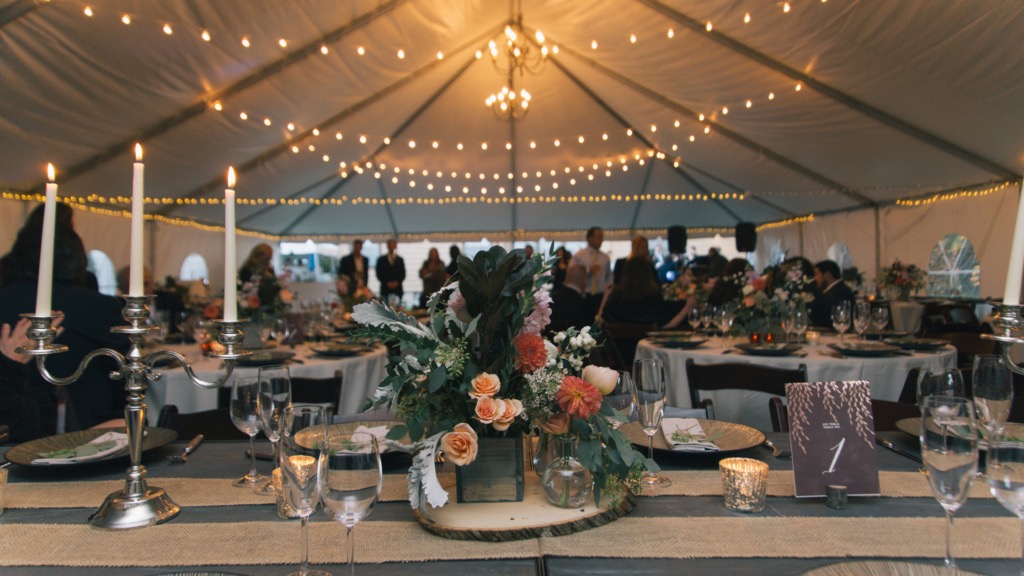
Floral approach: The weather protection here is a florist’s dream because it allows for installations that would wilt or blow away in an uncovered outdoor setting. If this space is being used for the ceremony, the setup mirrors the chapel interior in terms of focal point importance: a ceremony arch or altar arrangement is essential. Consider a wooden hexagonal arch draped asymmetrically with a garland of eucalyptus, olive branches, and white delphinium, with one corner densely packed with garden roses (Quicksand, Sahara, and O’Hara), ranunculus, and astilbe to create visual weight and interest. For cocktail hour, the covered space benefits from multiple smaller arrangements scattered across high-top tables — low, textured designs in brass or ceramic vessels featuring seasonal blooms and plenty of greenery. The support beams offer an opportunity for suspended installations: imagine a series of hanging glass orbs, each containing a single bloom (a full-headed peony or a large garden rose) and trailing greenery, creating a floating garden effect overhead. If the space is being used for a reception, string café lights overhead (most couples do this regardless) and let the floral focus shift to tablescapes and a statement arrangement for the cake or sweetheart table.
Outdoor Event Space
Capacity: Flexible, depending on setup
Setting: This is the uncovered outdoor option, a lawn or open area surrounded by the natural landscape of Chapel Hill. Expect gently rolling terrain, mature trees providing dappled shade, and views across pastureland or neighboring properties that read as quintessentially rural Tennessee. The beauty here is unadorned — no architectural features, no built-in focal points, just grass and sky and the chapel building standing quietly in the background. For couples drawn to natural, unstructured ceremonies, this setting offers simplicity and honesty. For florists, it offers a blank canvas and the accompanying challenge of creating structure where none exists.
Floral approach: In an uncovered outdoor space, the ceremony arch becomes non-negotiable — it’s the only vertical element defining the ceremony site, and it needs to earn that responsibility. A simple wooden or metal arch can be transformed with an asymmetrical garland installation that feels organic and gathered rather than formal and constructed. Use textural greenery as the backbone (Italian ruscus, seeded eucalyptus, and wild olive branches), then weave in blooms that can tolerate sun and heat: garden roses (these are surprisingly resilient if kept hydrated until the last moment), spray roses, veronica, and thistle for texture. Anchor one corner with a dense cluster of blooms; let the opposite corner remain mostly greenery. The asymmetry feels modern and effortless. For the aisle, skip floral runners (they’re impractical on grass and often look forced) and instead use shepherd’s hooks every few rows, each holding a small arrangement or a simple mason jar filled with wildflowers and greenery. If budget allows, a scattering of loose petals down the aisle just before the processional creates a romantic, ephemeral detail that photographs beautifully. Given the outdoor setting and Tennessee’s variable weather, all installations should be secured against wind, and blooms should be chosen for their hardiness. Avoid delicate flowers like sweet peas or lisianthus in uncovered outdoor ceremonies during summer months — they won’t survive the heat.
Bridal Suite with Makeup Station
Setting: This is a practical space, not a showpiece, designed for the wedding party to prepare in comfort. Expect mirrors, good lighting, a makeup station, and enough room for bridesmaids to bustle around without elbowing each other. The décor is likely neutral and functional rather than Instagram-bait, which actually works in a florist’s favor because it means any floral accent you add will stand out.
Floral approach: This space doesn’t need much, but what it does need should be intentional. A small arrangement for the makeup station — something low and lush in a ceramic or glass vessel, featuring blooms that echo the bridal bouquet — serves as both décor and a beautiful backdrop for getting-ready photos. Think Juliet roses, ranunculus, and tweedia in soft blush and blue tones, kept compact enough that it won’t get knocked over when someone reaches for a lipstick. If the bride wants to stage a bouquet reveal photo, consider delivering the bridal bouquet wrapped in silk ribbon and placed in a shallow dish of water on a side table, where it can be photographed before being held for the first time. A few loose stems scattered artfully across the table (perhaps sweet peas or spray roses) add an editorial touch without requiring additional labor or budget.
Wedding Flower Ideas for Chapel Venue
Tennessee Heirloom
This concept honors the venue’s Southern roots and century-old history with a palette that feels like it was passed down through generations. Antique pink and ivory garden roses (Patience, Keira, Quicksand) form the foundation, softened with blush ranunculus, white lisianthus, and café au lait dahlias in late summer. Textural elements include pale green hellebores (in spring), scabiosa pods, and plenty of silvery dusty miller foliage. Arrangements sit in heirloom-style vessels: aged brass compotes, milk glass vases, and vintage silver bowls sourced from estate sales or rental companies specializing in antique tabletop. The effect is soft, romantic, and deeply nostalgic without veering into grandma’s-attic territory. This palette shines in the historic chapel interior, where the architecture’s vintage bones provide context, and works equally well in the covered outdoor space with the pastoral landscape beyond.
Wildflower Revival
For couples drawn to the uncovered outdoor space and the natural beauty of Marshall County’s countryside, this concept leans into loose, organic designs that feel gathered from the surrounding fields. The palette is warm and sun-drenched: golden yellow celosia, peach ranunculus, coral spray roses (Peach Avalanche), cream snapdragons, and burgundy scabiosa, all tied together with wild olive branches, seeded eucalyptus, and trailing jasmine vine. Vessels should be simple and rustic — terracotta pots, wooden boxes, or clear glass cylinders that disappear and let the blooms do the talking. This style works beautifully for aisle markers (small gathered bundles tied with twine and hung from shepherd’s hooks) and for a ceremony arch installation that looks like it grew there rather than was constructed. It’s romantic but unfussy, colorful but not loud, and it photographs like a dream in the Tennessee golden hour.
Refined Simplicity
Some couples come to Chapel Venue precisely because they don’t want visual noise — they want the architecture and the landscape to remain the stars, with florals serving as quiet accents rather than bold statements. This concept delivers elegance through restraint. The palette is almost entirely white and green: white garden roses (Playa Blanca, Ivory Patience), white ranunculus, white lisianthus, white sweet peas (in spring), all anchored with abundant greenery in varying textures — Italian ruscus, silver dollar eucalyptus, myrtle, and olive branches. Vessels are understated: white ceramic, clear glass, or pale stone. The effect is clean, classic, and timeless. This approach works across all three event spaces but is particularly striking in the historic chapel interior, where the white palette glows against the neutral walls and allows the architecture’s lines to remain visible. For the outdoor spaces, the greenery-heavy approach ensures that arrangements feel connected to the natural surroundings rather than imposed upon them.
Seasonal Considerations
Middle Tennessee’s climate is humid subtropical, which means four true seasons with varying implications for floral design at Chapel Venue. Understanding what blooms when — and how the weather impacts installations — is essential for Chapel Hill wedding florists working this venue.
Spring (March-May): Spring in Chapel Hill is glorious and unpredictable in equal measure. Temperatures range from the 50s to the 70s, with frequent rain showers and the occasional late frost. This is peak season for locally grown tulips, daffodils, hyacinths, and flowering branches (dogwood, cherry, and pear). By late April and May, peonies arrive from domestic growers, and they’re worth building an entire design around. For Chapel Venue weddings, spring’s soft light and blooming landscape make the outdoor spaces particularly appealing, but have a weather backup plan — the covered outdoor space is ideal for this reason. Rain can arrive with little warning, and outdoor ceremonies on the uncovered lawn are a gamble. Floral-wise, embrace the season’s abundance: tulips (French and parrot varieties for texture), ranunculus, sweet peas, anemones, and early garden roses. The humidity isn’t yet oppressive, so delicate blooms hold up better than they will in summer. May is the wettest month on average, so if you’re installing ceremony arrangements early in the day, ensure everything is properly staked and weighted.
Summer (June-August): Summer in Chapel Hill is hot and sticky, with temperatures regularly hitting the upper 80s and 90s and humidity that makes everything feel ten degrees warmer. Afternoon thunderstorms are common, especially in July. For outdoor ceremonies, this season requires careful planning: schedule ceremonies for late afternoon or early evening to avoid the worst heat, and choose blooms that can tolerate high temperatures. Hardy options include dahlias (which thrive in Tennessee summers), zinnias, sunflowers, celosia, and spray roses. Garden roses can work if they’re kept hydrated and installed close to ceremony time, but avoid delicate varieties. The covered outdoor space is a lifesaver during summer weddings, offering shade and weather protection without sacrificing the outdoor ambiance. Inside the climate-controlled chapel, you have more flexibility, but any arrangements delivered in the heat should be transported in air-conditioned vehicles and moved inside quickly. Summer’s long daylight hours and golden evening light make for stunning photos, especially in the outdoor spaces with the rolling hills beyond.
Fall (September-November): Fall is Chapel Venue’s most popular season, and for good reason. Temperatures cool into the 60s and 70s, humidity drops, and the landscape begins its slow shift from green to gold. This is dahlia season in Tennessee — local farms are flush with varieties in every color imaginable, from burgundy (Black Satin) to peach (Labyrinth) to pale pink (Café au Lait). Other fall favorites include garden roses, ranunculus (returning in late October via California growers), roses, and chrysanthemums (the modern spray varieties, not the football mums of homecoming corsages past). Foliage becomes a key design element: sourcing local branches with turning leaves, adding seeded eucalyptus for texture, and incorporating berries (hypericum, privet, viburnum) brings seasonal authenticity. The outdoor spaces are ideal during fall — the weather is reliably pleasant, and the natural landscape provides a warm, golden backdrop. For couples marrying in November, consider adding elements like dried grasses, wheat stalks, or preserved oak leaves to arrangements for textural depth that echoes the season.
Winter (December-February): Winter in Chapel Hill is mild compared to northern states, with temperatures typically in the 40s and 50s, though occasional cold snaps can dip into the 20s. Snow is rare but possible. The landscape is dormant, which shifts the floral design focus indoors to the historic chapel interior, where evergreen garlands, berry-studded arrangements, and rich, saturated colors create warmth and intimacy. Amaryllis, anemones, ranunculus, hellebores, and early tulips (from domestic growers) are available. Evergreen foliage — white pine, cedar, magnolia, and holly — can be sourced locally and adds both texture and a subtle fragrance. For couples marrying around the holidays, incorporating elements like pinecones, gilded branches, or subtle metallic accents (gold-painted eucalyptus, silver brunia) elevates the seasonal aesthetic without veering into Christmas décor territory. The outdoor spaces are less appealing during winter due to cold and the dormant landscape, but the chapel interior is cozy and atmospheric with the right lighting and floral warmth.
Poppy’s Expert Take
The altar is non-negotiable. Chapel Venue’s historic chapel interior is built around a single focal point, and that’s where your floral budget should be concentrated. Skimping on the altar arrangement to save money for centerpieces is a miscalculation — every guest will be staring at that spot for the entire ceremony, and every photo will include it. Invest in height, volume, and quality blooms here. A pair of tall pedestals with abundant arrangements will photograph beautifully and create the visual anchor the space requires. If budget is limited, scale back on aisle flowers or skip them entirely, but do not skimp on the altar.
The covered outdoor space is your weather insurance policy. Middle Tennessee weather is unpredictable, especially in spring. If you’re planning an outdoor ceremony on the uncovered lawn, build your floral installation with the assumption that it may need to be moved under cover at the last minute. Use lightweight vessels, avoid ground installations that can’t be relocated, and communicate with your florist about contingency plans. Alternatively, plan your ceremony in the covered outdoor space from the start and eliminate the weather gamble entirely. The covered space still feels outdoor without the risk.
Respect the architecture in the chapel. The historic interior is beautiful because of its bones — the tall windows, the vintage light fixtures, the proportions of the room. Floral installations should enhance these elements, not compete with them. Avoid placing arrangements that block the windows or hang decorations from the vintage fixtures (many venues prohibit this anyway). Let the architecture lead, and design florals that complement rather than obscure.
Delivery logistics matter for this location. Chapel Hill is 50 miles south of Nashville, which is a significant drive for vendor teams. If you’re working with a Nashville-based florist, confirm their delivery radius and any additional fees for the distance. Deliveries should be scheduled with buffer time to account for traffic or delays. For Poppy, this distance is manageable but requires careful scheduling, especially if we have multiple events on the same day. Couples should book early to secure preferred delivery windows.
The bridal suite is practical, not precious. Unlike some venues with Instagram-famous getting-ready rooms, Chapel Venue’s bridal suite is designed for function over form. This is actually good news for floral budgets — you don’t need to transform the space with expensive installations. A single small arrangement for the makeup station and perhaps a few loose stems for styling photos are sufficient. Save your floral budget for the ceremony and reception spaces where it will have greater impact.
Use local foliage to connect indoors and outdoors. One of the advantages of Chapel Venue’s rural Middle Tennessee setting is access to beautiful local greenery. Work with your florist to incorporate branches, leaves, and foliage sourced from the region — it creates visual continuity between the outdoor landscape and the indoor floral installations, and it’s often more affordable than purchasing all specialty greens from wholesalers. Magnolia branches, oak leaves, and wild olive are particularly beautiful in Tennessee arrangements.
Timing is everything for outdoor installations. If you’re using the uncovered outdoor space for your ceremony, coordinate closely with your florist about installation timing. In summer, arrangements should go up as late as possible to avoid heat stress on the blooms. In spring, factor in the possibility of rain and have waterproof tarps on hand to cover installations if needed. The goal is to have everything looking fresh and perfect for the ceremony, which sometimes means a tighter installation window than you might prefer.
What Poppy Couples Spend on Flowers Here
While Poppy hasn’t yet designed for a wedding at Chapel Venue, we can provide guidance based on Nashville market trends and the specific characteristics of this venue’s spaces. Chapel Venue’s combination of a 150-seat historic chapel interior and flexible outdoor spaces means floral budgets can scale significantly depending on which areas couples choose to emphasize.
$2,500 - $4,500 | The Essentials
This tier covers the ceremony focal point and personal florals with restrained elegance. In the historic chapel interior, invest in a pair of substantial altar arrangements on tall pedestals (or a single large arch installation if using the included altar structure), simple pew markers or aisle hooks every third row with gathered greenery and bloom clusters, and a welcome arrangement near the entrance. Personal florals include a bridal bouquet with premium blooms (garden roses, ranunculus, and textured greenery), four to six bridesmaid bouquets in a complementary but simpler style, and boutonnieres and corsages for the wedding party and family. If the reception is in the covered outdoor space with a modest guest count (under 75), add simple low centerpieces for each table using bud vases or small ceramic vessels with seasonal blooms and greenery. This budget prioritizes the ceremony experience and ensures that the spaces guests will remember most — the altar and the aisle — feel intentional and beautiful. For the outdoor event space, this tier would include a dressed ceremony arch, minimal aisle markers, and personal florals, leaving the natural landscape to provide the backdrop.
$4,500 - $7,500 | The Full Picture
At this level, you’re adding depth and consistency across both ceremony and reception spaces. The historic chapel interior receives upgraded altar installations with increased volume and premium blooms (peonies in season, cafe au lait dahlias, Juliet and Patience roses), aisle markers for every row or every other row, and additional arrangements for the entry and any side tables. If the reception is in the covered outdoor space, full tablescapes with varied centerpiece heights (alternating low lush designs with taller arrangements on risers or pedestals) create visual interest. Add floral accents for the bar, cake table, and any lounge areas. Consider a statement installation like a garland for the head table or a hanging floral piece suspended from the covered structure’s beams. Personal florals are more elaborate — a larger bridal bouquet with premium, textured blooms, upgraded bridesmaid bouquets, and additional pieces like a flower crown, hair flowers, or a toss bouquet. This tier allows for a cohesive floral story across the entire event, with each space feeling designed rather than simply decorated.
$7,500+ | The Full Experience
This is the tier for couples who want Chapel Venue’s historic and natural beauty amplified through abundant, editorial-quality florals. The chapel interior becomes a floral sanctuary: dramatic altar installations with cascading elements, lush garlands dressing the included altar arch, every pew or aisle hook adorned, and additional large arrangements flanking the entrance or positioned at key architectural moments. If using the covered outdoor space for the reception, expect elevated tablescapes with a mix of heights and styles, suspended floral installations (chandeliers, hanging orbs, or greenery runners), full bar and cake table florals, and lounge area accents. The outdoor event space, if used for the ceremony, receives a fully dressed ceremony arch that becomes a work of art (think lush, asymmetrical installations with premium blooms and abundant foliage), lined aisle with substantial markers, and perhaps a floral tunnel or entry moment. Personal florals are luxurious: an oversized bridal bouquet with rare or out-of-season blooms, bridesmaid bouquets that function as statements in their own right, and additional details like floral installations in the bridal suite, petals scattered on tables or walkways, and florals for the send-off. At this budget, Poppy can create the kind of immersive floral experience where every turn reveals another beautiful detail, transforming Chapel Venue into a space that feels entirely your own.