
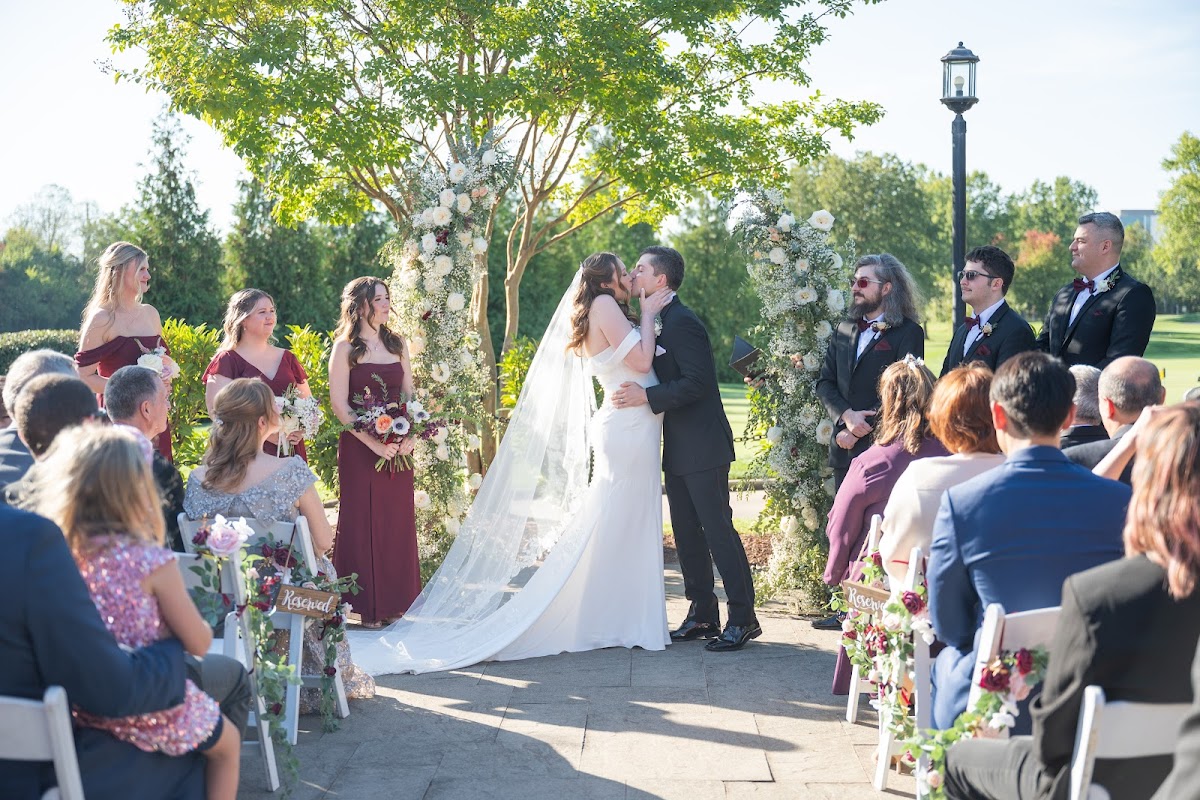
The drive to 1757 Golf Club won’t take you through rolling wine country or along winding mountain roads, but what it offers instead is something Northern Virginia does exceptionally well: accessibility without compromise. You exit Route 7 onto Waxpool Road, pass the last cluster of business parks and residential developments, and then the landscape opens up into something greener, more manicured, more intentional. The championship golf course unfolds in precise emerald waves, fairways cutting through the suburban sprawl like a secret kept in plain sight. And then you see it — the infamous 1757 Bridge, that graceful stone arch spanning a glittering water feature, the kind of structure that makes every couple stop their venue tour mid-sentence and say, “That’s where we’re getting married.” The clubhouse itself rises ahead, all floor-to-ceiling windows catching the afternoon sun, bistro lights strung across the outdoor terrace even in daylight, promising the kind of evening glow that makes photographers and florists equally grateful. This is not a venue trying to be something it’s not. It’s a modern country club that understands exactly what it does well: clean lines, natural light, golf course views for days, and that bridge. Always, that bridge. Poppy has worked with 14 couples planning their 1757 Golf Club wedding flowers, and every single one of them has requested something spectacular for the ceremony at the bridge.
About 1757 Golf Club
1757 Golf Club sits on 200 acres in Dulles, Virginia, approximately 1.7 miles from Washington Dulles International Airport — close enough that your out-of-town guests will bless you for the short drive, but far enough that you won’t hear the drone of departing planes during your vows. The golf course was designed by PGA Tour player Peter Jacobsen and Jim Hardy, and it shows in the thoughtful topography: rolling fairways, strategic water features, mature trees that provide natural framing for photographs, and that stone bridge that has become the venue’s visual calling card. This is a working golf club first, which means the grounds are impeccably maintained year-round. For a Dulles wedding florist, that maintenance ethic translates to reliably beautiful backdrops — no patchy grass, no neglected landscaping, just consistent, professional presentation.
The clubhouse architecture leans modern country club rather than traditional estate. Think clean geometric lines, abundant glass, soaring ceilings, and a blend of rustic and contemporary details that photograph beautifully without demanding a specific decor style. The Grand Ballroom’s floor-to-ceiling windows are the star here, flooding the space with natural light and framing the golf course views like a living landscape painting. Vintage details — exposed beams, wrought iron accents, textured stonework — prevent the space from feeling too sleek or corporate. The result is a venue that can swing from classic elegance to rustic romance to modern minimalism depending on how you style it, which gives couples (and their florists) significant creative latitude.
Logistically, 1757 Golf Club is refreshingly straightforward for vendor teams. The venue provides a dedicated event coordinator who manages the timeline, vendor arrivals, and day-of logistics, which means our Poppy delivery and setup teams have a clear point of contact and structured load-in process. Parking is ample and free, with a stoplight at the entrance that makes access simple even during peak traffic hours on Route 7. The venue is roughly 35 minutes from our Poppy studio in ideal traffic conditions, 50 minutes during rush hour — a manageable drive that allows us to transport larger installations without concern. The outdoor terrace connects directly to the Grand Ballroom, which facilitates seamless ceremony-to-reception transitions and allows us to create visual continuity between indoor and outdoor floral designs.
One important note: 1757 Golf Club operates with in-house catering exclusively, but outside vendors are welcomed for florals, photography, entertainment, and most other services. The venue does require liability insurance, which Poppy carries as standard practice. The events team has proven collaborative and communicative in our experience — they understand that great weddings require great vendor partnerships, and they facilitate rather than obstruct that process.
Event Spaces & Floral Opportunities
Grand Ballroom
Capacity: 216 seated, up to 300 theater-style
Setting: This is the venue’s flagship reception space, and it earns that designation honestly. 3,770 square feet of elegantly appointed room with floor-to-ceiling windows that span the entire west-facing wall, offering unobstructed views of the golf course, outdoor terrace, and rolling Virginia landscape beyond. The ceilings soar — high enough for dramatic tall centerpieces or suspended floral installations, but not so cathedral-like that the space feels cavernous. Vintage-inspired chandeliers with clean, geometric lines provide ambient lighting that transitions beautifully from daylight to evening. The included floor-length linens and dance floor come standard, which means one less logistical puzzle for couples to solve. The color palette is neutral warm: cream walls, honey-toned wood floors, touches of wrought iron and stone that read rustic without veering into barn territory. This is a ballroom that doesn’t fight you. It provides a beautiful, well-lit canvas and then steps back.
Floral approach: The windows are your design partner here, not your competition. During daylight hours, those floor-to-ceiling panes flood the room with natural light that makes florals absolutely glow — whites read crisp and luminous, blush tones catch the afternoon sun, and even deeper burgundies and mauves reveal their layered complexity. Because the windows provide such a strong visual anchor, we recommend centering your floral impact on the reception tables, head table, and entry moments rather than trying to decorate the windows themselves. For centerpieces, you have two excellent options: low and lush (8-10 inches tall, allowing conversation across the table) or dramatically tall on elevated risers (24+ inches, lifting arrangements above the sightline). We favor a mix of both heights to create visual rhythm across the room. Consider low compote arrangements in brushed gold vessels overflowing with garden roses (Patience, Juliet, and Keira varieties work beautifully here), ranunculus, Japanese sweet pea, and trailing jasmine vine. For tall arrangements, clear glass cylinders or slender gold stands topped with asymmetrical cloudlike designs featuring quicksand roses, white majolica spray roses, lisianthus, and abundant Italian ruscus create drama without blocking those precious window views. The head table, positioned against the interior wall, is your opportunity for something show-stopping: a 12-foot garland of smilax and seeded eucalyptus studded with clusters of roses, hydrangea, and seasonal blooms, elevated slightly off the table edge to create a floating effect. For the ballroom entrance, a pair of substantial arrangements in aged stone or ceramic urns — think 4-5 feet tall — signals the transition from cocktails to dinner and frames the doorway beautifully in photographs.
The Washington Room
Capacity: 120 seated, 225 theater-style (can be combined with other spaces for up to 3,770 square feet)
Setting: This flexible space functions as the Grand Ballroom’s smaller sibling, offering 2,000 square feet independently or expanding through retractable walls to combine with adjacent areas. The Washington Room features its own set of windows overlooking the outdoor terrace and, uniquely, views of the driving range — a detail that becomes unexpectedly charming during daytime events when golfers are out practicing. The aesthetic mirrors the Grand Ballroom: neutral warm tones, modern chandeliers, vintage-inspired details. The space works beautifully for mid-sized weddings (80-120 guests) or as a ceremony location for couples who prefer an indoor option with natural light.
Floral approach: The Washington Room’s flexibility demands equally flexible floral design. For couples using this as a standalone reception space, apply similar principles to the Grand Ballroom but scaled appropriately — centerpieces can be uniformly low to create intimacy, or you can introduce one or two tall statement pieces near the head table or bar area. If the room is serving as ceremony space, focus florals at the altar and aisle: a fabric-draped arch adorned with an asymmetrical floral installation (we love a modern take with structural foliage, white and blush blooms, and trailing elements), plus aisle markers every third row — small posies tied to chairs or low arrangements on shepherds’ hooks. If the Washington Room is being combined with other spaces for a larger celebration, think about floral design as a way to define zones: a dramatic bar arrangement to anchor the cocktail area, a floral installation or greenery garland to mark transitions between spaces, and consistent centerpiece style to create visual unity across the expanded footprint.
The Monroe Room
Capacity: 70 seated, 84 theater-style
Setting: At 1,680 square feet, the Monroe Room is the most intimate of the ballroom spaces, characterized by abundant natural sunlight and a layout that adapts easily to multiple functions — small ceremony, cocktail reception, lounge area, or additional dance floor space when combined with larger rooms. The windows here are particularly generous relative to the room size, which means natural light is the dominant design feature throughout the day.
Floral approach: Because this room often serves a supporting rather than primary role, floral design should be intentional but not overwhelming. For cocktail hours, scatter arrangements across high-top tables and the bar — we favor clusters of textured blooms in mixed-height bud vases (3-5 vases per table in varying heights from 6-12 inches) filled with garden roses, ranunculus, spray roses, and delicate filler like tweedia or Queen Anne’s lace. This creates visual interest without occupying valuable drink-setting space on small cocktail tables. If the Monroe Room is hosting a small ceremony, one beautiful altar arrangement is all you need — perhaps a substantial ground arrangement flanking either side of where the couple will stand, designed asymmetrically with a mix of lush blooms and flowing greenery that reads romantic and organic. For lounge areas, consider a large coffee table arrangement — low and lush, designed to be viewed from all sides, incorporating textural elements like succulents, garden roses, and interesting foliage that invites closer inspection.
The Barton Suite
Capacity: 13 guests
Setting: This is 1757 Golf Club’s dedicated bridal suite, and it delivers exactly what you want from a getting-ready space: lounge furniture for the bridal party to spread out, full-length mirrors for photographs and final touches, private restrooms, and ample storage. The suite is well-lit, spacious enough to accommodate photographers without feeling cramped, and styled neutrally so it doesn’t impose a specific aesthetic on your morning-of photos.
Floral approach: Bridal suite florals should be beautiful but unobtrusive — you’re not hosting an event here, you’re preparing for one. We recommend a single stunning arrangement placed on the main vanity or coffee table: a low, lush design in soft romantic tones (blush, cream, champagne) featuring garden roses, ranunculus, hellebores, and elegant greenery like silver dollar eucalyptus. This serves as a focal point for flat-lay photos of the bouquet, jewelry, invitation suite, and other details. Consider providing each bridesmaid with a small “getting ready” bouquet or posy they can hold during candid photos — think three to five stems of garden roses tied with silk ribbon, simple and sweet. If you’re gifting flower crowns or floral hair clips to the bridal party, the suite’s mirrors and natural light make it an ideal spot for those detail shots before heading out for the ceremony.
Outdoor Terrace
Capacity: Flexible (typically 150-200+ for cocktail hour)
Setting: Two expansive patios overlooking the manicured greens of the golf course, strung with rustic bistro lights that create an enchanting glow at dusk. The terrace is uncovered, which means it’s weather-dependent but absolutely magical when conditions cooperate. The connection to the Grand Ballroom is seamless — guests can flow easily between indoor and outdoor spaces — and the views are precisely what couples envision when they picture a country club wedding: rolling fairways, mature trees, and that particular quality of late-afternoon light that makes everything look professionally styled.
Floral approach: The terrace is where your ceremony flowers will shine if you’re planning an outdoor “I do.” For ceremonies, we recommend positioning the couple with the golf course as backdrop and designing florals that frame rather than obstruct the view. A fabric-draped arch or wooden structure adorned with an asymmetrical floral installation works beautifully — think one heavily adorned corner cascading with blooms and greenery (roses, hydrangea, amaranthus, Italian ruscus, smilax) while the opposite corner remains more minimal, creating organic, garden-picked asymmetry. Aisle markers should be low and unobtrusive — small arrangements on shepherds’ hooks or posies tied directly to ceremony chairs every third row with trailing silk ribbon. For cocktail hours, the terrace benefits from strategic floral moments: bar arrangements in substantial vessels (the outdoor setting allows for larger, more dramatic scale), small arrangements on high-top tables (but keep them low — wind is a factor), and consider garlands along the terrace railings if your budget allows. The bistro lighting provides ambiance on its own, so florals here should complement rather than compete. If your ceremony is on the terrace, consider ways to repurpose those arrangements for cocktail hour — the arch can be relocated near the bar as a photo backdrop, ceremony arrangements can be moved to flanking the terrace entrance, creating maximum value from your floral investment.
The 1757 Bridge
Setting: This is not technically an event space but rather the venue’s most iconic ceremony location — an elegant stone bridge arching over a serene water feature with the golf course and natural landscape stretching in all directions. The bridge is wide enough to accommodate a small ceremony setup, though many couples choose to position themselves at the base of the bridge with the structure as backdrop. This is what makes 1757 Golf Club visually distinctive, and nearly every couple who books this venue plans their ceremony here.
Floral approach: The bridge deserves your floral budget. This is the moment. We recommend one of two approaches: either an arch positioned on the bridge itself with a lush, romantic floral installation (think $800-1,500 for something truly spectacular), or forgoing the arch entirely and instead adorning the bridge railings with garland or florals that trace the stone curve. For railing installations, we love a loose, organic garland of smilax, seeded eucalyphs, and Italian ruscus punctuated every few feet with clusters of blooms — garden roses, hydrangea, and spray roses in your wedding palette. The water feature below creates beautiful reflections, so consider the view from all angles, including from across the water where guests will be seated. Aisle markers leading to the bridge should be simple and elegant — shepherds’ hooks with small posy arrangements or lanterns adorned with greenery and a single bloom. If budget allows, consider flanking arrangements at the base of the bridge — large, asymmetrical designs in aged stone urns that anchor the ceremony space without obscuring the bridge itself. The surrounding landscape is naturally beautiful, so your florals should enhance rather than dominate. This is where restraint and intentionality create the most impact.
Wedding Flower Ideas for 1757 Golf Club
Fairway Romance
This design concept draws directly from the golf course setting with a palette of lush greens, soft whites, and warm champagne tones that echo the natural landscape. Think white O’Hara garden roses, champagne Quicksand roses, ivory lisianthus, white majolica spray roses, and abundant textured greenery — seeded eucalyptus, Italian ruscus, olive branches, and trailing smilax. Vessels in brushed gold compotes and aged stone urns add warmth without reading overly formal. For the ceremony at the 1757 Bridge, a substantial arch installation with asymmetrical draping — one side heavily adorned with blooms and cascading greenery, the other side more minimal with elegant draping fabric and trailing vines. Aisle markers of small posies in champagne ribbon tied to white ceremony chairs. In the Grand Ballroom, alternate between low compote arrangements and tall designs on clear glass risers to create rhythm across the room, with a dramatic 12-foot head table garland incorporating all the same blooms in a lush, overflowing style. This palette photographs beautifully in natural light, complements the venue’s neutral tones, and feels romantic without being overly sweet.
Modern Elegance
For couples drawn to clean lines and sophisticated simplicity, this concept strips away the excess and focuses on structure, negative space, and bold choices. The palette is intentionally minimal: crisp white, deep green, and touches of black or charcoal. White calla lilies, white phalaenopsis orchids, white tulips (in season), glossy green monstera leaves, and structured greenery like eucalyptus and bear grass create graphic, architectural arrangements. Vessels are modern — clear glass cylinders, matte black ceramic vessels, or geometric brass stands. For the ceremony, forgo the traditional arch and instead create a minimalist installation using tall branches (curly willow or manzanita) positioned asymmetrically with orchid blooms wired at varying heights, creating a sculptural backdrop. In the Grand Ballroom, uniformly tall centerpieces (30+ inches) on slender stands create drama and elegance without cluttering the tables — each arrangement features a tight cluster of white blooms with one or two oversized tropical leaves adding bold graphic interest. The head table receives a low, linear arrangement running the full length in a modern trough vessel — white orchids, calla lilies, and monstera leaves in a precise horizontal line. This palette works exceptionally well with the Grand Ballroom’s floor-to-ceiling windows and modern chandeliers, creating a cohesive, gallery-like aesthetic.
Golden Hour Glow
This design leans into the warm, amber light of late afternoon on the golf course — that magical hour when everything turns honey-gold and the bistro lights on the terrace begin to twinkle. The palette is all warm tones: peach Juliet garden roses, golden yellow ranunculus, apricot spray roses, butterscotch Café au Lait dahlias (in season), and touches of deep orange and rust. Foliage includes warm-toned options like fall oak leaves (seasonal), amber-hued leucadendron, and dusty green olive branches. Vessels are textured and warm — terra cotta pots, copper vessels, aged wooden boxes. This palette is spectacular for fall weddings but translates beautifully to spring and summer with seasonal bloom substitutions (swap dahlias for peonies, add apricot sweet pea). For the outdoor terrace ceremony, an arch with fabric in soft champagne or taupe adorned with one heavily designed corner cascading with all these warm blooms and trailing greenery. In the Grand Ballroom, this palette absolutely glows in the natural light from those windows — low, lush centerpieces in copper compotes overflowing with textured blooms and foliage that catch and reflect the golden light. Bar arrangements on the terrace and in the ballroom feature these warm tones in substantial vessels, creating visual continuity between indoor and outdoor spaces. This is romance with warmth, ideal for couples who want their florals to feel inviting, organic, and intimately connected to that perfect late-afternoon glow.
Seasonal Considerations
Northern Virginia’s four-season climate means wedding flowers at 1757 Golf Club shift dramatically depending on your wedding date, both in terms of what blooms are available and what the golf course backdrop will look like.
Spring (March - May): Spring in Dulles begins tentatively — March can still see frost, and April is famously unpredictable with sudden temperature swings. By May, you’re reliably in beautiful weather territory with blooming trees and lush green fairways. Spring offers some of the most coveted wedding flowers: tulips (March-April), peonies (late April-May), ranunculus, anemones, sweet pea, and lilac. The golf course is vibrant green, and the outdoor terrace is reliably comfortable for ceremonies and cocktail hours by late April. Spring rain is common, so have a clear backup plan for outdoor ceremonies — the Washington Room with its abundant natural light makes an excellent indoor alternative. For Poppy teams, spring deliveries are straightforward with mild temperatures that are gentle on delicate blooms.
Summer (June - August): Summer brings heat and humidity to Northern Virginia, with July and August frequently reaching the high 80s and 90s. The golf course remains beautifully green thanks to irrigation, but outdoor ceremonies should be scheduled for late afternoon or early evening to spare your guests (and your florals) from midday heat. Summer flowers are abundant and bold: hydrangea, roses (all varieties), dahlias (late summer), zinnias, sunflowers, lisianthus, and Queen Anne’s lace. Heat-hardy flowers are essential — avoid delicate blooms that wilt quickly (anemones, sweet pea, tulips) and favor sturdier varieties. We recommend delivering ceremony flowers as close to start time as possible and ensuring arrangements stay hydrated and shaded until the ceremony begins. The Grand Ballroom’s climate control means reception florals remain pristine all evening. Summer sunsets on the terrace are spectacular, with the bistro lights creating magic as daylight fades.
Fall (September - November): This is peak season at 1757 Golf Club, and for good reason. The weather is mild and pleasant, the golf course takes on golden autumn tones, and the surrounding trees shift through their fall color progression. September still feels like late summer; October delivers classic crisp fall weather; November can be chilly but remains manageable for outdoor ceremonies with the right timing. Fall flowers are spectacular: dahlias (through October), chrysanthemums, asters, marigolds, fall foliage, hypericum berries, and late-season roses. The warm tones of autumn foliage complement nearly every floral palette, and the natural landscape provides a stunning backdrop that requires less floral embellishment. This is the season when that golden hour light on the golf course becomes truly extraordinary — photographers and florists both worship the quality of light in October. For outdoor ceremonies, plan for 4:00-5:00 PM start times to capture that light.
Winter (December - February): Winter weddings at 1757 Golf Club skew heavily toward New Year’s Eve and holiday-season celebrations, with January and February seeing fewer events. The golf course goes dormant, taking on brown and tan tones, which means your florals and the Grand Ballroom’s interior become the primary visual focus. Winter offers elegant blooms: amaryllis, tulips (imported), anemones, ranunculus, hellebores, and evergreens. Consider incorporating seasonal elements like pine, magnolia leaves, hypericum berries, and even subtle touches of pinecones or birch branches for texture. The Grand Ballroom’s floor-to-ceiling windows frame the winter landscape, which can be beautiful in its own stark way, especially if snow arrives. Indoor ceremonies become the default, and the Washington Room or Grand Ballroom both work beautifully. Winter light is softer and shorter — by 5:00 PM you’re relying on interior lighting and the bistro lights outdoors, which creates an intimate, romantic ambiance. For Poppy’s logistics, winter deliveries require careful temperature management — we transport blooms in climate-controlled vehicles and time our arrival to minimize cold exposure.
Poppy’s Expert Take
The bridge is non-negotiable, budget accordingly. Every couple who books 1757 Golf Club envisions their ceremony at that stone bridge, and rightfully so — it’s the venue’s defining feature. This means your ceremony florals will be the star of your floral budget, and that’s exactly as it should be. A substantial arch or railing installation at the bridge will likely run $800-1,500 depending on scale and bloom choices, but this is where your guests will be focused during the ceremony and where your photographer will capture dozens of your most important images. Skimp elsewhere if you must, but invest here. The good news: ceremony florals at the bridge can be repurposed beautifully for cocktail hour on the terrace or as statement pieces flanking the Grand Ballroom entrance, maximizing their value.
Those floor-to-ceiling windows are your lighting designer. The Grand Ballroom’s wall of windows means your reception florals will be photographed in spectacular natural light throughout cocktail hour and into the early reception, then transition to ambient chandelier and bistro light as the sun sets. This is a florist’s dream — natural light makes every bloom look its absolute best. Take advantage by choosing a palette that glows in sunlight: whites, blushes, champagnes, soft yellows, and even deeper tones like burgundy and mauve all become luminous. What doesn’t work: fighting the windows with overly tall centerpieces that block the view, or placing florals on window sills where they’ll be backlit into silhouette. Let the windows do their work, and design your florals to complement that natural light, not compete with it.
Weather backup plans are mandatory for outdoor ceremonies. The terrace and bridge are uncovered, which means Virginia’s unpredictable weather (spring rain, summer heat, winter cold) can force last-minute ceremony relocations. The Washington Room makes an excellent indoor ceremony alternative with its natural light and capacity, but it requires a different floral approach than the bridge. When designing ceremony florals, have a conversation with your florist about how the arrangement will adapt if moved indoors — an arch designed for the bridge’s stone backdrop may need adjustment for an indoor space with different proportions. Build flexibility into your design from the start, and your florist can pivot smoothly if weather demands it.
Maximize cocktail hour on the terrace. The outdoor terrace with its bistro lights and golf course views is arguably the venue’s second-best feature after the bridge. Don’t treat cocktail hour as an afterthought — this is where guests will spend 60-90 minutes mingling, and it deserves intentional floral design. Bar arrangements, small arrangements on high-top tables, and potentially garland or florals on the terrace railings create a cohesive, designed space. The bonus: if your ceremony was at the bridge, this is the perfect opportunity to repurpose those florals. Move ceremony arrangements to the terrace bar area, relocate aisle markers to cocktail tables, and suddenly your cocktail hour looks lush and intentional without doubling your floral budget.
Coordinate head table florals with the windows. If your head table is positioned in the Grand Ballroom along the interior wall (opposite the windows), you have a prime opportunity for a dramatic floral moment. A long, lush garland running the length of the table — elevated slightly on risers or draped along the table edge — creates a stunning focal point that photographs beautifully from across the room. Since your guests’ attention will naturally be drawn to the head table during toasts and key moments, this is where investment makes sense. If your head table is instead positioned in front of the windows (some couples prefer this for the view), keep head table florals low or skip them entirely — you don’t want to block your own view of the golf course.
Think about floral continuity between spaces. 1757 Golf Club’s layout flows naturally from outdoor ceremony (bridge or terrace) to outdoor cocktail hour (terrace) to indoor reception (Grand Ballroom), and your florals should reflect that progression. Use a consistent palette and style across all three spaces so the wedding feels cohesive rather than disjointed. This doesn’t mean identical arrangements everywhere — it means your ceremony arch, cocktail hour bar arrangements, and reception centerpieces all speak the same visual language through shared blooms, colors, and design style. Poppy approaches 1757 Golf Club weddings as a complete floral journey rather than separate disconnected moments.
Budget buffer for the terrace and outdoor elements. Outdoor florals require more structural support, weatherproofing, and often more blooms to make impact in an open-air setting. An arch that looks lush indoors may need 20-30% more material to achieve the same visual density outdoors where there are no walls to contain the design. Similarly, wind, sun exposure, and temperature fluctuations mean outdoor florals need extra care and hydration. When budgeting for 1757 Golf Club wedding flowers, allocate 15-20% more for outdoor elements than you would for comparable indoor pieces. Your florist will need to account for stakes, weights, weatherproofing, and additional blooms to ensure everything looks spectacular and stays secure through the ceremony and cocktail hour.
What Poppy Couples Spend on Flowers Here
While 1757 Golf Club is a Tier 5 venue for Poppy (meaning we haven’t yet completed a wedding here, though we’ve worked with 14 couples in the inquiry phase), we can provide spending guidance based on comparable country club venues in the Northern Virginia market and the specific floral opportunities at this property.
$2,500 - $3,800 | The Essentials
This tier covers the foundational florals for a 100-120 guest wedding focused on the key moments. Your budget includes: