
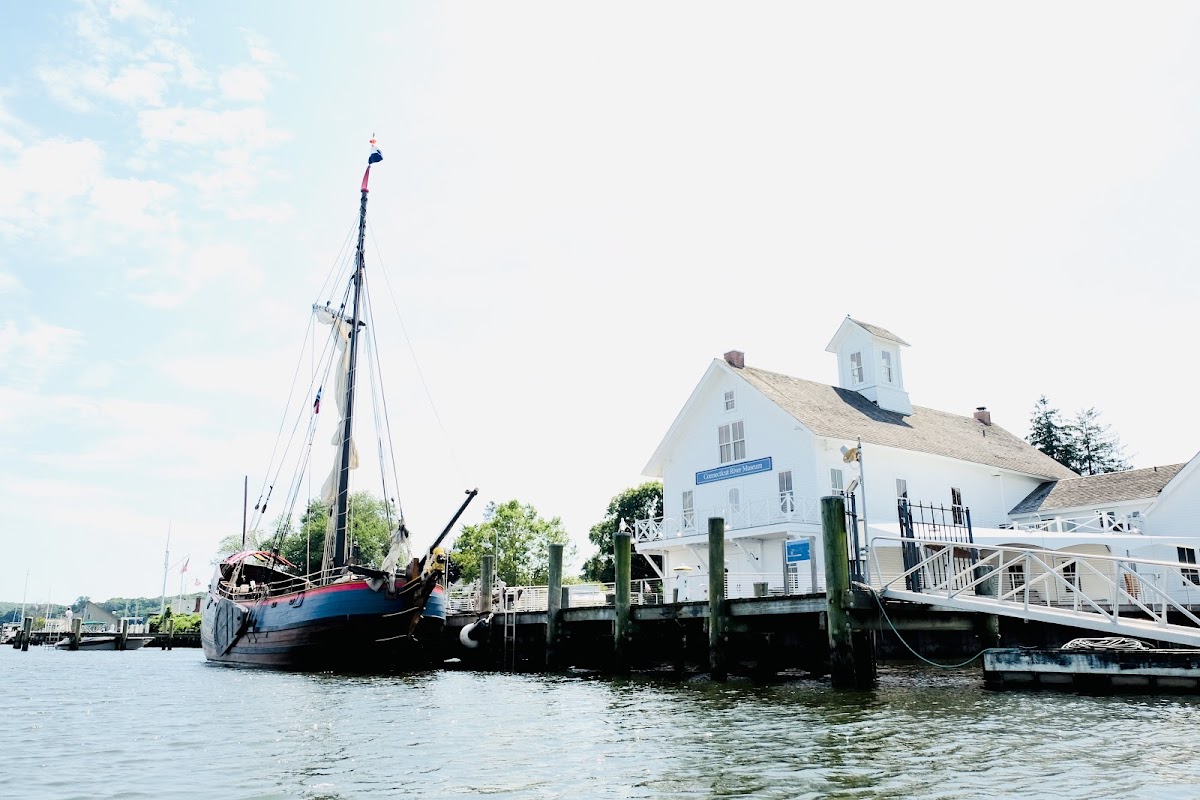
The Connecticut River Museum offers a rare intersection of New England history and raw riverfront beauty. Floral design here must be as resilient as it is refined, navigating the persistent breezes of the Essex harbor while complementing the museum’s collection of maritime artifacts. We know this venue well from our work here, and the key to success lies in embracing the rustic, weathered textures of the architecture.
The Spaces
River Front Lawn
This is the venue’s crown jewel, offering panoramic views of the water and the historic schooners often docked nearby. It is a wide-open canvas that demands scale but punishes flimsy construction.
- What works: Grounded ceremony hoops or heavy-based wooden arbors. Use hardy foliage like ruscus or eucalyptus that won’t wilt in direct sun and river wind.
- Skip: Tall, top-heavy pedestals or light glass vases for aisle decor; the wind coming off the water will tip them.
- Watch out: The ground can be uneven near the water’s edge. Ensure all structures are leveled with shims during setup.
- Budget hero move: Focus the majority of your ceremony budget on a single, impactful grounded installation that frames the river view. It requires no expensive rental structure and won’t catch the wind like a traditional arch.
Boathouse Room and North Deck
This space bridges the gap between the museum’s interior and the outdoor elements. The large awning and river views provide a sheltered but airy atmosphere for mid-sized receptions.
- What works: Long farm tables styled with organic, low-profile arrangements. Incorporate textures like dried sea grass or thistle to lean into the nautical environment.
- Skip: Extremely tall centerpieces that block the sightlines to the river.
- Watch out: If using the North Deck for cocktail hour, ensure bud vases are heavy enough (or secured with museum wax) to stay on high-top tables.
- Budget hero move: Use lush greenery garlands with tucked-in blooms for the long tables. It provides a high-end, “full” look at a lower price point than individual lush centerpieces.
Main Dining Hall
For larger celebrations, the dining hall offers a more traditional interior with elegant chandeliers and expansive windows. The aesthetic is “historic maritime,” which benefits from a slightly more tailored floral approach.
- What works: Classic compote arrangements that feel intentional and curated. A palette of blues, whites, and deep greens mirrors the river outside.
- Skip: Overly modern, geometric stands that clash with the museum’s historic character.
- Watch out: Lighting is warm and atmospheric; avoid muddy colors like dark purples which may disappear as the sun goes down.
- Budget hero move: Add simple sprigs of greenery to the existing chandeliers to draw the eye upward and fill the vertical space without the cost of a full floral installation.
Wooded Area
Tucked away from the immediate riverfront, this space offers a shaded, natural forest environment. It is a stark contrast to the open lawn and requires a different design language.
- What works: “Grounded” floral nests that look as if they are growing out of the forest floor. Use ferns and woodland textures.
- Skip: Symmetrical, formal arrangements. This space calls for an organic, asymmetrical hand.
- Watch out: Tree roots and rocks make placing traditional structures difficult.
- Budget hero move: Utilize the existing trees as “anchors” for floral sprays rather than bringing in a separate ceremony arch.
What Works at Connecticut River Museum
- Wind-Hardy Selections: The riverfront is beautiful but breezy. We recommend “stiff” greens and sturdy blooms like ranunculus, roses, and protea. Avoid delicate poppies or sweet peas for outdoor ceremonies.
- Nautical Textures: Lean into the museum setting with subtle nods to the environment. Incorporate eryngium (thistle), pampas grass (in moderation), or even succulents to contrast with the weathered wood.
- Low-Profile Sightlines: The view is why you book this venue. Every floral decision should respect the horizon line. Keep table arrangements below 12 inches.
- Weighted Installations: For any outdoor structure, we use sandbags hidden within floral nests or heavy steel bases. This is non-negotiable for safety and aesthetics.
- Organic Palettes: Let the environment lead. Whites, creams, and sage greens are timeless here, while a “sunset” palette of peach and dusty rose mimics the light reflecting off the water in the evening.
Budget Guide
| Tier | Investment | Floral Scope |
|---|---|---|
| Essentials | $1,750 - $3,000 | Personal flowers (bouquets/boutonnieres) plus a focused ceremony moment or bud vases for the Boathouse Room. |
| Sweet Spot | $3,500 - $5,500 | Full personal flowers, a sturdy ceremony arbor, and low-profile lush centerpieces for up to 12 tables. |
| Full Experience | $6,000 - $8,500 | Expansive ceremony installations, cocktail hour accents, lush greenery for chandeliers, and premium centerpieces for 15+ tables. |
| Statement | $9,000+ | Full-scale grounded installations, floral entrances for the barn doors, overhead tent installations (if applicable), and high-density table designs. |
The Connecticut River Museum is a venue that rewards those who work with nature rather than against it.
Tips
- Repurpose with purpose: Move your grounded ceremony installations to the front of the sweetheart table or the base of the cake table to maximize your investment.
- Respect the exhibits: The museum is a living history space; ensure your florist is aware that nothing can be pinned or taped to historic walls or artifacts.
- Load-in logistics: The terrain can be uneven (docks, lawn, forest floors); ensure your floral team is prepared with appropriate carts and extra hands for setup.
- Hardy hydration: For summer weddings on the lawn, request that all ceremony flowers be designed in water-retaining foam or heavy vessels to prevent wilting in the sun.
- Approved vendors matter: The museum maintains a list of professionals who understand the specific quirks of the property—always check their requirements for external vendors.