
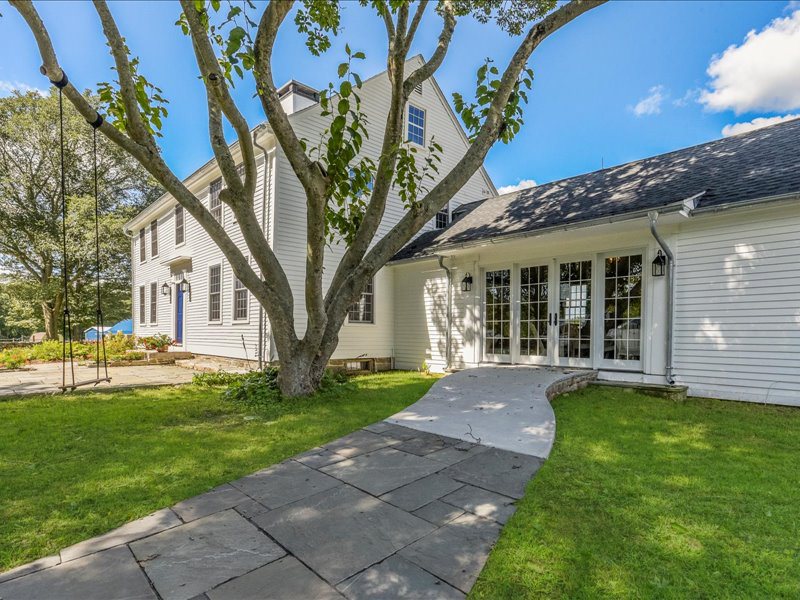
Designing at 1189 Pequot Trail, historically known as Deans Mill Farm, requires an appreciation for the raw texture of the Connecticut coast. The property is a study in New England heritage, where the floral design should feel like a natural extension of the meadows rather than a formal imposition. The interplay between the weathered stone ruins and the crisp white farmhouse creates a versatile environment that handles both wild, meadow-style arrangements and refined, classic palettes with equal grace.
Success here is found in scale. With 70 acres of rolling hills as your backdrop, small, isolated arrangements will disappear. We focus on creating concentrated “moments” of floral impact—at the ceremony altar, the tent entrance, and the head table—to anchor the vastness of the landscape.
The Spaces
Ceremony Ruins
The stone ruins are the architectural soul of the property. These weathered foundations offer a sense of permanence and history that few venues can match. Because the stone is visually heavy, the floral design should feel light and organic.
- What works: Ground-level “nests” or meadow-style installations that look like they are growing out of the cracks in the stone. Using a mix of heights creates depth against the low walls.
- Skip: Traditional, four-post chuppahs or heavy wooden structures that obscure the beauty of the ruins.
- Watch out: The ground within the ruins can be uneven. Mechanics must be leveled using shims or heavy-duty bases to prevent tipping.
- Budget hero move: Focus all ceremony funds on two large, asymmetrical ground installations at the foot of the ruins. These can be easily repurposed to the tent entrance or the front of the band stage later.
Tented Reception Area
The tent is a blank slate, typically featuring long wooden farm tables. The challenge here is the narrow width of the tables and the height of the tent canopy. To make the space feel intimate, you must bring the “ceiling” down or draw the eye upward.
- What works: Low, lush runner-style centerpieces. Smilax or hops vines climbing the center poles soften the industrial feel of the tent structure and connect the interior to the surrounding fields.
- Skip: Tall, top-heavy arrangements on narrow stands. They are prone to tipping if a guest bumps the table and they block sightlines in a tented environment.
- Watch out: Tents act as wind tunnels. Even if it is a calm day, a sudden gust can lift unweighted items.
- Budget hero move: Greenery-only wraps on the two main center poles. It provides a massive visual impact for a fraction of the cost of floral installations and makes the tent feel like a permanent structure.
Outdoor Ceremony Lawn
For larger guest counts, the open lawn with its stone wall backdrop is the primary choice. This space is defined by its simplicity and the expansive views of the meadows.
- What works: A classic arch or a pair of oversized floral pillars. Because the backdrop is green and grey, using flowers with high luminosity (whites, creams, or bright pops) ensures the couple doesn’t get lost in the landscape.
- Skip: Small, delicate aisle markers. In this scale of space, they often look like litter rather than intentional design.
- Watch out: Full sun exposure. If your ceremony is in mid-July, choose hardy varieties like roses, carnations, and dried elements that won’t wilt before the processional.
The Farmhouse
Used for intimate gatherings or as a staging area, the farmhouse is defined by vintage charm and modern comfort.
- What works: Delicate bud vase clusters and a statement mantel piece. The indoor light is softer, allowing for more fragile blooms like sweet peas or ranunculus.
- Skip: Oversized arrangements that crowd the narrow hallways or small tables.
- Watch out: Ensure all water-based arrangements have felt pads on the bottom to protect the renovated historic surfaces.
What Works at 1189 Pequot Trail
- Monochromatic Greenery: The venue is lush. Using a palette of varied greens—eucalyptus, ruscus, and local ferns—complements the “farm” aesthetic without competing with the natural scenery.
- High-Contrast Palettes: To pop against the white clapboard of the farmhouse and the grey stone of the ruins, we recommend bold saturations or crisp whites. Muted “muddy” tones can sometimes look washed out against the stone.
- Textural Variations: Incorporating dried grasses, seed pods, or local Connecticut wildflowers honors the livestock farm history of the site.
- Asymmetrical Design: Perfect symmetry feels out of place in a 1700s ruin. Lean into organic shapes that mimic the natural movement of the surrounding meadows.
- Weighted Mechanics: This is a hilltop property. Every arch, pedestal, and large vessel must be weighted with sandbags or lead weights to combat the coastal Connecticut breeze.
Budget Guide
| Tier | Investment | Floral Strategy |
|---|---|---|
| Essentials | $1,750 - $3,500 | Focus on high-quality personal flowers and a single high-impact ceremony focal point that can be moved to the reception. |
| Sweet Spot | $4,500 - $7,000 | Full personal flowers, a lush ceremony installation (ruins or arch), and a mix of low centerpieces and bud vases for the tent. |
| Full Experience | $8,000 - $12,000 | Includes greenery pole wraps in the tent, a more expansive “meadow” installation at the ceremony, and lush floral runners for farm tables. |
| Statement | $15,000+ | Large-scale floral installations on tent poles, a fully “grown-in” ceremony ruin design, and premium blooms throughout the entire property. |
The character of this venue is rooted in its history; your floral budget should prioritize enhancing the existing architecture rather than trying to transform it into something modern or sterile.
Tips
- Repurpose the Ruins: Any ground-level installations used at the ruins should be designed in movable trays so they can be relocated to the tent entrance or the base of the sweetheart table.
- Mind the Gravel: The pathways are beautiful but difficult for rolling carts. Ensure your floral team has sturdy, large-wheeled equipment for load-in.
- Embrace the Poles: Tent poles are often seen as obstacles, but they are your best friend for adding height and “wow” factor in a tented reception.
- Check the Wind: Always have a “Plan B” for ceremony arches; if the wind is over 15mph, ground-based pillars are a safer and more stable option than a top-heavy arch.
- Local Sourcing: In late summer and early fall, the surrounding Stonington landscape is peak New England—ask for dahlias and zinnias to lean into the farm’s seasonal rhythm.