
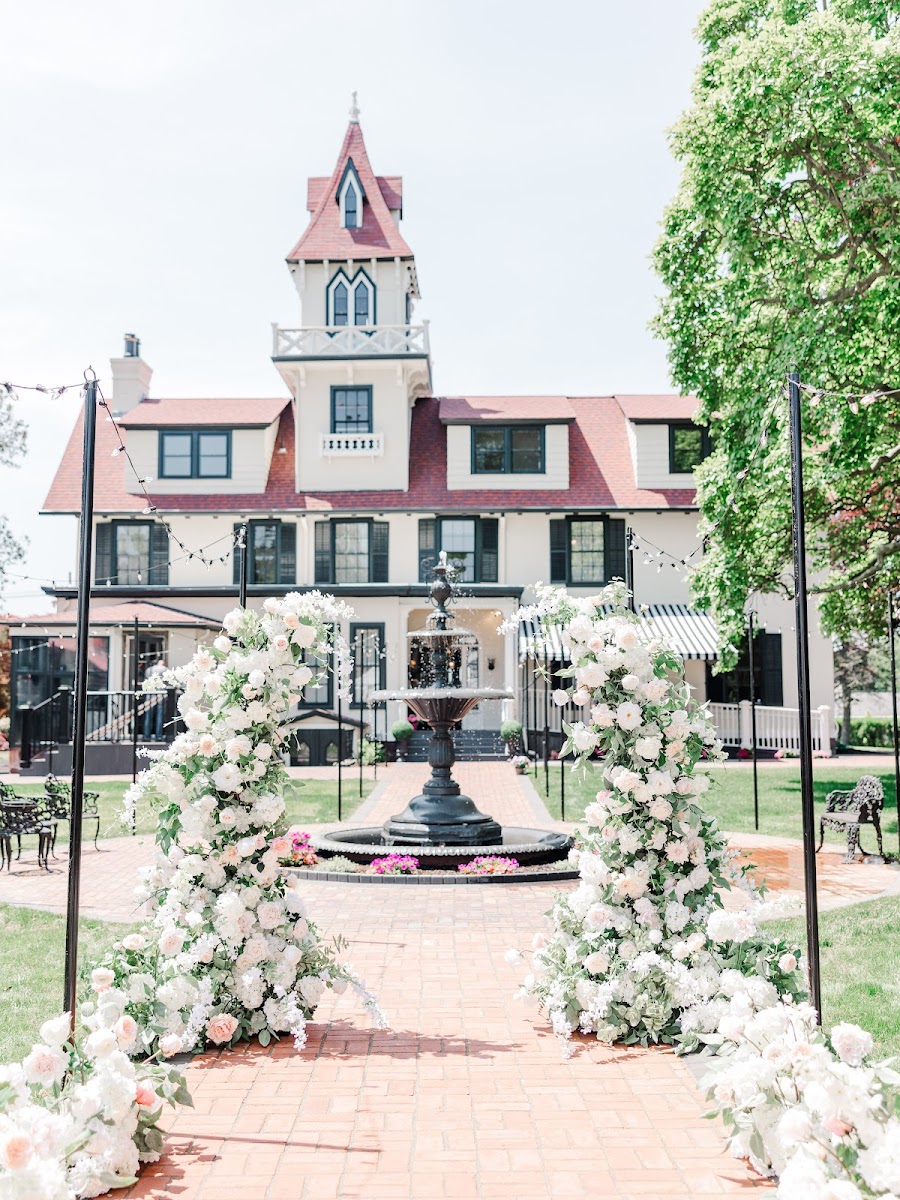
21 Joshua’s Trail, known locally as The Estate, offers a rare architectural duality: the crisp, bright exterior of a restored Victorian mansion and the sophisticated, dark-walled drama of its interior. From a floral perspective, this venue demands a strategy of contrast and scale to compete with the expansive hilltop views and the heavy historic bones of the house.
The Spaces
Ceremony Lawn
This is a classic Connecticut hilltop setting defined by rolling grass and a massive, mature tree canopy. The scale here is immense, meaning small, spindly arrangements will disappear against the horizon.
- What works: Large-scale ground meadows that frame the couple without blocking the view. If using the trees, consider hanging floral “chandeliers” or heavy greenery garlands from the lower branches to create an outdoor room effect.
- Skip: Standard thin pedestals. They look like toothpicks against the backdrop of the mansion and the vineyard.
- Watch out: The wind on the hilltop can be significant. All ground installations must be weighted or staked into the turf.
- Budget hero move: Focus all ceremony funds on two massive, lush floor installations at the altar that can be moved to the reception fountain later.
Tent Area
The tent at 21 Joshua’s Trail is not your average marquee. It often centers around a permanent fountain and sits on a mix of brick and lawn, providing a more structured environment for design.
- What works: Utilizing the fountain as a floral anchor. Wrapping the base in “growing” floor gardens makes the entire tent feel like a botanical conservatory. The tent poles are also prime real estate for smilax or ruscus crawls.
- Skip: Tall, thin centerpieces that don’t have enough volume at the top. The tent ceiling is high; you need “fluff” to fill the vertical void.
- Watch out: The transition from the mansion to the tent is via a brick walkway. Ensure any floral markers here are heavy enough to not be knocked over by guest traffic.
- Budget hero move: Greenery on the tent poles. It provides the most visual impact per dollar by drawing the eye up and masking the industrial structure.
Main Mansion
The interior of the mansion has been revived with a modern, editorial edge. The walls are dark, which is a gift for photographers but a challenge for florists who use “muddy” or muted tones.
- What works: High-contrast palettes. Crisp whites, buttery creams, or vibrant jewel tones (magenta, cobalt, sunset orange) will “pop” off the dark walls.
- Skip: Deep purples, dark reds, or “antique” mauves. These colors will recede into the shadows and look like black holes in your photos.
- Watch out: The mansion features historic molding and 200-year-old pillars. We do not use tape or nails on these surfaces; all installations must be self-supporting or use non-destructive tension rigs.
Vineyard Grounds
At the edge of the property, the vineyard provides a more rustic, nature-forward vibe compared to the formal mansion.
- What works: Wild, airy arrangements with plenty of movement. Think cosmos, sweet peas, and grasses that dance in the hilltop breeze.
- Skip: Overly manicured, tight “ball” bouquets or traditional roses-only designs. This space calls for a softer, organic touch.
What Works at 21 Joshua’s Trail
- Architectural Integration: The brownstone pillars and iron gates are begging for floral intervention. Instead of a standard arch, we recommend asymmetrical designs that appear to climb the existing structures.
- Monochromatic Moments: Given the venue’s black-and-white exterior, a monochromatic floral palette (all white with deep greenery) looks incredibly high-end and editorial here.
- Fountain Focus: The fountain is the heart of the reception. A full floral “moat” around the water line is the most photographed element of any wedding at this venue.
- Staircase Transitions: The grand staircase is the primary transition point. A heavy greenery crawl here sets the tone for the luxury experience guests can expect.
- Graphic Palette Cues: Use the black-and-white striped awnings as a design cue. Clean lines and sophisticated textures work better here than “shabby chic” or rustic-country styles.
Budget Guide
| Tier | Investment | Floral Strategy |
|---|---|---|
| Essentials | $1,750 - $3,500 | Personal flowers (bouquets/boutonnieres) plus a high-impact “moment” like a staircase crawl or a pair of large ceremony meadows. |
| Sweet Spot | $3,500 - $7,500 | Includes personals, a full ceremony setup with meadow-style aisles, and a mix of bud vases and low lush centerpieces for the tent. |
| Full Experience | $7,500 - $12,000 | Adds a signature fountain installation, greenery crawls on the tent poles, and upgraded focal arrangements for the mansion’s dark-walled rooms. |
| Statement | $12,000+ | Full-scale floral transformation: hanging installations in the trees, a “growing” fountain surround, and lush, floor-to-ceiling staircase florals. |
The Estate is a venue that rewards scale over quantity; one large, intentional installation does more for this space than twenty small ones.
Tips for 21 Joshua’s Trail
- Repurpose with Purpose: The ceremony meadows should almost always be moved to the base of the fountain or the sweetheart table to maximize your investment.
- Mind the Wind: This is a hilltop venue. If you are planning tall centerpieces in the tent, ensure the vessels are heavy-bottomed or weighted with stone.
- Color Contrast is Key: Always ask for a photo of the specific room where your flowers will sit. If the walls are dark, go two shades lighter with your floral palette than you originally planned.
- Load-in Logistics: The mix of grass, brick, and stone means our team uses specialized carts. If you are DIY-ing any elements, bring a sturdy wagon; the trek from the parking area to the vineyard is longer than it looks.
- Seasonal Awareness: The vineyard looks best from late June through September. If you are marrying in the “off” months, lean harder into the mansion’s interior architecture and the historic pillars.---