
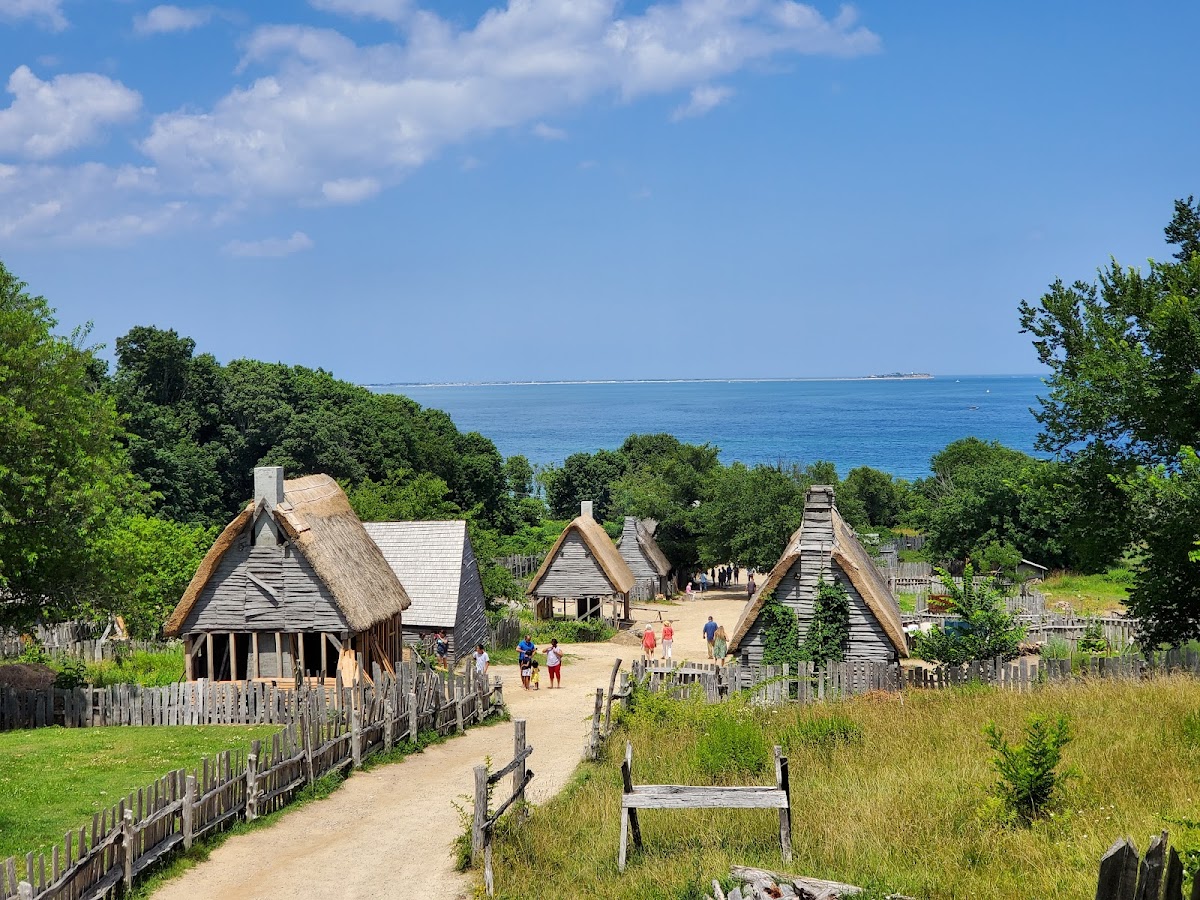
Designing for Plimoth Patuxet Museums requires a departure from the polished ballroom aesthetic in favor of something more elemental and grounded. The venue’s power lies in its raw materials—weathered wood, fieldstone, and the salt-heavy air of the Plymouth coast. Successful floral design here doesn’t compete with the history; it grows from it.
The challenge at this venue is scale and stability. With vast outdoor spaces and open-sided pavilions, flowers must be robust enough to withstand the South Shore breeze and significant enough to not disappear against the sprawling landscape. We approach this venue by anchoring designs to the permanent structures—the hearths and the beams—to create intimacy within the expanse.
The Spaces
Outdoor Pavilion & Covered Patio
This is the functional heart of most receptions at the museum. The space is defined by its rustic, heavy-timber construction and a monumental stone fireplace that serves as the natural center of gravity for the room. The transition from the brick-paved patio to the covered area allows for a seamless flow, but the open sides mean lighting and floral movements are subject to the elements.
- What works: Asymmetrical mantel installations that appear to be “growing” up the stone. Use the exposed beams for “floral clouds” or thick greenery garlands to lower the visual ceiling and create a more intimate dining atmosphere.
- Skip: Tall, narrow glass trumpets. They feel too fragile for the heavy timber surroundings and are a liability if the wind picks up.
- Watch out: Rigging to the beams requires specific hardware and approval. The wood is dense, and weight limits must be respected.
- Budget hero move: Allocate 40% of your reception floral budget to the fireplace. It is the first thing guests see and the backdrop for nearly every significant photo.
Museum Grounds (Ceremony Sites)
The ceremony locations at Plimoth Patuxet are often situated to take advantage of the ocean views or the historical backdrops of the replica ships. These are high-exposure areas where the landscape does the heavy lifting.
- What works: Ground-level “broken” arches. These consist of two or more floor-based installations that frame the couple without a connecting top bar. They are structurally more stable in the wind and don’t block the horizon.
- Skip: Traditional four-post chuppahs or light-weight arches unless they are heavily weighted with sandbags or anchored into the turf.
- Watch out: The walk from the prep area to the ceremony sites can be long and over uneven terrain. All ceremony pieces should be fully designed before being moved to the site.
Historic Patuxet Homesite
This space is deeply rooted in Indigenous history and architecture. Design here must be approached with a high degree of cultural sensitivity and environmental respect.
- What works: Monobotanical groupings and palettes that reflect the native flora of coastal Massachusetts. Think berries, branches, and hardy textures like waxflower or dried elements.
- Skip: Overly manicured, “perfect” round bouquets or dyed tropicals. They look entirely out of place in this living history context.
- Watch out: Access is restricted to preserve the integrity of the site. Installations must be “light touch” and leave no trace.
The New Indigenous Programs Building
A newer addition to the museum, this space offers a more controlled, indoor environment while maintaining a connection to the natural surroundings through large windows and wood accents.
- What works: Clean, architectural arrangements that utilize negative space. This is the one area where more modern, minimalist floral design can thrive.
- Skip: Heavy, sprawling garden-style arrangements that might feel too cluttered in a space designed for clarity and education.
- Watch out: The lighting here is more modern; ensure your floral palette holds up under indoor LED or fluorescent sources if natural light isn’t the primary driver.
What Works at Plimoth Patuxet Museums
Embrace the “Foraged” Aesthetic. The most successful designs here look like they were gathered from the surrounding woods and coastline. Incorporate textural elements like viburnum berries, thistle, and agonis to lean into the rugged New England landscape.
Prioritize Weight and Stability. This is a coastal venue. Every arrangement, from the cocktail high-tops to the ceremony pillars, must be designed with a low center of gravity. We often use weighted ceramic vessels or heavy stone containers that complement the venue’s materiality.
Utilize the Verticality of the Pavilion. The beams in the pavilion are a gift to floral designers. Instead of cluttering the tables, move the impact upward. Suspended smilax or hops vines can transform the pavilion from a picnic shelter into a lush, immersive canopy.
Focus on “Earth Tints.” While bright whites and greens are classic, the museum’s palette of weathered grey wood and tan stone begs for deeper, muddier tones. Consider ochre, terracotta, deep burgundy, and dusty mauve to harmonize with the historical environment.
Design for 360-Degree Viewing. In the open pavilions and outdoor grounds, guests move around the floral pieces constantly. There is no “back” to a fireplace mantel here; the sides are just as visible. Centerpieces must be lush from every angle.
Budget Guide
| Tier | Investment | Floral Strategy |
|---|---|---|
| Essentials | $1,750 - $3,500 | Personal flowers and a high-impact ceremony focal point that can be repurposed to the fireplace mantel. |
| Sweet Spot | $3,501 - $6,500 | Adds low, textural centerpieces for 15-20 tables and a dedicated installation on the pavilion fireplace. |
| Full Experience | $6,501 - $10,000 | Includes a “broken” ceremony arch, full fireplace growth, and greenery accents on the pavilion beams. |
| Statement | $10,001+ | Large-scale suspended floral clouds in the pavilion, full-aisle meadow installations, and premium blooms throughout. |
Plimoth Patuxet is a venue that rewards those who lean into its rustic, unpretentious character rather than trying to mask it.
Tips
Repurpose with a plan. Move your ceremony ground installations to the base of the sweetheart table or the foot of the fireplace to maximize your investment.
Check the wind forecast. If gusts are predicted over 15mph, ensure your florist is prepared to anchor all outdoor installations with stakes or heavy weights.
Coordinate load-in carefully. The museum is active during the day; floral delivery and setup must be timed to avoid peak visitor hours and navigate the wide, often unpaved paths.
Avoid floral foam. In an outdoor, environmentally-conscious museum setting, foam-free mechanics (like chicken wire and water tubes) are preferred and often required by the venue.
Think about the “Golden Hour.” The light hits the museum grounds beautifully in the late afternoon; choose flower colors like peach or copper that glow in the setting sun.