
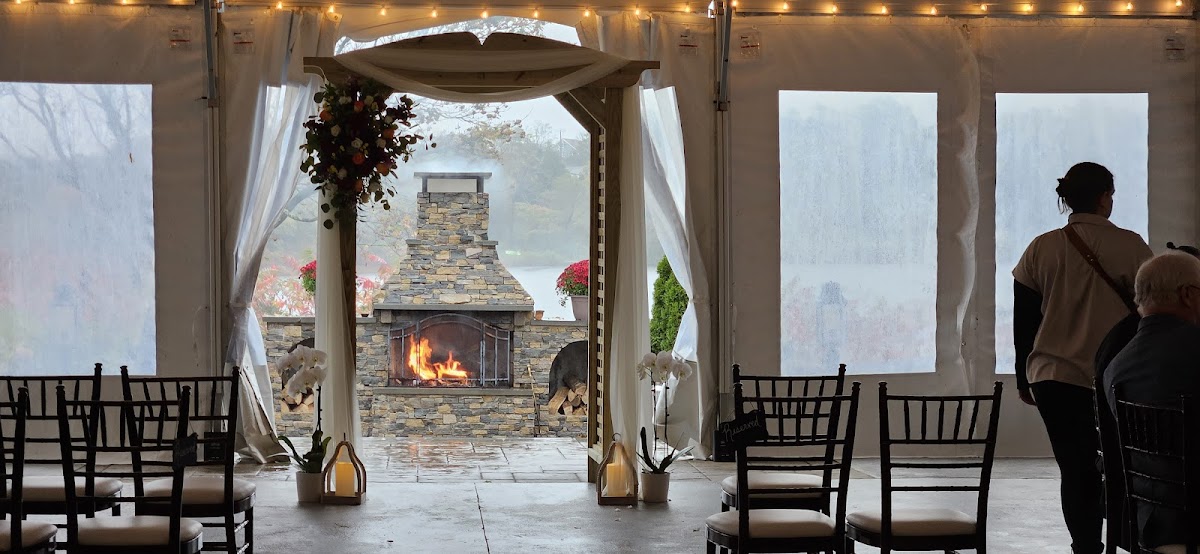
Designing for Plimoth Patuxet Museums requires a sophisticated understanding of how to bridge 17th-century historical textures with modern coastal elegance. The venue offers a rare juxtaposition of manicured English-style gardens and a rugged, wood-beamed pavilion that demands a floral strategy rooted in organic movement and structural stability.
The Spaces
Hornblower Garden
This is a formal, sunken garden space that feels worlds away from the museum’s living history exhibits. It is defined by its architectural stone walls, mature perennials, and a distinct sense of enclosure that creates an intimate ceremony atmosphere despite the expansive ocean views nearby.
- What works: Asymmetrical floor installations that appear to “grow” out of the grass at the head of the aisle. These mimic the garden’s existing flora without obstructing the sightlines of the stone masonry.
- Skip: Traditional heavy-topped pedestals. The ground here can be uneven, and the coastal breeze coming off the Eel River makes top-heavy arrangements a liability.
- Watch out: The stone walls are historic. Do not plan for any installations that require drilling or adhesive; stick to self-supporting structures or weighted “nest” arrangements.
Budget hero move: Use the stone walls as your primary backdrop. Instead of a full four-post arch, invest in a “broken” arch—two grounded pillars of varying heights—that frames the couple while letting the garden’s natural architecture do the heavy lifting.
Peabody Pavilion
The Pavilion is the venue’s workhorse, offering a rustic, open-air feel with the security of a permanent roof. The aesthetic is dominated by dark wood beams and large windows that flood the space with natural light.
- What works: Low, lush compote arrangements that allow guests to see across the round tables to the river views. If you want height, use thin-profile stands that disappear into the room’s architecture.
- Skip: Tall, bulky glass trumpets. They feel too formal for the pavilion’s rustic timber and can look dated against the natural wood backdrop.
- Watch out: Ceiling fans. The beams are tempting for hanging installations, but the fans are positioned centrally in most bays. Any greenery wraps or hanging planks must be meticulously measured to avoid the blade radius.
Budget hero move: Smilax or Ruscus wraps on the central support columns. This brings the garden feel of the Hornblower space into the reception without the high cost of a full ceiling installation.
Indoor Dining Hall
A more traditional, climate-controlled alternative, this space works best for couples leaning into a classic, “Old New England” aesthetic.
- What works: Traditional, multi-dimensional centerpieces with a focus on scent—think garden roses, sweet peas, and eucalyptus.
- Skip: Minimalist, industrial designs. The room’s character is too traditional to support hyper-modern floral styles.
- Watch out: The lighting here is warmer than the Pavilion. Avoid muddy purples or very dark burgundies, which can disappear in the evening light; stick to whites, creams, and vibrant corals or blues to maintain contrast.
What Works at Plimoth Patuxet Museums
- Naturalistic Textures: The venue is surrounded by historical accuracy and raw nature. Floral designs should feel “found” rather than manufactured. Incorporate local-feeling elements like Queen Anne’s Lace, viburnum berries, or trailing jasmine.
- Weighted Stability: This is a coastal venue. The wind off the Eel River is no joke. Every outdoor arrangement, from aisle markers to “growing” floor nests, must be built on heavy lead or steel bases to prevent tipping.
- Bridge the Transition: The walk from the Hornblower Garden to the Peabody Pavilion is a transition from formal to rustic. Use a consistent floral “ingredient” in both spaces—like a specific variety of garden rose—to create a cohesive narrative.
- Respecting the Stone: The fieldstone walls are a signature feature. Use them. Placing low, lush arrangements along the base of the walls creates a high-end, integrated look that feels like the flowers have always been there.
- Tonal Palettes: The dark wood of the Pavilion and the grey-blues of the coastal light favor palettes that include “pops” of brightness. All-white can look stark; a palette of “dirty” neutrals, sage greens, and a single accent color (like a deep apricot or a dusty blue) feels more grounded.
Budget Guide
| Tier | Investment | Floral Strategy |
|---|---|---|
| Essentials | $1,750 - $3,000 | Focus on the “personal” flowers and a high-impact ceremony focal point. Reception tables utilize simple, elegant bud vase clusters that maximize the variety of blooms without the cost of large centerpieces. |
| Sweet Spot | $3,000 - $6,000 | Includes a full floral ceremony arch or grounded meadow. Reception tables transition to lush compote arrangements. Column wraps in the Pavilion are added to bring greenery into the rafters. |
| Full Experience | $6,000 - $10,000 | Comprehensive design including aisle meadows, a lush sweetheart table installation, and elevated centerpieces. Significant greenery work on the Pavilion beams (navigating fans) to lower the visual ceiling. |
| Statement | $10,000+ | Full-scale transformation. This includes “growing” installations on the Hornblower stone walls, hanging floral chandeliers in the Pavilion, and a high density of premium blooms (peonies, ranunculus, imported roses) throughout. |
The character of Plimoth Patuxet is one of understated historical significance; your floral budget should prioritize quality of bloom and intentionality of placement over sheer volume.
Tips
- Repurpose with purpose: The “growing” meadows from your Hornblower Garden ceremony are perfect for the base of the sweetheart table or the Pavilion entrance. Plan for a 30-minute flip window.
- Mind the salt air: Coastal humidity can make soft-petaled flowers like hydrangeas wilt faster than usual. Ensure your designer uses deep-hydration techniques or stick to heartier blooms for outdoor installations.
- Logistics of the grass: The Hornblower Garden is a grass surface. If you are using a chuppah or a heavy arch, ensure the florist uses wide-foot bases to prevent the structure from sinking into the turf if it has rained recently.
- The “Golden Hour” factor: The light hits the Pavilion patio beautifully in the late afternoon. Use reflective elements like glass votives or metallic accents in your tabletop design to catch this light.
- Avoid the “Museum” feel: To prevent the wedding from feeling like a field trip, avoid overly literal historical props. Keep the flowers modern and lush to ensure the museum backdrop remains a sophisticated setting rather than a theme.