
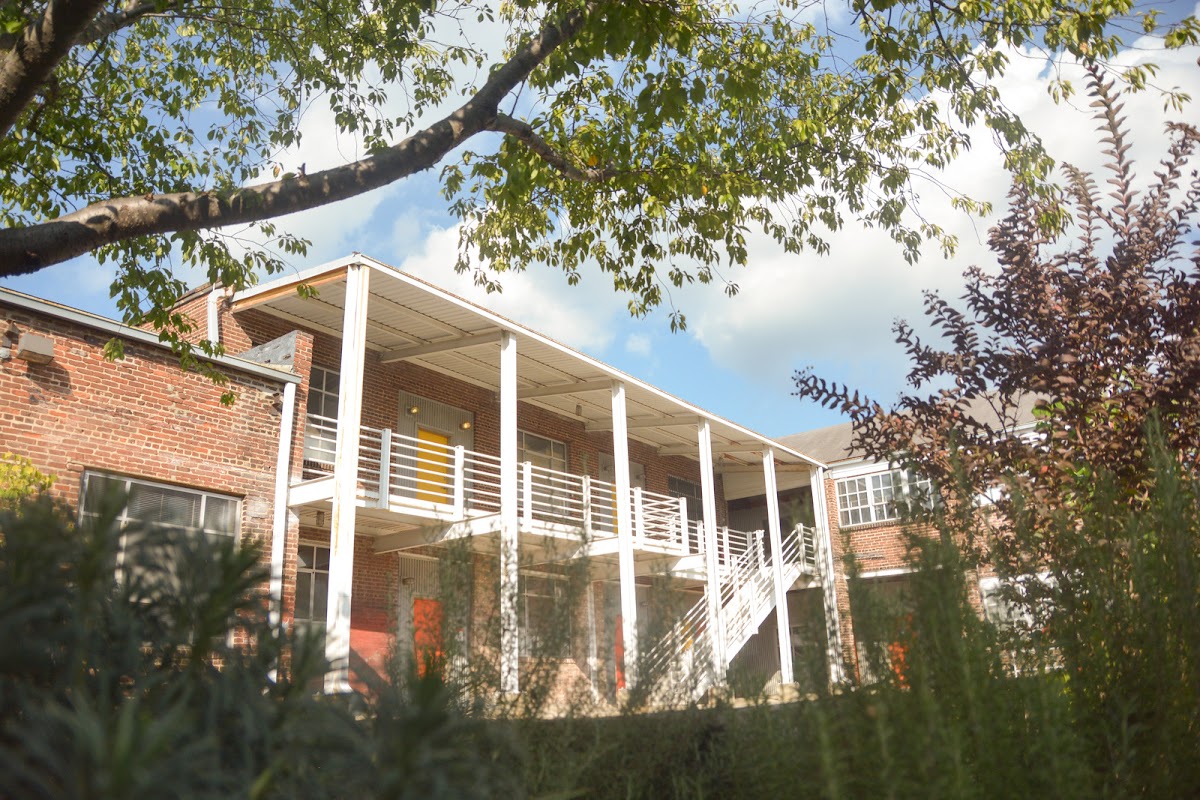
Atlanta Contemporary offers a rare duality: the expansive, manicured grandeur of a southern estate paired with the refined, neutral interior of a high-end gallery. Floral success here depends on navigating the scale of the outdoor architecture while leaning into the intimate, detailed textures of the indoor fireplaces and brickwork.
The Spaces
Gardens
The gardens are defined by a stately columned facade and wide stone steps. This is a high-drama environment where small arrangements disappear against the backdrop of mature trees and white columns.
- What works: Massive, freestanding floral arches or semi-circles that frame the central doorway. Ground-level “meadows” that line the stone steps create a seamless transition from the lawn to the house.
- Skip: Thin, spindly arbors that lack the visual weight to stand up to the building’s facade.
- Watch out: Wind exposure is a factor on the open lawn; all structures must be heavily weighted.
- Budget hero move: Focus the entire ceremony budget on a single, high-impact installation at the top of the stone steps.
Ballroom
This space acts as a sophisticated blank canvas with its neutral walls and French doors. The standard ceiling height means you don’t need to fight for verticality, but you do need to consider sightlines.
- What works: A mix of low, lush bowls and medium-height elevated stands. Framing the French doors with a floral crawl or “growing” installation adds a garden-to-indoor feel.
- Skip: Tall, narrow trumpet vases that feel dated in such a refined, modern-leaning space.
- Watch out: The room can feel crowded with too many high centerpieces; vary the heights to keep the eye moving.
Wine Cellar
The cellar is all about texture—exposed brick, wood beams, and low, moody lighting. It is the most industrial-leaning space in the venue and requires a different design language than the gardens.
- What works: Petite, highly textured arrangements featuring architectural foliage or dark, moody blooms. Fireplace mantel installations are the primary focal point here.
- Skip: Hanging installations. The low ceiling height makes rigging impractical and visually oppressive.
- Watch out: Limited natural light means delicate, pale pastels may look washed out; use saturated colors or high-contrast whites.
Outdoor Courtyard
A more intimate alternative to the main gardens, the courtyard is characterized by brick walls and wrought iron gates. It feels private and European.
- What works: Utilizing the metal gates as a structural support for asymmetrical climbing florals. Ground-level clusters at the base of the brick walls add softness to the hardscape.
- Skip: Traditional pedestals, which can feel clunky on the uneven brick and concrete flooring.
- Budget hero move: A lush, asymmetrical installation on the metal gate serves as both a ceremony backdrop and a photo op for the rest of the night.
What Works at Atlanta Contemporary
- Architectural Framing: Use the building’s columns and French doors as natural frames. Installations should look like they are growing from the structure, not just sitting in front of it.
- Mantel Moments: With fireplaces in both the bridal suite and the cellar, mantel installations are non-negotiable for a cohesive design. These should be organic and asymmetrical to contrast the formal architecture.
- Ground-Level Transitions: The stone steps and brick pathways are ideal for floral “crawls.” These ground-based designs feel more modern and premium than standard aisle markers.
- Neutral-to-Moody Palettes: The venue’s white exterior and neutral interior support almost any color story, but a sophisticated palette of whites, creams, and deep greens—or a transition into moody burgundies in the cellar—feels most at home.
- Weight and Stability: Because the outdoor spaces are paved or manicured lawn, there is no staking into the ground. All floral structures must be self-supporting and designed for hard surfaces.
Budget Guide
| Tier | Investment | Floral Strategy |
|---|---|---|
| Essentials | $1,750 - $3,500 | Focus on personal flowers and a single high-impact mantel or gate installation. Use repurposed aisle clusters as low centerpieces. |
| Sweet Spot | $3,500 - $7,500 | A full freestanding ceremony arch in the gardens, lush mantel work, and a mix of elevated and low centerpieces in the ballroom. |
| Full Experience | $7,500 - $12,000 | Includes staircase floral runners, a more expansive garden installation, and statement designs for the French doors and ballroom entrance. |
| Statement | $12,000+ | Full-scale floral immersion featuring overhead ballroom installations (where rigging allows), massive garden focal points, and lush cellar transformations. |
The venue’s inherent character is one of quiet luxury, meaning your budget should go toward quality and scale rather than trying to hide the space.
Tips
- Repurpose with purpose: Ground-level ceremony “nests” from the gardens can be moved easily to frame the sweetheart table or the ballroom’s French doors.
- Plan for the hardscape: Since staking isn’t an option on the brick courtyard or stone steps, ensure your designer uses heavy, discreet bases for all tall pieces.
- Embrace the season: The manicured gardens change significantly with the seasons; coordinate your flower choices to complement the existing greenery or autumnal tones of the trees.
- Lighting matters in the cellar: If designing for the Wine Cellar, advocate for extra candlelight to ensure the floral textures are visible in the lower-light environment.
- Load-in logistics: The transition from the garden to the house involves steps; ensure your floral team is prepared for a labor-intensive setup if moving large pieces between spaces.