
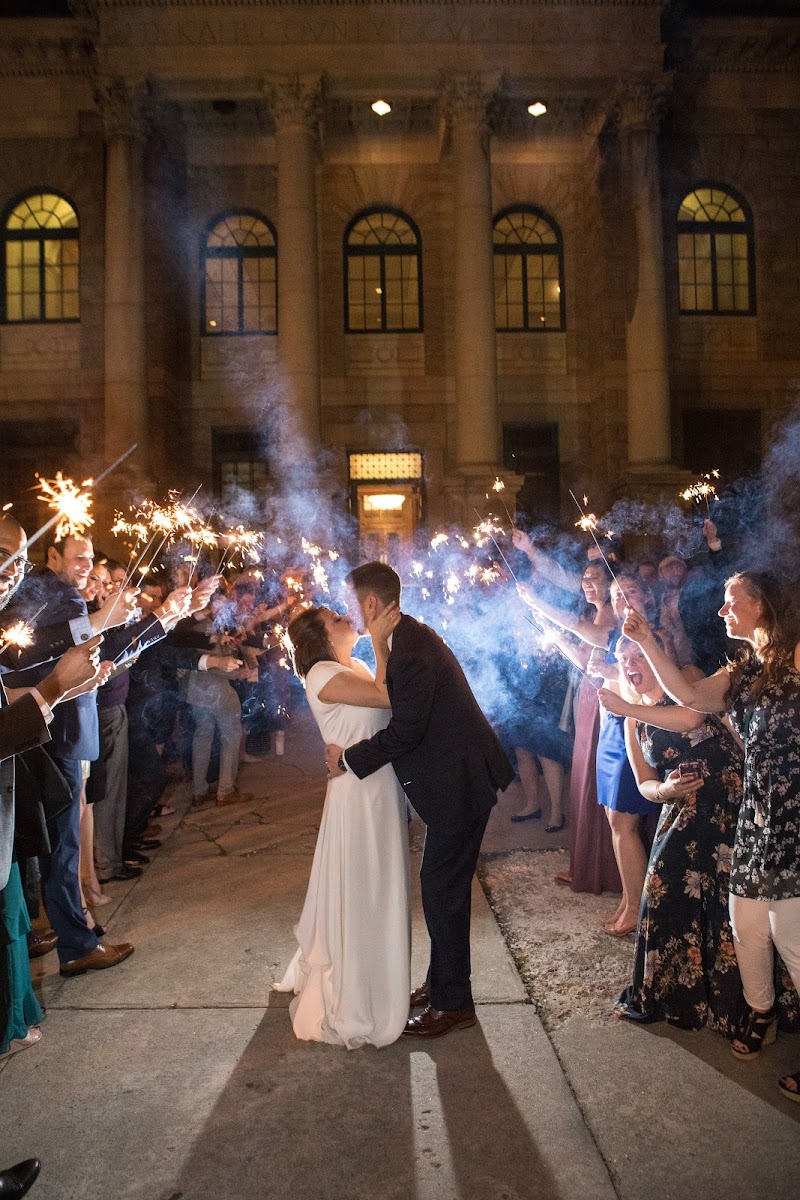
101 E Court Square, home to the DeKalb History Center, is a study in neoclassical permanence. The white marble walls and soaring verticality provide a museum-quality backdrop that requires a disciplined approach to floral scale and color theory.
The Spaces
The Great Hall (The Courtroom)
This is the primary event space, defined by its massive arched windows and high, detailed ceilings. The architecture here is dominant; floral designs must either lean into the historic grandeur or provide a lush, organic counterpoint to the hard marble surfaces.
- What works: Tall, slender harlow stands or massive floor-to-ceiling “trees” that draw the eye upward. The windows are the natural focal point for ceremonies, so flanking installations are more effective here than a standard four-post arbor.
- Skip: Small, low-profile centerpieces that get lost in the room’s volume. If using low arrangements, they must be exceptionally dense and lush to command attention.
- Watch out: The marble walls are historic and protected. Mechanical attachments (nails, tape, staples) are strictly prohibited. All designs must be 100% self-standing.
- Budget hero move: Focus your investment on two massive “altar” arrangements that can be repurposed to frame the sweetheart table or the band stage later in the evening.
The Main Entrance Atrium
This transition space features a dramatic glass pyramid ceiling. It bridges the gap between the historic courthouse exterior and the polished interior. It is often used for cocktail hours or smaller intimate ceremonies.
- What works: Ground-level floral meadows that wrap around the base of the columns. The light here is spectacular for photography, making this an ideal spot for high-impact, textural “statement” pieces.
- Skip: Tall arrangements that block the view of the glass ceiling or the architectural transition.
- Watch out: Heat. On a sunny day, this space acts as a greenhouse. Ensure all floral foam is fully saturated and consider using tropicals or hardy roses.
The Grand Staircase
The marble staircase is a classic “moment” for portraits and grand entrances. It provides a unique opportunity to introduce movement into your floral plan.
- What works: Asymmetrical greenery crawls that appear to grow up the banister. Focus the density at the bottom and top of the stairs to frame the couple.
- Skip: Over-decorating every single step, which can create a tripping hazard and look cluttered in photos.
- Watch out: Water. Drips on marble are incredibly slippery. All installations on the stairs must be meticulously pre-soaked and dried before placement.
What Works at 101 E Court Square
- Architectural Framing: Use the existing arched doorways and windows as your guide. Flowers should look like they are accentuating the building’s bones, not hiding them.
- Monochromatic Palettes: All-white or high-contrast deep jewel tones look best against the cool grey and white marble. Muted pastels can sometimes look washed out in the bright, reflected light of the Great Hall.
- Organic Textures: Since the venue is composed of hard, flat surfaces (marble, glass, wood), use flowers with high petal counts and airy textures—like ranunculus, sweet pea, and bleached ferns—to soften the environment.
- Self-Sustaining Installations: Because you cannot attach anything to the walls, large-scale floor installations on heavy, hidden bases are the most effective way to create drama.
- Scale Over Quantity: One massive, well-placed arrangement is worth more than ten small ones in this venue. The height of the ceilings will swallow anything undersized.
Budget Guide
| Tier | Estimate | Floral Strategy |
|---|---|---|
| Essentials | $1,750 - $3,000 | Personal flowers and a pair of high-impact floor arrangements for the ceremony that move to the reception. |
| Sweet Spot | $3,500 - $5,500 | Adds lush centerpieces for the Great Hall and a greenery installation on the grand staircase. |
| Full Experience | $6,000 - $9,000 | Includes a full floral “meadow” for the ceremony, elevated centerpieces, and cocktail hour accents. |
| Statement | $10,000+ | Floor-to-ceiling floral trees in the Great Hall, full staircase coverage, and premium blooms throughout. |
The venue’s innate historic character means you aren’t fighting the space; you are simply enhancing a landmark.
Tips
- Prioritize the Great Hall windows: They are the venue’s most iconic feature and should be the primary focus of your ceremony decor.
- Plan for a quick flip: If the ceremony and reception are both in the Great Hall, ensure your floral designs are easily movable by two people.
- Mind the marble: Always use plastic liners or trays under every arrangement to prevent water stains on the historic stone.
- Utilize the Atrium light: Schedule your detail photos in the Atrium to take advantage of the top-down natural light from the glass ceiling.
- Check load-in routes: The historic nature of the building means elevators can be small; large-scale items may need to be assembled on-site in the Great Hall.