
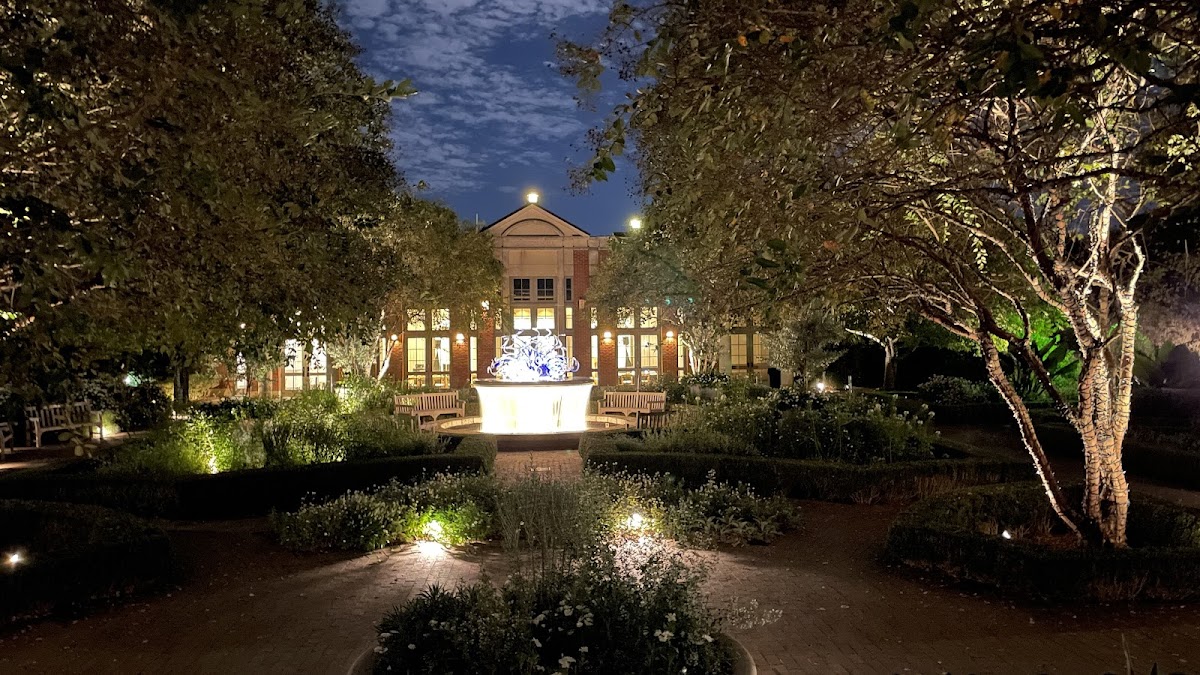
Designing for the Atlanta Botanical Garden requires a “complement, don’t compete” philosophy. As one of the most curated landscapes in the Southeast, the venue provides a dense botanical backdrop that demands intentional, architectural floral choices rather than generic filler.
We know this venue intimately and understand that the most successful designs here lean into the garden’s permanent features—from the towering hardwoods of Storza Woods to the precision of the formal parterre gardens.
The Spaces
Day Hall
This is the garden’s primary indoor reception space, defined by its modern wood-and-glass architecture. The floor-to-ceiling windows bring the garden inside, which means your indoor palette must feel cohesive with the seasonal reality outside those windows.
- What works: Utilizing the high vertical space. The exposed beams are perfect for hanging installations that draw the eye upward and mirror the canopy of the trees visible through the glass.
- Skip: Short, squat centerpieces that get lost in the scale of the room.
- Watch out: The natural light is abundant; colors will appear much brighter and truer here than in a traditional ballroom.
- Budget hero move: Focus your investment on a single, high-impact hanging installation over the dance floor or a lush greenery treatment on the beams.
Alston Overlook
For intimate ceremonies, this space offers some of the best views in the city. Because the backdrop is so spectacular, the floral goal is to frame, not hide.
- What works: Ground-level “growing” installations that look as though they are emerging from the stone patio.
- Skip: Traditional four-post arbors that can feel heavy and block the Midtown skyline.
- Watch out: Wind exposure can be higher here than in the lower gardens; all arrangements must be heavily weighted.
- Budget hero move: Two large, asymmetrical floor meadows that can be easily moved to the Day Hall entrance or the sweetheart table after the ceremony.
Fuqua Orchid Center
This space feels like a high-end botanical gallery. It is humid, lush, and filled with rare species, making it a spectacular choice for a cocktail hour or a small, sophisticated dinner.
- What works: Minimalist, high-design arrangements. Think single-variety groupings of premium orchids or architectural tropical leaves in modern vessels.
- Skip: Rustic, wildflower, or “garden-style” arrangements that clash with the exotic, structured nature of the conservatory.
- Watch out: The humidity is high; ensure your floral choices are heat-tolerant and well-hydrated.
- Budget hero move: Bud vases with single, high-end Vanda or Phalaenopsis orchids placed strategically on cocktail tables.
The Great Lawn
When hosting a large-scale ceremony on the lawn, the primary challenge is the sheer vastness of the space. Without a focal point, the wedding party can look adrift in a sea of green.
- What works: Large-scale, flanking installations. You need height and volume to compete with the Howell Fountain and the surrounding tree line.
- Skip: Small, delicate aisle markers that will disappear in the grass.
- Watch out: The “flip” from ceremony to reception often requires moving pieces across long distances of lawn and gravel.
- Budget hero move: Use oversized urns or pedestals that provide immediate height and can be repurposed to flank a stage or DJ booth later.
What Works at Atlanta Botanical Garden
Ground-level “growing” installations. In a venue where guests are surrounded by world-class landscaping, floral designs that mimic the natural growth patterns of the garden feel the most authentic.
Contemporary, clean lines. Especially in Day Hall and the Orchid Center, the architecture is modern. Floral designs should lean toward clean silhouettes and intentional groupings rather than messy, overstuffed arrangements.
Framing permanent art. The garden features significant sculptures, including Chihuly glass. Your floral designer should be aware of these permanent installations to ensure your color palette doesn’t vibrate unpleasantly against the art.
Leveraging the verticality. In Day Hall, the ceiling is your best friend. Bringing greenery up into the rafters makes the room feel more intimate despite the high ceilings and glass walls.
Seasonal awareness. If you are marrying during “Orchid Daze” or “Scarecrows in the Garden,” the venue’s own decor will be prominent. Plan your floral aesthetic to work within these seasonal themes.
Budget Guide
| Tier | Investment | What it Covers |
|---|---|---|
| Essentials | $1,750 - $3,500 | High-end personal flowers (bouquets/boutonnieres) and a collection of impactful bud vases or small centerpieces for an intimate dinner. |
| Sweet Spot | $3,500 - $7,000 | Full personal flowers, a significant ceremony focal point (like Alston Overlook meadows), and standard centerpieces for a mid-sized reception. |
| Full Experience | $7,000 - $12,000 | Comprehensive design including a large ceremony installation, repurposed pieces for the reception, and a focal greenery or floral installation on the Day Hall beams. |
| Statement | $12,000+ | Full-scale botanical transformation. Multiple large installations, custom rigging in Day Hall, and premium blooms throughout all spaces. |
The Atlanta Botanical Garden is a premium venue that does much of the heavy lifting for you; your budget should be spent on quality and placement rather than quantity.
Tips
Weight your arrangements. The outdoor spaces, particularly the overlooks and the Great Lawn, are subject to Piedmont Park breezes that can easily topple top-heavy pedestals.
Plan for the SAGE parking walk. Load-in at the garden is a logistical dance. Ensure your floral team is familiar with the service elevators and the distance from the loading docks to spaces like the Orchid Center.
Repurpose with purpose. Ceremony flowers from the Alston Overlook or the Great Lawn are perfect for the outdoor deck at Day Hall, creating a cohesive transition for guests moving to cocktail hour.
Respect the collection. This is a living museum. Floral designers must be careful not to introduce invasive species or use mechanics that could damage the permanent botanical collections.
Think about the evening. As the sun sets, the garden’s lighting takes over. White flowers and light-colored blooms will “pop” much better in the evening garden light than dark burgundies or purples.