
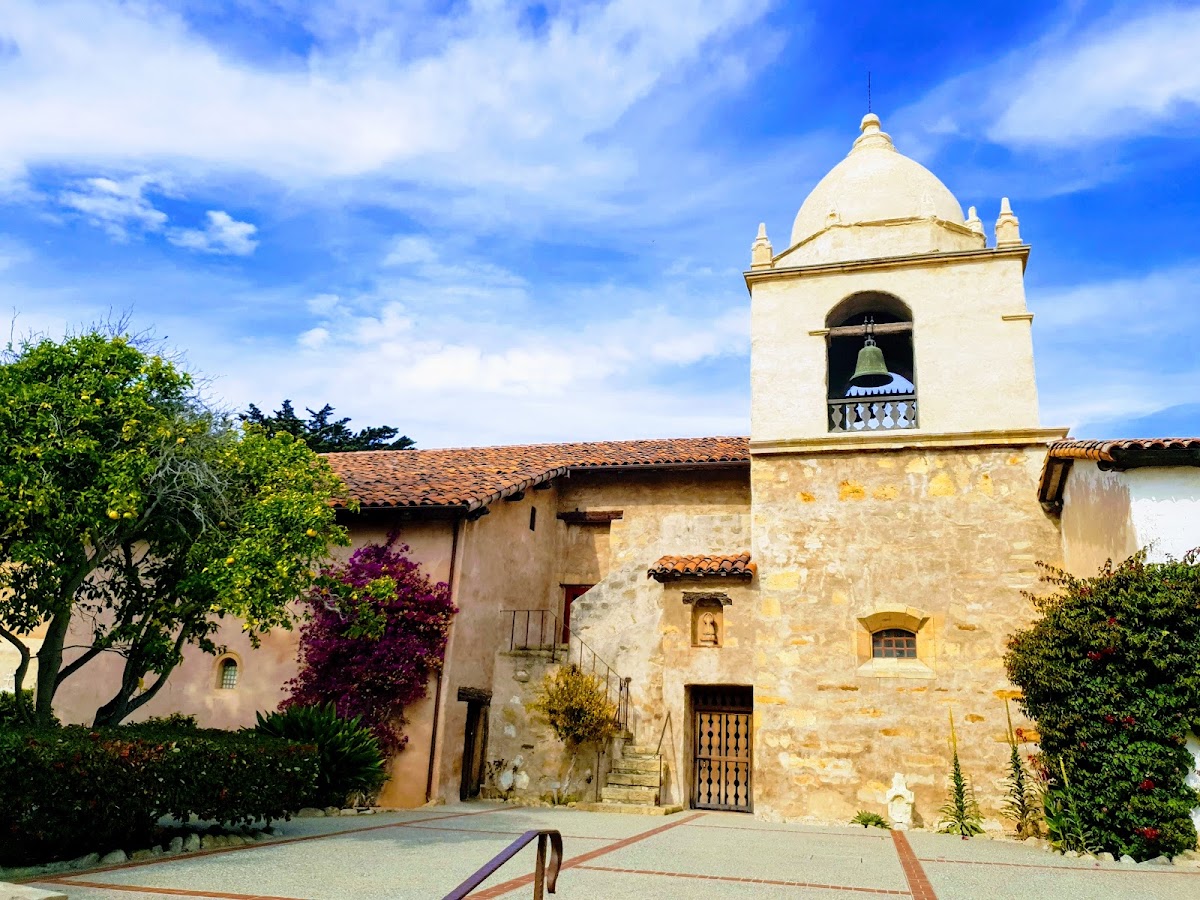
Designing for the Carmel Mission requires a deep respect for 18th-century Spanish Colonial architecture. The stone walls, terracotta tiles, and weathered wood provide a rich, textured canvas that does not need to be hidden or “transformed.” Instead, floral design here should be additive, focusing on framing the historic focal points and enhancing the natural serenity of the grounds.
The visual weight of the Basilica and the expansive nature of the Courtyard demand arrangements with intention and scale. This is not a venue for petite, delicate gestures that get lost against the masonry; it is a place for architectural foliage and grounded, lush installations that feel like they have always belonged to the landscape.
The Spaces
The Basilica
The interior of the Mission is a masterclass in historic scale, featuring a long nave and a prominent altar. The lighting is naturally dim and atmospheric, which means color choice and placement are critical for visibility.
- What works: Large-scale altar arrangements in heavy, stone-like vessels. Use whites, creams, and high-contrast greenery to ensure the flowers pop against the dark wood and stone.
- Skip: Pew ends or small aisle markers. The narrow aisle and historic seating are better left unobstructed to maintain the architectural integrity.
- Watch out: Strict religious guidelines often govern what can be placed on or near the altar. Always verify the “liturgical season” as it may dictate allowed colors.
- Budget hero move: Two massive, floor-standing altar installations that can be moved to the reception entrance later.
The Courtyard
This is the heart of the Mission’s outdoor experience, defined by its iconic bell tower and arched walkways. It is an open-air space that benefits from ground-up design.
- What works: Asymmetrical floor installations at the base of the arches or the entrance to the Basilica. These should look like they are growing out of the stone.
- Skip: Tall, spindly stands or pedestals. They look precarious and “event-y” against the solid, permanent feel of the Mission.
- Watch out: Wind can whip through the courtyard. All installations must be weighted heavily, especially if they are top-heavy.
- Budget hero move: A lush, low floral semi-circle at the base of the bell tower for portraits.
The Gardens and Grounds
The surrounding grounds feature mature trees and existing flowering vines. The vibe here is more organic and less structured than the Courtyard.
- What works: Wild, textural flanking pieces for the garden gate or pathway entries. Incorporate olive branches or eucalyptus to nod to the California landscape.
- Skip: Overly manicured, tight rose spheres. The gardens call for a looser, more “gathered” aesthetic.
- Watch out: Uneven terrain. Ensure any freestanding structures are stabilized for safety on dirt or gravel paths.
What Works at Carmel Mission
- Terracotta-Informed Palettes: Lean into the colors of the venue. Creams, sands, ochre, and deep burgundy complement the tile and stone perfectly. Avoid “cool” pastels like lavender or baby blue, which can look washed out against the warm masonry.
- Architectural Foliage: Use branches with character—olive, bay laurel, or fruiting branches. These echo the historic, Mediterranean-adjacent feel of the California missions.
- Ground-Grown Mechanics: Because rigging is not an option in these historic spaces, focus on floor-based “meadow” styles or heavy urns that provide height without needing attachment points.
- Respectful Scale: The Mission is grand. Small centerpieces will disappear. If the budget is tight, do fewer, larger pieces rather than many small ones.
- Textural Contrast: Pair the rough, weathered stone of the walls with soft, pillowy blooms like garden roses or ranunculus to create a sophisticated tension between the old and the new.
Budget Guide
| Tier | Investment | Floral Strategy |
|---|---|---|
| Essentials | $1,750 - $3,000 | Personal flowers and two high-impact altar pieces that define the ceremony space. |
| Sweet Spot | $3,500 - $5,500 | Adds a ground-level courtyard installation and lush, medium-scale centerpieces for an outdoor reception. |
| Full Experience | $6,000 - $9,000 | Includes a statement entrance piece, full aisle treatment in the courtyard, and elevated reception florals. |
| Statement | $10,000+ | Full-scale floral “growth” along the arched walkways and a maximalist approach to the Basilica altar. |
The Carmel Mission is a venue of permanence and history; your floral budget should prioritize quality and scale over quantity to match that gravity.
Tips
- Prioritize the altar: In a space as storied as the Basilica, the primary floral focus should always be the focal point of the ceremony.
- Weighted mechanics are non-negotiable: The coastal breeze in Carmel can be deceptive; ensure all outdoor pieces are wind-proofed.
- Repurpose with care: Moving large pieces from the Basilica to the Courtyard is smart, but ensure your team has enough time to navigate the historic (and often narrow) pathways.
- Check the calendar: As an active parish and museum, load-in windows are often strict and non-negotiable.
- Embrace the “Found” look: Choose vessels that look like they could have been excavated from the site—terracotta, aged stone, or dark metals.