
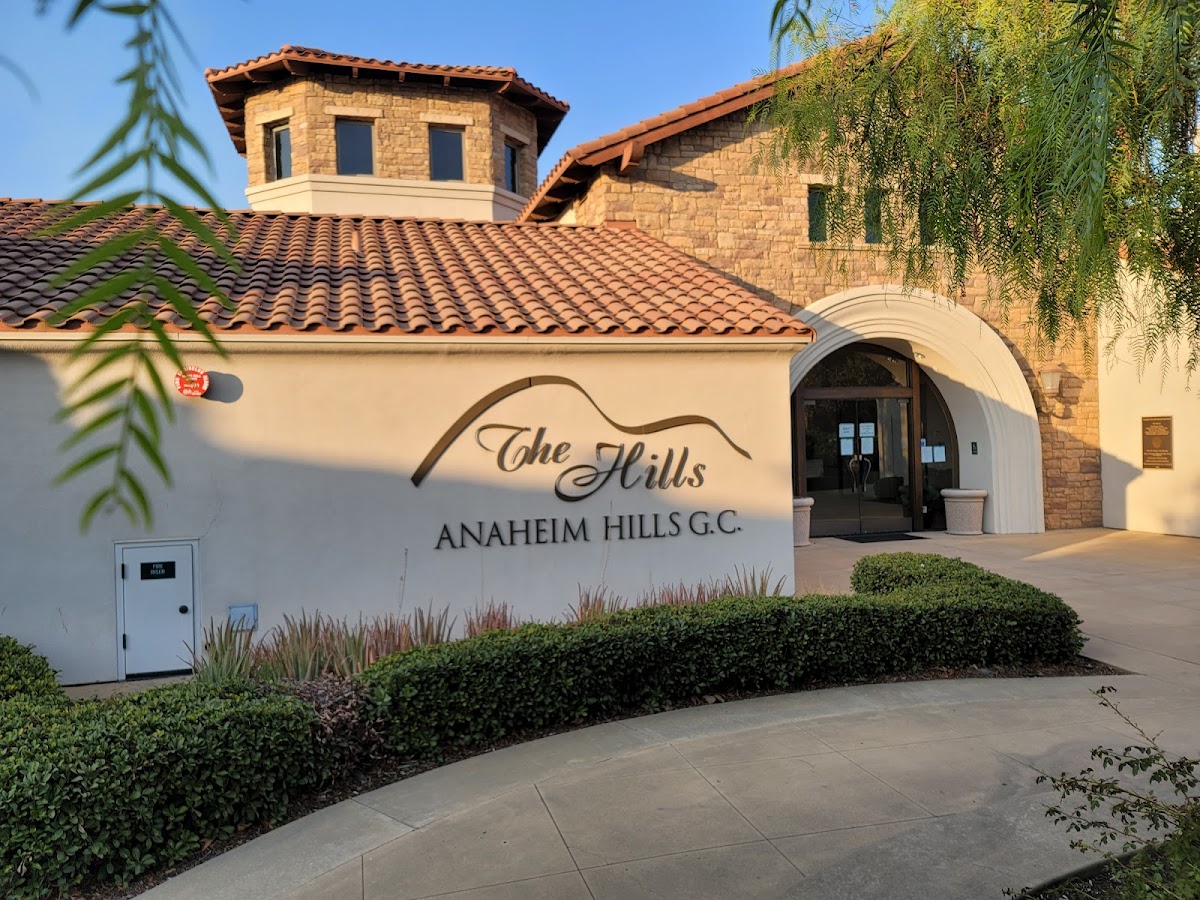
Designing for a golf course of this scale is an exercise in visual competition. At Anaheim Hills Golf Course, your primary challenge is the horizon; the vast, rolling greens and open sky will swallow timid floral designs. To make an impact here, we focus on structural integrity and intentional color theory that pulls the eye away from the landscape and toward the couple.
This venue demands a departure from the “delicate.” Because the ceremony space is entirely open to the elements, every design choice must account for the bright California sun and the inevitable afternoon breeze that rolls across the hills. We approach this property as a green canvas that requires bold, architectural strokes to feel complete.
The Spaces
Outdoor Ceremony Space
The ceremony site at Anaheim Hills is defined by its paved aisle and the panoramic view of the course. It is a clean, functional space that provides a blank slate for heavy floral intervention. The pavement is a logistical advantage, providing a level surface for arches and pedestals, but it can feel stark without proper floral softening.
- What works: Ground-level “meadow” arrangements that line the paved aisle. These should be designed with an organic, overgrown feel to bridge the gap between the hard-scaped walkway and the natural turf of the course. Asymmetrical arches also work well here, as they frame the view without completely blocking the rolling hills.
- Skip: Thin, spindly metal arches or small shepherd’s hooks. These look like toothpicks against the massive backdrop of the Anaheim hills. If the structure doesn’t have visual “weight,” it will disappear in photos.
- Watch out: Wind exposure. This is an open-sky environment with no windbreaks. Any arch or pedestal must be weighted with sandbags or steel plates hidden within the design.
- Budget hero move: Focus the majority of the budget on a lush, semi-circle ground nest at the altar. It grounds the couple in the landscape and provides a high-impact focal point that feels more modern and substantial than a traditional thin arch.
Golf Course Greens
While not a seated event space, the greens are the primary backdrop for portraits and the “vibe” of the venue. The manicured turf and sand traps offer a very specific aesthetic—clean, curated, and expansive.
- What works: Repurposing ceremony ground arrangements for photography “moments” on the grass. Bringing a piece of the ceremony design out onto the course for portraits creates a cohesive visual narrative.
- Skip: Anything that requires staking into the ground. Golf course superintendents are protective of their turf; all floral installations must be self-supporting and sit on top of the grass.
- Watch out: Transport logistics. Moving flowers across a golf course requires a cart and careful packing. Arrangements must be built into sturdy containers that won’t tip during transit over uneven paths.
Clubhouse Ballroom
The transition from the bright, airy outdoors to the indoor ballroom requires a shift in design scale. The ballroom is a traditional space that benefits from bringing the “outside in.”
- What works: Tall, airy centerpieces that utilize branches or long-stemmed foliage. This mimics the mature trees seen through the clubhouse windows and fills the vertical volume of the room.
- Skip: Low, tight pavé arrangements that feel too corporate. The venue is about the “hills,” so the flowers should feel like they have room to breathe.
- Watch out: Lighting. Indoor spaces at golf clubs can sometimes lean toward warmer, yellow-toned lighting. Ensure your floral palette includes bright whites or cool tones to keep the arrangements looking crisp.
What Works at Anaheim Hills Golf Course
High-Contrast Palettes are Essential. Against the dominant green of the course and the blue of the sky, muted tones can get lost. We recommend “high-value” colors—crisp whites, deep burgundies, or vibrant corals. These colors hold their own against the saturation of the landscape.
Architectural Foliage. Use greens that have structure, such as Italian Ruscus, Eucalyptus, or even tropical palms if the vibe allows. These provide the skeleton needed for large-scale installations to survive the wind and the visual expanse.
Weighted Mechanics. This is a practical necessity. We do not design for this venue without heavy-duty bases. Every freestanding element is a sail once the wind picks up; internal steel plates or hidden sandbags are non-negotiable for safety and aesthetic stability.
Asymmetrical Framing. Rather than a perfectly symmetrical arch, consider a “broken” arch or asymmetrical pillars. This feels more contemporary and allows the natural beauty of the hills to peek through the design, rather than trying to wall it off.
Aisle Softening. The paved aisle is practical for walking but visually hard. Placing floral clusters at the “start” and “end” of the aisle—and perhaps a few “growing” out of the sides—breaks up the long line of the pavement and makes the ceremony feel more integrated into the nature surrounding it.
Budget Guide
| Tier | Price Range | Floral Strategy |
|---|---|---|
| Essentials | $1,750 - $2,500 | Personal flowers (bouquets/boutonnieres) and a pair of impactful altar pillars that can be moved to the reception. |
| Sweet Spot | $3,000 - $5,000 | A full ceremony arch, aisle markers for the first three rows, and a mix of high and low centerpieces for the ballroom. |
| Full Experience | $5,500 - $8,000 | A lush floral “nest” or heavy arch, full-length aisle meadows, and elevated statement centerpieces for every reception table. |
| Statement | $8,500+ | Full-scale installations including a floral ceiling moment in the ballroom and a completely transformed ceremony site with “hedges” of flowers. |
The character of Anaheim Hills Golf Course is one of suburban tranquility and curated nature; your floral budget should reflect the need to “fill” a large, open environment.
Tips
Plan for the Cart Path. All floral delivery and setup involve navigating golf cart paths. We ensure our designs are “road-ready” and won’t shift during the bumpy ride to the ceremony site.
Heat Management. The open greens offer no shade. We prioritize hardy blooms like roses, ranunculus, and orchids that can withstand the direct Southern California sun without wilting by the time the processional begins.
Repurpose with Intent. The ground meadows used at the ceremony are perfect for lining the front of the sweetheart table or the base of the cake table. Since they are already designed to be low and lush, they transition seamlessly to the ballroom.
No Hanging Points. There are no overhead structures at the ceremony site. Do not plan for hanging installations or “floating” florals unless you are bringing in a custom-built truss system.
Sunset Timing. The light on the hills changes rapidly. If you are using a dark floral palette, ensure your photographer knows how to light them once the sun dips behind the hills, or they will turn into black silhouettes in your photos.