
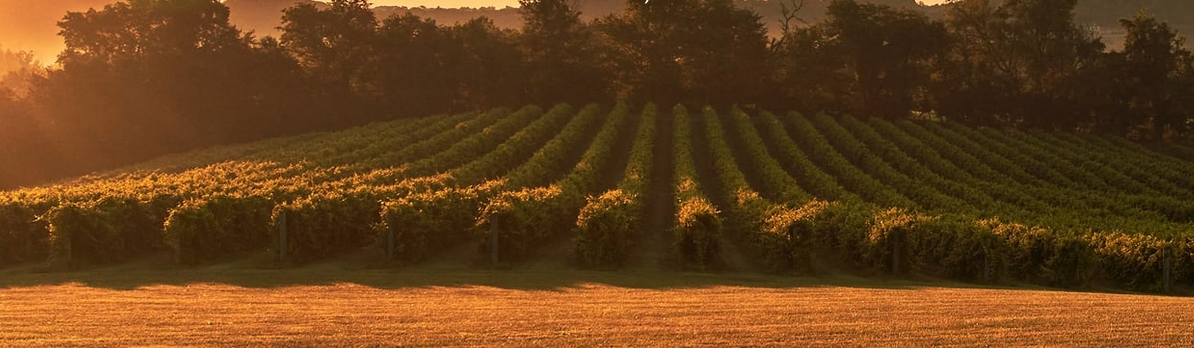
Designing at Noboleis Vineyards requires an understanding of scale and the elements. The Missouri Wine Country landscape is expansive, and the architecture is heavy with stone and wood, meaning dainty arrangements will quickly disappear into the background. We focus on creating structural, organic designs that feel like an extension of the surrounding Norton and Traminette vines.
We know this venue intimately and have navigated the unique logistical challenges of the Augusta hillsides. Success here is found in the tension between the refined white fabric of the reception pavilion and the rugged, natural textures of the vineyard.
The Spaces
Hillside Ceremony Area
This is a classic vineyard vista, positioned perfectly to capture the rolling hills of Augusta. The aisle is grass, and the backdrop is pure horizon.
- What works: Large-scale “growing” floor installations that frame the couple without obstructing the view. Use the venue’s wooden barrels as pedestals for high-impact asymmetrical arrangements to create a sense of height and drama.
- Skip: Lightweight pedestals or thin, spindly arches that might tip in the frequent hillside gusts.
- Watch out: The grass can be uneven; all floral structures must be leveled and shimmed during setup to ensure they don’t lean.
- Budget hero move: Focus your entire ceremony budget on two massive, lush arrangements on the venue’s barrels. These can be easily moved by a professional team to the reception entrance or the head table after the ceremony.
Tented Pavilion
The pavilion is a blank canvas of white fabric and concrete. It is functional and weather-protected but requires floral intervention to feel intentional and warm.
- What works: Greenery crawls up the tent poles or delicate vines suspended from the ceiling. This draws the eye upward and softens the industrial feel of the tent structure. For tables, a mix of high and low centerpieces breaks up the visual monotony of a large tent.
- Skip: Very small bud vases on their own. In a space this large, they look like an afterthought. If you love bud vases, cluster them in groups of five or seven.
- Watch out: The sides of the tent are often open; light wind can move tall, top-heavy centerpieces. Ensure all tall vases have weighted bottoms (like decorative stones or heavy glass).
- Budget hero move: Greenery smilax wraps on the center tent poles. It provides a massive “wow” factor for a relatively lower cost compared to full floral installations.
Wine Cellar and Tasting Room
These spaces are characterized by stone walls, low ceilings, and a cozy, subterranean vibe. They are often used for intimate dinners or cocktail hours.
- What works: Monochromatic palettes that pop against the gray stone. Think creamy whites or deep, moody burgundies that lean into the winery aesthetic. Floor-to-ceiling “vine” moments that appear to grow up the stone walls are particularly effective here.
- Skip: Tall, airy arrangements that interfere with the low ceilings.
- Watch out: Lighting is limited in the cellar. Florals with high contrast or white blooms will photograph significantly better than dark purples or blues.
What Works at Noboleis Vineyards
Embrace the Barrel Pedestals. The venue’s wooden barrels are stable, thematic, and provide the perfect height for ceremony florals. Rather than bringing in rented stands, we prefer to design directly onto these or use them as hidden supports for overflowing garden-style urns.
Design for Wind Stability. Augusta is beautiful but breezy. We prioritize heavy ceramic containers or weighted glass for all tabletop work. For ceremony arches, we use internal steel weights and ground stakes to ensure the design stays exactly where it was placed, regardless of the weather.
Texture Over Perfection. This is a vineyard, not a ballroom. Florals that incorporate grapes, hypericum berries, or trailing jasmine vine feel at home here. We lean into “perfectly imperfect” shapes that mimic the way grapevines naturally climb and twist.
The Power of Repurposing. Because the ceremony site and the pavilion are in close proximity, Noboleis is an ideal venue for moving large floral pieces. A lush ceremony arch can be broken down into “ground nests” for the sweetheart table, and barrel arrangements can flank the band or the cake display.
Seasonal Palette Shifts. In the summer, the vineyards are vibrant green; in the fall, they turn to gold and rust. We recommend palettes that either complement these shifts (golds and ambers in October) or provide a clean contrast (crisp whites and sage greens in June).
Budget Guide
| Tier | Estimate | Description |
|---|---|---|
| Essentials | $1,750 - $3,000 | Focuses on personal flowers and a few high-impact “moment” pieces. Typically includes bouquets, boutonnieres, and two large barrel arrangements for the ceremony that are later moved to the reception. |
| Sweet Spot | $3,500 - $5,500 | A more comprehensive design including a full ceremony arch or ground-level floral meadow, plus a mix of lush low centerpieces and bud vases for the pavilion tables. |
| Full Experience | $6,000 - $9,000 | Includes everything in the Sweet Spot plus greenery wraps for the tent poles, elevated centerpieces on half the tables, and a dedicated floral installation for the bar or sweetheart table. |
| Statement | $10,500+ | A total transformation of the pavilion. This involves overhead floral installations, a fully flowered ceremony entrance, and premium blooms throughout the entire venue, including the wine cellar. |
The character of Noboleis Vineyards is rooted in its rugged Missouri charm; your floral budget should prioritize scale and texture to ensure your designs feel as grand as the landscape.
Tips
- Anchor your arch. The hillside wind is no joke; ensure your florist uses heavy-duty base weights or ground stakes for any outdoor structures.
- Repurpose with intention. The walk from the ceremony to the pavilion is short, making it easy for a floral team to move large arrangements during the cocktail hour.
- Think about the floor. The pavilion has a concrete floor; use lush, low arrangements or floor installations to hide the transition between the tables and the ground.
- Coordinate with the vines. If you want the “vineyard look,” remember that the vines are most lush from June through September; they are dormant and brown in the winter and early spring.
- Lighting matters. If you are using the pavilion after dark, consider adding floating candles to your floral designs to help the tables glow against the dark vineyard backdrop.