
You leave Highway 44 at the Pacific exit, the last gas stations and Route 66 nostalgia shops falling away behind you, and Thornton Road narrows into something quieter. The land opens up, flattens, then rolls, and suddenly there are cows grazing in pastures that seem to stretch forever. This is not manufactured pastoral charm. This is a working farm — 246 acres of it, in fact, operated by the same family for 125 years. When Haue Valley appears, it does so honestly: a timber-frame reception hall with soaring cedar beams cut from trees on the property itself, a stone fireplace built with fieldstone gathered from these hills, and beyond it all, a historic vineyard where wine grapes once won a silver medal at the 1904 World’s Fair. The daffodils arrive by the thousands in spring. The cows wander the hillsides. The ponds reflect the sky. This is not a venue trying to look like a farm. It is a farm that happens to host weddings, and that distinction — that authenticity — changes everything about how you approach Haue Valley wedding flowers. Poppy has designed for one celebration here so far, with 26 couples reaching out to ask about this space, and every conversation begins with the same realization: the land does half the work for you.
About Haue Valley
Haue Valley sits on a 125-year-old family farm just west of St. Louis, a thirty-minute drive from downtown that deposits you squarely in Missouri farm country. The property sprawls across 246 acres of rolling pasture, woodland, ponds, open meadow, and that storied vineyard — planted over a century ago, tended by generations, and still producing grapes descended from the vines that earned recognition at the 1904 World’s Fair. The farm is not a prop. It is actively worked. Cows graze the hillsides. The ponds are stocked. The woodland trails wind through genuine forest, not landscaped gardens. This is the Midwest as it actually exists, not as a decorator imagines it, and that authenticity is Haue Valley’s greatest asset.
The main reception hall was built with intentionality. The cedar beams that arch across the soaring ceiling were milled from trees harvested on the farm itself. The stone fireplace — a dramatic focal point with a 100-inch mantle — was constructed from fieldstone gathered on the property. The walls are clad in warm wood with greenery accents already built into the design, which means the space arrives pre-dressed in a way that flatters nearly any floral palette. Hanging lanterns provide ambient lighting. A wooden bar anchors one end of the 30-by-80-foot hall. Glass doors open onto views of the farm beyond. The aesthetic is what you might call “elevated barn” — rustic bones, refined execution, and enough architectural character that florals can play a supporting role rather than carrying the entire design load.
The venue also includes a recently added 23-by-64-foot extension off the main hall, effectively expanding reception capacity and providing additional space for lounge areas or cocktail service. A separate 1,000-square-foot log cabin serves as the bridal suite, complete with an outdoor balcony, a dedicated hair-and-makeup room outfitted with five ring-light mirror stations, and an abundance of natural light. The groom suite offers entertainment (big-screen TV, gaming systems, shuffleboard, foosball) in a space designed to keep the party relaxed before the main event. There is a bonus reception suite below the main hall for private moments or securing belongings, and a courtyard that functions as a versatile space for first looks or additional photo opportunities.
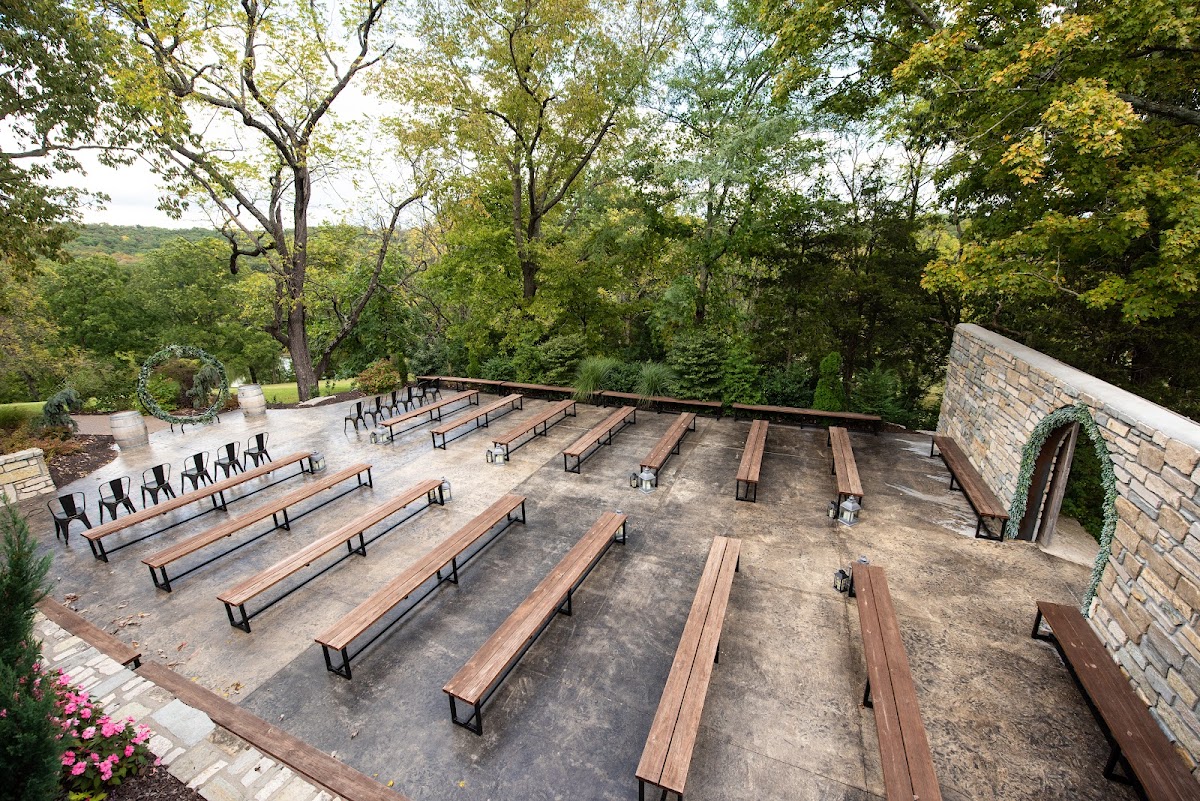
Outdoor ceremony options include the Lower Patio, which features a natural greenery backdrop and can accommodate up to 200 guests with a 50-foot aisle, and a more secluded wooded waterfront area called The Point, available as an upgrade for couples seeking maximum privacy. The property also includes a stone archway (250 inches total, ideal for garland installations) and a circular floral ring structure (requiring approximately 22 feet of garland), both of which serve as distinctive ceremony focal points.
One operational detail worth noting: Haue Valley provides over 3,000 pieces of decor through their “Something Borrowed Closet,” available for couples to use at no additional charge. This extensive inventory — vases, candles, signage, linens, and more — can significantly reduce the need for supplemental floral or decorative elements, which in turn allows couples to focus their floral budget on high-impact installations rather than filling every surface. For Poppy’s delivery and setup, the venue provides vendor access at contracted times (not earlier), and a staff team leader is present throughout the event to facilitate smooth transitions. Load-in is straightforward, with ample space near the reception hall, and the layout flows logically from ceremony to cocktails to reception. Music must end by 10:30 PM on Fridays and Saturdays (off property by midnight) or 9:30 PM on Sundays (off property by 10 PM), and gates lock at midnight to keep the farm secure, so no vehicles can be left overnight.
From a logistics perspective, Haue Valley requires couples to use caterers from their exclusive list (The Hawthorne Inn, Two Mike’s Catering, Pappy’s Smokehouse, and Graze Catering) and T’s Liquor Lane for bar service. No outside alcohol is permitted after the event begins, though outside food and non-alcoholic drinks are allowed before the ceremony. Fireworks and sparklers are prohibited, and nothing can be hung from the high cedar beams due to their height. However, the venue provides hooks for decor that doesn’t damage walls, and they handle all standard cleanup and trash removal.
For a Pacific wedding florist, the drive from our studio is uncomplicated — straight west on Highway 44, off at the Pacific exit, and down Thornton Road. The venue’s location on historic Route 66 adds a touch of Americana nostalgia for guests making the drive, and the surrounding area offers charming downtown Pacific for rehearsal dinners or post-wedding brunches. The farm setting, combined with easy highway access, strikes that rare balance between genuine rural escape and metropolitan convenience.
Event Spaces & Floral Opportunities
Main Reception Hall
Capacity: 200 seated (including bridal party)
Setting: The heart of Haue Valley is this 30-by-80-foot hall with a soaring ceiling and cedar beams that were milled from trees on the farm. The beams are tall — unreachable by ladder, so nothing can be suspended from them — but they create a sense of cathedral-like volume that makes the space feel grand without being cavernous. The stone fireplace dominates one wall, its 100-inch mantle providing a natural stage for floral drama. The walls are clad in warm wood with greenery already integrated into the design, and hanging lanterns provide soft, ambient light. A wooden bar sits at one end, and glass doors open onto farm views. The palette is honey-toned wood, warm stone, and muted greenery, which gives you a neutral base that flatters nearly any floral direction.
Floral approach: Because the beams are out of reach, all floral impact happens at eye level and below, which is actually a gift — it forces you to focus on the surfaces that guests will see and interact with most. The fireplace mantle is the single most important floral real estate in this room. We recommend a lush, asymmetrical garland that spills over the edges: smilax and seeded eucalyptus as the base, with clusters of Quicksand roses, café au lait dahlias, and white lisianthus woven through, plus trailing jasmine vine to soften the edges. If you’re working with a tighter budget, even a simpler arrangement of clustered pillar candles in varying heights with low, trailing greenery will make that mantle sing. For guest tables, consider either low, abundant centerpieces in weathered wood boxes (garden roses, ranunculus, stock, and Italian ruscus) or elevated arrangements on tall gold stands that lift florals above sightlines and create visual layers without blocking conversation. The wooden bar is an excellent spot for a statement arrangement — something substantial in a copper urn, with movement and texture that catches the eye from across the room. The built-in greenery on the walls means you don’t need to add much to the vertical surfaces; instead, let the architecture do its work and focus your efforts on the mantle, the tables, and key accent areas like the entrance or the bar.
Lower Patio Outdoor Ceremony Space
Capacity: 200 seated
Setting: This outdoor ceremony area offers a natural greenery backdrop — living foliage that changes with the seasons but always provides a lush, verdant wall of texture. The patio accommodates a 50-foot aisle (three feet wide), and the seating arrangement flows naturally toward the ceremony focal point. The backdrop is already doing the heavy lifting visually, which means you don’t need to construct an entire floral environment from scratch. The space is open to the sky, surrounded by the farm’s rolling landscape, and benefits from the kind of natural beauty that requires a light touch rather than heavy intervention.
Floral approach: The existing greenery backdrop is your greatest ally here, so resist the urge to compete with it. Instead, frame and enhance what’s already present. The stone archway (measuring 250 inches total) is the ideal canvas for a dramatic garland installation — approximately 21 feet of lush greenery (Israeli ruscus, silver dollar eucalyptus, and olive branches) with blooms clustered at intervals: Juliet garden roses, white ranunculus, blush lisianthus, and soft peach spray roses. The garland should feel organic and slightly wild, as though it grew there naturally. For the aisle, we favor simplicity: arrangements in vintage brass urns or galvanized buckets placed every three to four rows, or wooden shepherd’s hooks with floral clusters suspended at varying heights to create rhythm without blocking views. If the budget allows, a circular floral ring structure (the venue has one that requires approximately 22 feet of garland) can be installed as a ceremony focal point — imagine a wreath of smilax, fern, and white blooms suspended behind the couple, framing them within a living circle. Keep the aisle runner simple (or skip it entirely and let the natural patio surface show through), and consider white or blush petals scattered lightly down the aisle for subtle romance.
Indoor Ceremony Space (Fireplace)
Capacity: 200 seated
Setting: When weather doesn’t cooperate, the indoor ceremony moves in front of the stone fireplace, which serves as a dramatic and intimate backdrop. The fireplace’s architecture is substantial — all that fieldstone, the 100-inch mantle, the warmth of a crackling fire if the season allows — and the hall’s soaring ceiling creates a sense of occasion even in the rain-plan scenario. The space is already furnished with seating capacity for 200, and the layout allows for a center aisle that leads directly to the fireplace.
Floral approach: This is one of the rare cases where a rain plan might actually be more photographically stunning than the outdoor option, because the fireplace is such a compelling focal point. Dress the mantle with a lush, overflowing garland similar to what you’d use for the reception — greenery as the base (smilax, eucalyptus, fern), with blooms clustered heavily toward the center and trailing outward: garden roses in ivory and blush, white hydrangea, ranunculus, hellebores, and spray roses, all loosened with trailing jasmine vine and Italian ruscus. If the season permits a fire, keep the garland slightly elevated off the mantle surface so it doesn’t overheat, and avoid delicate blooms that wilt easily in warmth. Flank the fireplace with two large urns on pedestals — substantial installations with height and presence, using branches (curly willow, flowering quince, or dogwood) as structural elements and filling in with hydrangea, roses, and greenery. Add pillar candles in varying heights on the hearth for additional glow. The aisle can be marked with simpler arrangements than the outdoor ceremony — perhaps just greenery and candles in hurricane lanterns, allowing the fireplace installation to remain the visual anchor.
Building Addition
Setting: This 23-by-64-foot space extends off the side of the main reception hall, effectively adding nearly 1,500 square feet of usable area. It functions as overflow reception space, a lounge area, or additional cocktail service depending on how the couple configures the event. The aesthetic matches the main hall — warm wood, clean lines, and neutral tones.
Floral approach: Treat this as an extension of your main reception design rather than a separate space. If you’ve used low centerpieces in wood boxes in the main hall, repeat that treatment here on any cocktail tables or lounge surfaces. If the addition is being used for a lounge area with sofas and armchairs, consider one or two statement arrangements on side tables — substantial enough to anchor the space but not so large that they overwhelm intimate conversation areas. This is also an excellent spot to use some of the venue’s 3,000+ pieces from the Something Borrowed Closet — vintage books, candles, lanterns — mixed with smaller floral accents (bud vases with single stems, small posies in vintage vessels) to create a layered, collected look without significant floral investment.
Bridal Suite (VIP Room #1)
Setting: A 1,000-square-foot log cabin that sits separate from the main venue but within easy walking distance. This space includes an outdoor balcony, a dedicated hair-and-makeup room with five ring-light mirror stations, abundant natural light, and cozy seating areas. It’s open from 7 AM until the ceremony begins, giving the bridal party ample time to settle in, get ready, and take getting-ready photos.
Floral approach: The bridal suite benefits from a restrained floral touch — enough to make the space feel special and photo-ready, but not so much that it competes with hair, makeup, dresses, and all the other visual elements in play. A small arrangement for the main sitting area — perhaps a low, lush design in a ceramic vessel with garden roses, ranunculus, and trailing greenery — provides a beautiful backdrop for detail shots (rings, shoes, invitation suite) and adds a touch of luxury. The outdoor balcony is ideal for bridal bouquet photos, so ensure the bouquet itself is designed to be photographed in natural light: soft, romantic, slightly loose in structure, with movement and texture that catches the light. Consider a single bud vase with a few stems on the makeup station, or a petite arrangement that doesn’t take up valuable counter space but adds a touch of beauty to the getting-ready process.
Courtyard
Setting: An outdoor courtyard area that serves multiple purposes throughout the event — first looks, additional ceremony option, photo location, or cocktail hour overflow. The setting is naturally beautiful, with the farm’s landscape visible in all directions and the courtyard itself providing a defined, intimate space within the larger property.
Floral approach: The courtyard’s versatility means your floral approach should be adaptable. If it’s being used for a first look, a single statement piece — a large urn overflowing with blooms and greenery, placed near the spot where the couple will meet — provides a focal point without cluttering the space. If the courtyard hosts the ceremony, treat it similarly to the Lower Patio: enhance rather than overwhelm, using the stone archway or the floral ring structure as your primary installation. For cocktail hour, scattered arrangements on high-top tables (compact, elevated designs that don’t take up drink space) keep the floral presence consistent without requiring major investment. The key is to think modularly: arrangements that can be moved, repurposed, or scaled up and down depending on how the courtyard is being used at different points in the day.
The Point
Setting: A private, secluded ceremony location on the property — wooded, waterfront, and intentionally set apart from the main venue areas. This is an upgrade option for couples seeking maximum intimacy and a true escape-into-nature feeling. The woodland provides a natural canopy, the water adds reflective light and movement, and the seclusion creates a ceremony that feels like a secret shared only with your closest people.
Hillside & Vineyard
Setting: The property’s scenic hillside features the historic vineyard — grapes descended from the vines that won a silver medal at the 1904 World’s Fair. This area is primarily used for photos rather than as an event space, but it’s one of the most visually distinctive parts of Haue Valley and worth considering in your overall floral plan.
Floral approach: The vineyard itself is the star here, so floral interventions should be minimal. However, if you’re taking formal portraits in the vineyard, consider bringing along a few loose stems (not in water, just handheld) to add to the bride’s bouquet or for the couple to hold together — a casual, organic touch that photographs beautifully against the rows of vines. For couples who want to honor the vineyard’s history, incorporating actual grapevine tendrils into other arrangements (ceremony arch, fireplace mantle, centerpieces) creates a subtle narrative thread that ties the floral design to the property’s heritage. Just coordinate with the venue team first — never harvest materials from the vineyard without permission.
Wedding Flower Ideas for Haue Valley
Farm & Hearth
This design concept leans into Haue Valley’s working-farm roots with a palette that feels gathered from the property itself. Start with a base of warm neutrals — ivory, cream, soft peach, and buttery yellow — and layer in textures that evoke the countryside: garden roses (Patience, Juliet, and Bombastic), ranunculus in cream and soft apricot, stock in blush and ivory, and dahlias in café au lait and peach tones. The greenery mix should feel abundant and slightly wild: Italian ruscus, seeded eucalyptus, olive branches, and fern, with accents of privet berries and scabiosa pods for textural interest. Vessels lean rustic but refined — weathered wood boxes for low centerpieces, galvanized metal buckets for aisle markers, and aged copper urns for statement pieces like the fireplace mantle. The overall effect is warm, inviting, and deeply connected to the land. This palette works beautifully in the main reception hall, where the cedar beams and stone fireplace provide the perfect backdrop, and in the outdoor ceremony space, where it complements rather than competes with the natural greenery.
Vineyard Romance
Drawing inspiration from the property’s historic vineyard, this concept uses a palette of deep wine tones, plums, and dusty mauves balanced by softer blush and ivory. Think burgundy dahlias (Rip City, Black Satin), plum-toned ranunculus, deep purple calla lilies, and burgundy hellebores as your rich, saturated base, lightened with Quicksand roses, blush spray roses, and café au lait dahlias. Textural accents include actual grapevine tendrils (with venue permission), privet berries, and silvery olive foliage. Arrangements sit in dark bronze vessels, amber glass compotes, or even wine barrels (if the venue has them available through the Something Borrowed Closet). The aesthetic is moody, romantic, and unmistakably tied to the winemaking landscape. This palette is especially stunning in the indoor ceremony space with the fireplace as a backdrop — imagine that dramatic stone architecture dressed with deep, wine-colored blooms and flickering candlelight. It also photographs beautifully in the vineyard itself, where the deep florals echo the colors of ripening grapes and autumn foliage.
Modern Meadow
For couples drawn to Haue Valley’s natural beauty but seeking a cleaner, more contemporary aesthetic, this concept strips away the rustic elements in favor of a modern, refined approach. The palette is soft and sophisticated: white, blush, soft lavender, and pale green. Flowers include white garden roses (Patience, Polo), blush ranunculus, lavender sweet peas, white lisianthus, astilbe in blush and white, and hellebores in pale green. Greenery is kept simple and structural: eucalyptus (both seeded and silver dollar), fern, and Italian ruscus, without trailing vines or overly loose, organic elements. Vessels are sleek and minimal — white ceramic cylinders, clear glass, and brushed gold stands for elevated arrangements. The overall effect is fresh, airy, and elegant without being overly formal. This design concept works particularly well in the building addition, where the cleaner lines of the newer space complement the modern aesthetic, and in the bridal suite, where the soft palette photographs beautifully in natural light. For centerpieces, consider low, tightly gathered arrangements in white ceramic vessels, allowing the soaring cedar beams and stone fireplace to provide the rustic elements while the florals remain refined and contemporary.
Seasonal Considerations
Haue Valley’s location in Pacific, Missouri — part of the greater St. Louis metro area — means experiencing four distinct seasons, each with its own personality, challenges, and opportunities for wedding flowers.
Spring (March through May) brings the property’s most dramatic seasonal display: thousands of daffodils blooming across the farm, carpeting the hillsides in cheerful yellow. This is a gift for couples marrying in spring — the landscape does much of the decorative work for you, and your floral palette can either echo the daffodils (soft yellows, creams, and greens) or contrast with them (soft pinks, lavenders, and whites). Spring also brings tulips, hyacinths, and ranunculus into peak season, with excellent availability and pricing. The weather is variable — warm sunshine one day, cold rain the next — so have a solid rain plan in place for outdoor ceremonies (the indoor fireplace option is your friend here). Peonies typically arrive in mid-to-late May in Missouri, and if your wedding falls during that narrow window, they’re worth splurging on. Just know that spring can also bring severe weather (thunderstorms, occasionally tornadoes), so keep an eye on forecasts and stay flexible.
Fall (September through November) is arguably the most popular season at Haue Valley, and for good reason. The weather is mild and pleasant, the humidity drops, and the farm takes on those golden, amber tones that make everything look like it’s been dipped in honey. Dahlias are at their absolute peak in September and October, offering an extraordinary range of colors, sizes, and forms at excellent prices. This is also prime season for marigolds, chrysanthemums (the elegant, spray varieties, not the grocery-store pom-poms), and the last of the garden roses. Fall foliage adds natural color to the landscape — the wooded areas around The Point and the hillsides turn shades of red, orange, and gold — which means your floral palette can lean into those warm, autumnal tones or provide contrast with cooler shades (dusty blues, plums, soft grays). Temperatures begin to drop in November, and by Thanksgiving you’re looking at potential frost, so keep that in mind for late-fall weddings. The vineyard’s grapevines turn brilliant shades of crimson and gold in autumn, making the hillside ceremony and photo locations particularly stunning.
Winter (December through February) is the quietest season at the farm, and also the coldest. Temperatures can drop below freezing, and snow is possible (though not guaranteed). For couples marrying in winter, the indoor spaces become your primary focus — the fireplace ceremony option is ideal, and the crackling fire adds genuine warmth (not just visual ambiance). Winter florals lean on imported varieties and hothouse blooms: amaryllis, anemones, hellebores, ranunculus, and evergreens (pine, cedar, fir, juniper). This is also an excellent season for incorporating non-floral elements: pinecones, berries (hypericum, ilex, privet), branches (curly willow, birch, red twig dogwood), and greenery garlands that can handle cooler temperatures without wilting. The color palette often shifts toward richer tones — deep reds, burgundies, forest greens, and creamy whites — or toward icy, elegant palettes (white, silver, pale blue, champagne). The Something Borrowed Closet likely includes winter-appropriate decor (lanterns, candles, cozy textiles), which can be mixed with florals to create a layered, seasonally appropriate design without requiring massive floral investment. If you’re planning an outdoor ceremony in winter, have substantial contingency plans — the indoor fireplace option is non-negotiable.
Poppy’s Expert Take
The Something Borrowed Closet is not a threat to your floral budget — it’s an opportunity. Many couples worry that a venue providing 3,000+ decor pieces means they should minimize florals to avoid redundancy. The opposite is true. Use the venue’s existing inventory for foundational elements (lanterns, candles, signage, linens, accent pieces) and concentrate your floral budget on high-impact installations that can’t be borrowed: the fireplace mantle, ceremony installations, centerpieces, and personal flowers. This approach gives you a fully designed event without spreading your floral budget too thin. Coordinate with the venue team early to see what’s available in the closet, then design your floral plan to complement rather than duplicate those items.
The fireplace mantle is your single most important floral investment in the reception space. Whether you’re using the main hall for dinner or cocktails, that stone fireplace draws the eye, anchors the room, and appears in approximately 80% of reception photos. A lush, dramatic garland on that 100-inch mantle — even if it’s your only substantial floral installation in the room — will carry the entire space. Budget a minimum of $400-600 for this piece alone if you’re working with a smaller overall budget, or $800-1,200 if you want something truly spectacular. The return on investment is significant: one installation that appears in countless photos, creates a cohesive design anchor, and makes the space feel fully dressed even if your centerpieces are more modest.
The stone archway and floral ring are ceremony focal points that actually justify their cost. At 250 inches (roughly 21 feet) for the archway and 22 feet for the ring, these installations require substantial materials and labor. But unlike a rented arch that you’re paying to install, dress, and then dismantle, these structures are permanent features of the venue. You’re simply enhancing what’s already there. The result is a ceremony backdrop that looks intentional, integrated with the property, and photographically distinctive. If budget is tight, choose one (the archway is more traditional; the ring is more unique) and invest in dressing it beautifully rather than attempting both with insufficient materials.
Book your wedding during daffodil season and let the farm do half your floral work. If you have flexibility with dates, consider late March through April, when thousands of daffodils bloom across the property. The landscape becomes a natural floral installation, your ceremony backdrop is already dressed in yellow