
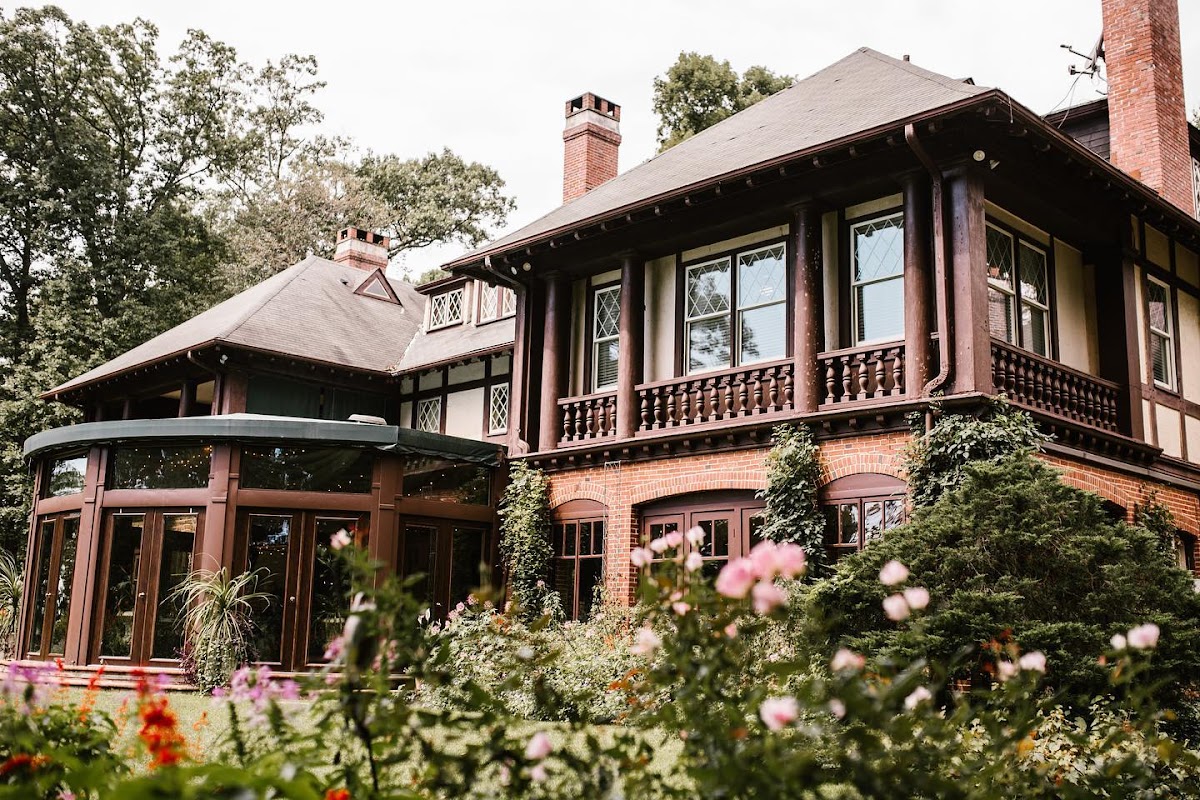
Gramercy Mansion presents a rare design opportunity to lean into a “Gothic Garden” aesthetic. The property is defined by the tension between its moody, dark-wood Tudor interiors and the bright, sprawling formality of its 45-acre grounds. We know this venue intimately, and the most successful designs here are those that acknowledge this contrast rather than trying to soften it.
The floral strategy at Gramercy should be architectural. Because the mansion is so heavily detailed—think ornate rugs, dark paneling, and historic artwork—florals need to be clean, intentional, and scaled correctly to avoid looking like clutter. Outside, the challenge is the opposite: the gardens are so vast that small arrangements simply vanish. You must design for the scale of the landscape.
The Spaces
Garden Ceremony Space
This is a classic English garden setting with brick walkways and a white gazebo that serves as the natural altar. The surrounding mature trees provide a canopy that filters light beautifully for afternoon ceremonies.
- What works: “Nesting” the gazebo. Rather than bringing in a standalone arch, we recommend building floral installations directly onto the gazebo’s structure. Lush, asymmetrical clusters on the pillars create a sense that the garden is reclaiming the architecture.
- Skip: Heavy, floor-standing metal arches. They often look flimsy against the permanent stone and wood structures of the garden.
- Watch out: The brick walkways are historic and can be uneven. Any ground-level installations or aisle markers must have weighted, stable bases to prevent tipping.
- Budget hero move: Focus 70% of the ceremony budget on the gazebo. It is the focal point of every photo; aisle markers are secondary in a space this naturally lush.
The Conservatory
The glass atrium is a transitional space that bridges the mansion’s history with a more modern, light-filled atmosphere. It is the most versatile room for floral design because of its rigging capabilities.
- What works: Hanging installations. The exposed beams are perfect for floral “clouds” or greenery vines that draw the eye upward. This keeps table surfaces clear for dining while filling the vertical volume of the room.
- Skip: Standard low rounds without any height. The glass walls and high ceiling can make the room feel “empty” if all the decor is kept at table level.
- Watch out: The abundance of natural light will make colors appear more vibrant than they do in the mansion’s interior. If you are using a moody palette, ensure it has enough saturation to hold up under direct sun.
- Budget hero move: A single, high-impact hanging installation over the head table or dance floor.
Grand Foyer & Staircase
This is the mansion’s centerpiece. The dark wood staircase is a masterclass in 19th-century craftsmanship and demands a floral response that is equally grand.
- What works: Cascading staircase garlands. Using a mix of long-lasting greenery like eucalyptus and smilax, punctuated by focal blooms, creates a high-drama entrance moment.
- Skip: Small bud vases on the foyer tables. They get lost against the heavy wood and ornate rugs.
- Watch out: This is a high-traffic area. Garlands must be secured tightly to the banister to ensure they don’t shift as guests move between rooms.
- Budget hero move: If you aren’t doing a full staircase wrap, focus on a lush “puddle” of flowers at the base of the newel post. It anchors the room for a fraction of the cost.
Carriage House
For receptions, the Carriage House offers a more rustic, intimate vibe. It is simpler than the main mansion, which allows for more creative freedom with the floral palette.
- What works: Long farm tables with low, textural “meadow” runners. This complements the rustic architecture and encourages conversation.
- Skip: Tall, traditional trumpet vases. The ceiling height here doesn’t support them as well as the Conservatory does.
- Watch out: Lighting is generally lower here. Incorporating metallic accents or a high volume of candles is essential to make the flowers pop.
What Works at Gramercy Mansion
- High-Contrast Palettes: In the dark-wood rooms, white and cream flowers act as natural light sources. If you prefer color, go for deep jewel tones—burgundy, plum, and emerald—that lean into the mansion’s gothic roots.
- Architectural Nesting: Use the venue’s existing features—fireplaces, the gazebo, and the staircase—as the “bones” for your flowers. This makes the decor feel permanent and integrated.
- Candle Power: This venue was built for candlelight. We recommend doubling the standard candle count for any indoor reception here to highlight the floral textures and wood grain.
- Textural Greenery: Given the organic farm on-site, a “foraged” look works exceptionally well. Think seeded eucalyptus, ferns, and branches that mimic the surrounding 45 acres.
- Statement Entrances: The transition from the gardens to the mansion is a major part of the guest experience. Flanking the brick archways with large-scale arrangements helps define these movement moments.
Budget Guide
| Tier | Investment | Floral Strategy |
|---|---|---|
| Essentials | $1,750 - $3,000 | Focus on personal flowers and a high-impact gazebo installation. Use the venue’s natural beauty to carry the rest. |
| Sweet Spot | $3,500 - $6,000 | Adds a partial staircase garland and centerpieces for the Conservatory. Allows for a mix of low and elevated designs. |
| Full Experience | $6,500 - $9,500 | Includes a full staircase wrap, a hanging installation in the Conservatory, and lush mantel arrangements for the fireplaces. |
| Statement | $10,000+ | Floor-to-ceiling floral design, including entryway arches, full gazebo coverage, and custom installations in the Carriage House. |
Gramercy Mansion is a venue that rewards those who embrace its historic weight and lush surroundings with bold, architectural floral choices.
Tips
- Prioritize the staircase for indoor photos; it is the most iconic backdrop in the mansion and deserves the bulk of the indoor floral budget.
- Repurpose ceremony flowers from the gazebo to the Carriage House or Conservatory to maximize your investment in large-scale pieces.
- Plan for low-light photography by choosing flowers with some “shimmer” or lighter outer petals to ensure they show up in the moody interior rooms.
- Ask about seasonal blooms from Koinonia Organic Farm to ground your design in the specific Maryland landscape of the estate.
- Secure all outdoor arrangements with extra weight; while the trees provide a windbreak, the open garden areas can catch unexpected gusts.