
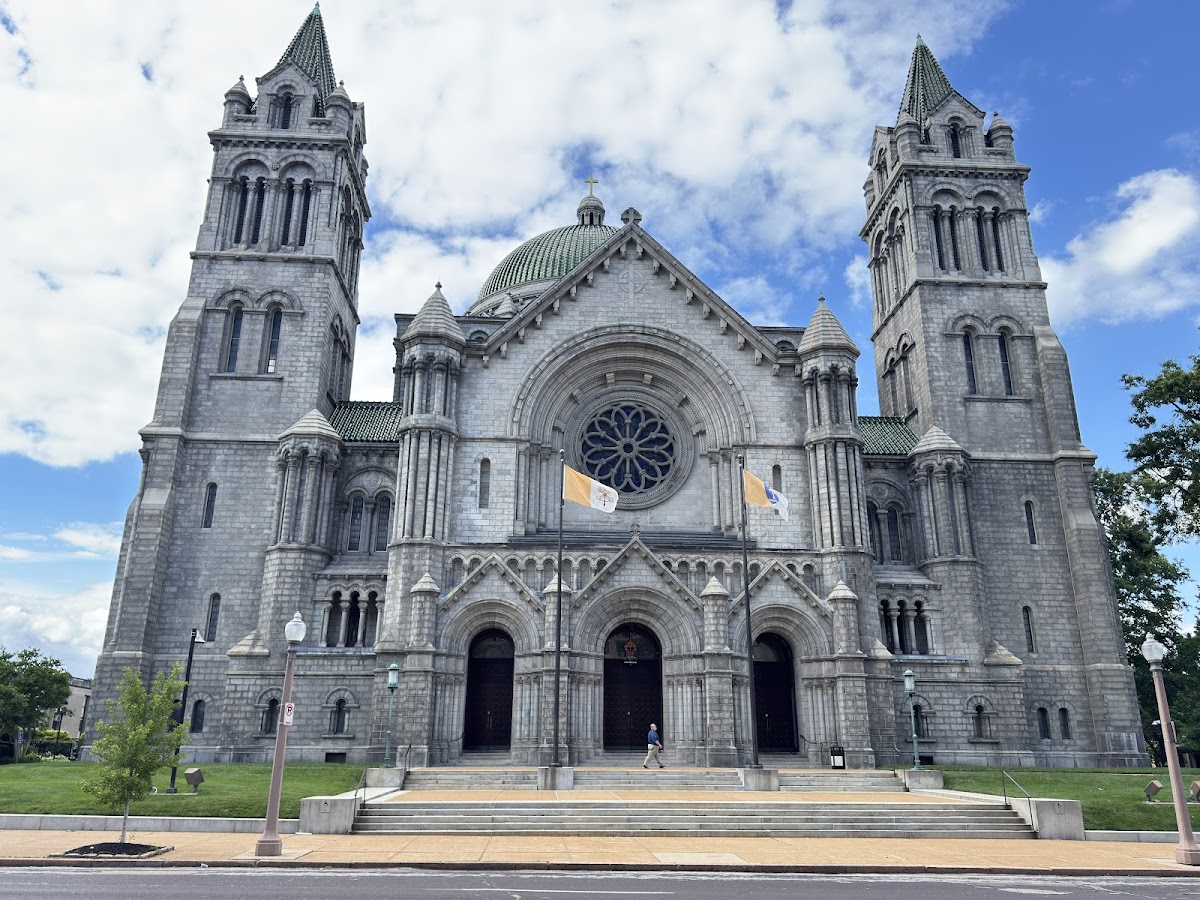
Designing for the Cathedral Basilica of Saint Louis is an exercise in scale and architectural reverence. This is not a space for delicate, airy “garden-style” wisps that might work in a tent; the sheer volume of the stone and the density of the mosaics will consume anything that lacks structural integrity. We know this venue intimately, and the secret to success here is understanding that you are decorating a monument, not just a room.
The floral opportunity lies in the contrast. Against the 41.5 million glass tesserae that make up the mosaics, fresh botanical textures provide a soft, living counterpoint to the rigid, historic brilliance of the walls. To design here is to work within a color palette already dictated by Byzantine and Italianate influences—golds, deep blues, and earthy terracottas.
The Spaces
Cathedral Interior
The nave of the Cathedral is one of the most imposing ceremonial spaces in North America. The height of the ceilings and the width of the center aisle mean that standard-sized pew markers or aisle runners often look miniature and accidental.
- What works: Substantial altar arrangements on pedestals that reach at least six feet in total height. Using heavy foliage like Magnolia or Ruscus provides the “visual weight” needed to anchor the space.
- Skip: Tiny posies on every other pew. They get lost in the sea of wood and stone.
- Watch out: The lighting is historically dim. Dark jewel tones like burgundy or navy will vanish into the shadows.
- Budget hero move: Focus the entire ceremony budget on two massive, show-stopping urns at the altar. These will be the focal point of every processional and wide-angle photo.
The Sanctuary
The area surrounding the high altar is where the most sacred moments of the liturgy occur. The architecture here is exceptionally ornate, featuring intricate carvings and marble.
- What works: Flanking arrangements that utilize “negative space.” By using tall, clean branches like Quince or Forsythia, you can add height without blocking the view of the mosaics.
- Skip: Busy, multi-colored “wildflower” looks. They compete with the patterns in the mosaics and create visual clutter.
- Watch out: Rigging is generally not permitted. All installations must be self-supporting and stable.
- Budget hero move: A lush, low-profile floral “meadow” at the base of the ambo (pulpit) provides a pop of freshness in the foreground of close-up shots.
Exterior Grand Entrance
The steps leading up to the Cathedral from Lindell Boulevard are a prime location for photography and guest arrival. The transition from the urban environment of the Central West End to the sacred interior is a significant moment.
- What works: Large-scale stone or heavy resin urns at the top of the stairs. These frame the couple as they exit and provide a “finished” look to the facade.
- Skip: Light floral stands that might blow over in a gust of wind on Lindell.
- Watch out: This is a public-facing space. Installations should be set up as late as possible to ensure security and freshness.
- Budget hero move: If the budget is tight, skip the exterior entirely and move those funds to the altar. The building itself is the statement.
What Works at Cathedral Basilica
- High-Contrast Palettes: Whites, creams, and pale yellows are the heroes of this venue. They catch whatever light is available and pop against the dark stone and gold-leaf mosaics.
- Architectural Foliage: Think large-scale. Monstera leaves, palms, or even tall pampas (if styled elegantly) can match the “bigness” of the Cathedral.
- Monobotanical Groupings: Massing one type of flower—like 50 stems of Calla Lilies or a cloud of Hydrangea—creates a clean, modern look that doesn’t fight with the intricate mosaic patterns.
- Symmetry: This is a formal, traditional space. Symmetrical placements feel more intentional and harmonious with the Byzantine architecture than asymmetrical “organic” placements.
- Candlelight (Where Allowed): While floral rules are strict, the addition of floor-standing candelabras (if permitted by the current sacristan) can add the warmth that the stone interior often lacks.
Budget Guide
| Tier | Investment | Floral Strategy |
|---|---|---|
| Essentials | $1,750 - $2,500 | High-end personal flowers (bouquets/boutonnieres) plus two medium-sized altar arrangements that can be moved to the reception. |
| Sweet Spot | $3,500 - $5,000 | Grand-scale altar urns on rented pedestals, substantial aisle markers for the first 10 pews, and a lush arrangement for the Narthex. |
| Full Experience | $6,000 - $8,500 | Massive altar installations, full pew decor for the entire center aisle, and statement entrance arrangements for the Lindell Blvd steps. |
| Statement | $10,000+ | Floor-to-ceiling floral “trees” at the sanctuary entrance and a continuous floral runner or “meadow” lining the entire center aisle. |
The Cathedral Basilica is a venue where “less is more” only applies if the “less” is very, very large. A few massive pieces will always trump a dozen small ones.
Tips
- Check the liturgical calendar: The Cathedral often has its own decor for Easter, Christmas, or Ordinary Time. Ask what will already be in place so your flowers don’t clash with the church’s seasonal banners or lilies.
- Prioritize white flowers: The interior is darker than you think. Deep reds and purples will look like black holes in professional photography without significant flash.
- Plan for repurposing: The altar arrangements are usually the largest pieces of the day. Ensure your florist has a plan to transport these to the reception venue immediately following the ceremony.
- Strict setup windows: Cathedrals often have back-to-back ceremonies or confessions. Your floral team must be efficient and respectful of the “sacred silence” of the space.
- No adhesives: Never assume you can tape or wire anything to the pews or stone. All floral elements must be non-destructive and usually require specialized clips or freestanding structures.