
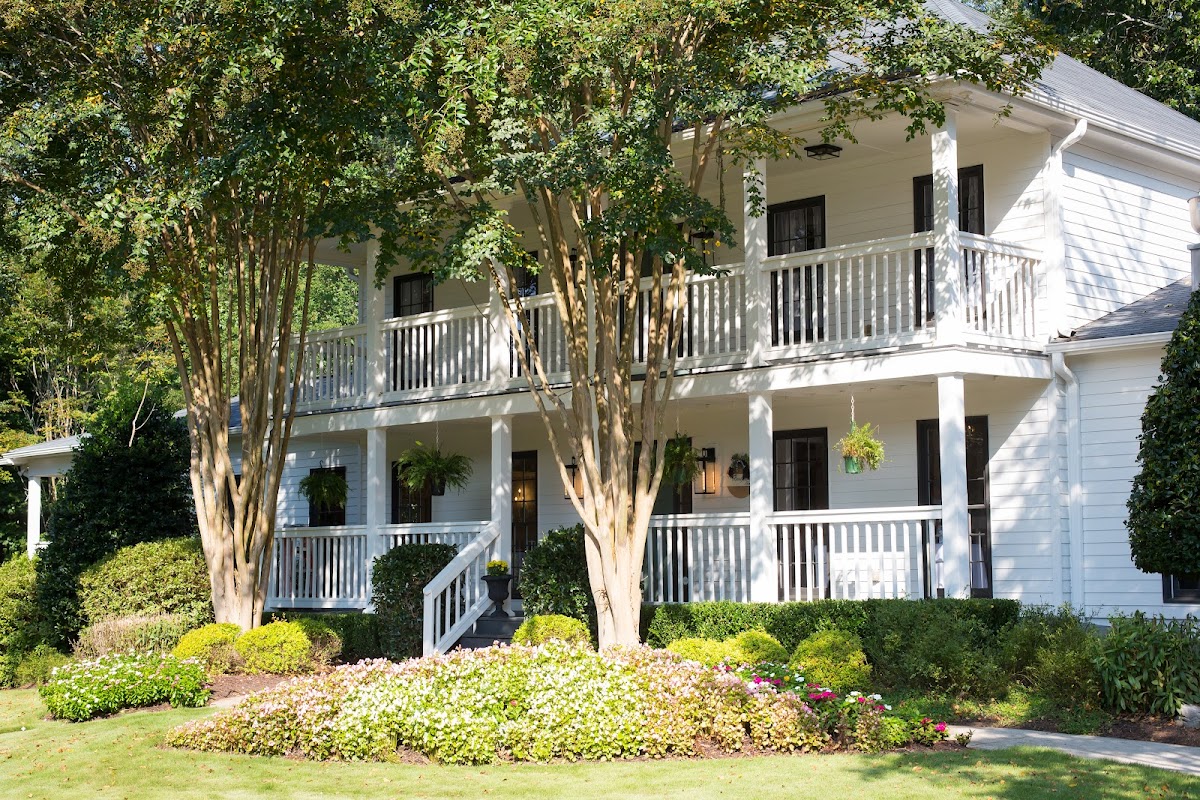
The approach to Bradford House and Gardens tells you everything you need to know about what kind of wedding day awaits. You leave McEver Road behind, the kind of commercial thoroughfare that defines outer Atlanta suburbs, and turn onto the property. Suddenly, the noise falls away. The seven-acre estate unfolds like a secret: first the classic white house with its deep front porch and those generous Southern proportions, then the gardens themselves—softly manicured but not fussy, opening onto glimpses of Lake Lanier through the trees. The magnolia in the front yard is the kind of tree that makes you stop and stare, its branches sweeping low and wide, glossy leaves catching the light, white blooms appearing almost architectural in their perfection. In the back, the woods press close in that particular North Georgia way, tall pines and hardwoods creating dappled shade, and there in the clearing sits the climate-controlled pavilion—modern comfort wrapped in Southern charm, draped ceilings and those clever fandelier hybrids spinning slowly above. This is not a grand estate trying to be something it’s not. Bradford House is simply, genuinely itself: an intimate lakeside property that understands the assignment, which is to make a wedding feel less like a production and more like a beautiful day in a place that matters.
About Bradford House and Gardens
Bradford House and Gardens sits on the south shore of Lake Lanier in Flowery Branch, Georgia, roughly 45 minutes north of Atlanta via I-985 and GA-347. The location puts it squarely in North Georgia lake country, where wooded residential areas meet water recreation and the pace slows down considerably from the city. This is not wine country or mountain country—it’s lake country, with all the particular characteristics that implies: tall pines, red clay soil, water glimpses through trees, and a certain unpretentious ease that comes from being a destination without trying too hard. The property encompasses seven acres bordering the lake’s southern portion, though the water views are more subtle than dramatic—you sense the lake through the woods rather than standing directly on its banks, which actually works beautifully for wedding photography and creates a more intimate, enclosed feeling to the gardens.
The house itself is classic Southern vernacular—white clapboard, black shutters, generous windows, and that extra-wide staircase inside that was clearly designed with grand entrances in mind. The original 1960 pine floors run throughout, honey-toned and well-worn in the best way, providing warmth against the crisp white walls. The wood-burning fireplace anchors one end of the main room, and when couples choose to hold their ceremony indoors (which happens more often than you’d think, particularly during Georgia’s unpredictable spring weather), the fireplace becomes an instant focal point. Two dressing suites are built into the house—one for each party—so there’s no scrambling for preparation space or awkward hotel room getting-ready sessions.
Outside, the property divides naturally into distinct zones: the front yard with its iconic magnolia, the woodsy ceremony site with its existing natural arch and tree canopy, and the back yard with its customizable setup including a wood backdrop for hanging florals and soft artificial grass flooring that solves the perpetual Southern wedding problem of heels sinking into natural grass after rain. The climate-controlled pavilion—2,000 square feet of covered space with actual HVAC, not just fans—functions as reception space, weather backup, and the reason couples can book here year-round without sweating the forecast quite so intensely.
Bradford House operates as a full-service venue, which means outside catering is strictly prohibited—all food comes from their onsite culinary team—and venue rental includes eight to ten hours of private access depending on package selection. For florists, this means coordinated but not complicated logistics. The venue team is small but communicative, vendor meals are included (a detail that matters more than couples realize when your floral team is installing for six hours), and the property’s compact layout means load-in is straightforward with paved parking close to setup areas. Outside vendors must be licensed and insured, standard for Georgia wedding venues. The Edison string lights throughout the gardens stay on for evening events, creating that soft amber glow that makes late-night reception photos look magical without additional lighting rentals. For a Flowery Branch wedding florist, or any Atlanta-area floral designer making the drive north, Bradford House is the kind of venue where the infrastructure supports your work rather than fighting against it.
Event Spaces & Floral Opportunities
Climate Controlled Pavilion
Capacity: 150 seated (175 if couples are flexible with layout)
Setting: The Climate Controlled Pavilion is Bradford House’s answer to Georgia weather, and it’s a good answer. At 2,000 square feet, the covered structure provides genuine climate control—air conditioning in summer, heat in winter—while maintaining an open, airy pavilion aesthetic through its draped fabric ceilings and fandiliers (those clever fan-chandelier hybrids that keep air moving while looking elegant). The pavilion’s footprint is wide and relatively unobstructed, with support posts positioned to allow flexible table configurations and clear sightlines. The fabric draping softens the ceiling, and the Edison lights strung throughout add warmth after dark. The space opens onto the back lawn and connects easily to both the main house and the gardens, functioning as either primary reception space or a supremely civilized Plan B if weather turns.
Floral approach: The draped ceilings in this pavilion create an unusual opportunity for suspended floral installations that don’t require rigging approval or engineering consultations—the existing structure can support lightweight garlands and hanging arrangements when properly secured. Consider a long installation of smilax and Italian ruscus running the length of the head table area, punctuated with clusters of Café au Lait dahlias and Quicksand roses for texture without excessive weight. For dining tables, stay low and lush—the fandiliers hang at a height that makes tall centerpieces awkward, so build your impact at table level with garden-style arrangements in matte ceramic vessels: Princess Miyuki ranunculus, Romantic Antike garden roses, white lisianthus, and plenty of silver dollar eucalyptus and jasmine vine trailing onto the linens. The pavilion’s neutral palette (cream draping, dark wood floors, soft lighting) accepts any color direction, but it particularly loves romantic blush-and-ivory schemes or richer jewel tones that pop against the pale fabric. For cocktail hour, if you’re using this space, line the bar with bud vases holding single stems—spray roses, sweet peas, or scabiosa—creating visual interest without blocking bartender workflow. The connection to the outdoors means you can extend floral moments from the pavilion onto the adjacent lawn, creating a visual thread between spaces with potted ferns or statement urns flanking the entrance.
Main House Interior
Capacity: Variable depending on use (typically cocktails or intimate ceremonies up to 50)
Setting: The main house interior is pure Southern charm without veering into theme park territory. Original 1960 pine floors glow honey-gold underfoot, running throughout the first floor and showing just enough age to have character. The walls are crisp white with large windows bringing in natural light from multiple exposures. The extra-wide staircase sits prominently, designed for dramatic descents, and the wood-burning fireplace provides an architectural anchor with a substantial mantel. The two dressing suites are on opposite ends of the floor, each with natural light and space for a small bridal party. The scale is residential rather than grand ballroom, which means intimacy and warmth but also means crowd control if you’re hosting full cocktail hour inside.
Floral approach: The staircase and fireplace mantel are your two hero moments inside this house, and they deserve full attention. For the staircase, a garland installation that follows the banister from bottom landing up several steps creates immediate impact for both arrival moments and photography—use a base of seeded eucalyptus and variegated pittosporum, then weave in Juliet garden roses, white ranunculus, and trailing amaranthus for movement. Keep the garland relatively loose and organic rather than densely packed; the pine floors and white walls provide such a clean backdrop that you want texture and air in the arrangement, not a solid mass of foliage. The fireplace mantel calls for a more structured installation: a low, wide arrangement that extends nearly the full length of the mantel, using a mechanics system that keeps everything secure if the fireplace is in use during cooler months. Build this with a mix of heights—taller tapers in brass candlesticks at varying levels, then clusters of Sarah Bernhardt peonies (in season), Mayra’s Rose or Kiera garden roses, white or cream lisianthus, and lots of movement from things like scabiosa stems, astilbe, and hanging amaranthus. The dressing suites each need just a small accent—a petite arrangement on the vanity or prep table in a mint julep cup or small ceramic vase, nothing that takes up working space but enough to make the getting-ready photos feel intentional. If couples are using the house for an indoor ceremony, flank the fireplace with two substantial ground arrangements in aged concrete or stone urns, built large enough to frame the couple but not so tall they block the mantel installation.
Outdoor Woodsy Ceremony Site
Capacity: Flexible, typically up to 150 with ceremony seating
Setting: The woodsy ceremony site embraces its setting rather than fighting it. Set against the backdrop of Lake Lanier views filtered through trees, the space features a natural wooden arch already dressed with wildflowers and greenery as part of the venue’s existing setup, positioned under a tall tree canopy that provides dappled shade. The ground is natural—forest floor with some areas of grass—and the feeling is genuinely sylvan without being difficult to navigate. The tree canopy creates natural overhead coverage, and the woods press close on three sides while opening to lake glimpses and sky in front. This is the ceremony site for couples who want a true garden wedding feel, who don’t mind nature’s imperfections, and who trust that the setting itself does most of the work.
Floral approach: The existing wooden arch structure eliminates the need to bring in rental pieces, but it absolutely benefits from floral enhancement beyond the venue’s basic wildflower treatment. Work with the structure rather than overwhelming it—add volume at one or both base corners with asymmetrical clusters of seasonal blooms and textured foliage: in spring and summer, try locally grown zinnias, phlox, Queen Anne’s lace, and lots of wild-looking grasses and seed heads; in fall, swap to local dahlias, sunflowers, seeded eucalyptus, and burgundy-toned foliage; winter calls for magnolia leaves (abundant in Georgia), white hellebores if you can source them, evergreen cedar and pine, and plenty of silver brunia or privet berries. Keep the arch installation deliberately imperfect and organic—this is not the venue for symmetrical, formal florals. For the aisle, rather than lining every single row, mark just the entrance and perhaps every third or fourth row with either shepherd’s hooks holding small floral clusters or low arrangements directly on the ground in weighted containers (those spring Georgia storms can blow things around). The tree canopy means overhead installations aren’t necessary and actually wouldn’t be visible, so save that budget for moments at eye level. Consider creating a small floral moment at the entrance to this ceremony space—a ground arrangement or two flanking the pathway where guests transition from lawn to woods, signaling the shift from cocktails to ceremony and providing a clear photo opportunity before the processional begins.
Front Yard Ceremony Area
Capacity: Flexible, typically up to 100 with ceremony seating
Setting: The magnolia tree in Bradford House’s front yard is not just a nice feature. It is the feature—a massive, mature specimen with sweeping branches that create a natural canopy, glossy green leaves that photograph beautifully, and those iconic white magnolia blooms appearing in late spring and summer. The tree’s scale is such that it needs very little help being a stunning ceremony backdrop. The front lawn is manicured but not precious, with enough space for rows of white folding chairs (included in venue setup) and clear sightlines from all angles. The house serves as backdrop behind the tree, white clapboard and black shutters providing classic Southern framing without competing with the magnolia’s drama.
Floral approach: The cardinal rule for this ceremony site: do not compete with the magnolia. This tree has been doing its job for decades, and your role is to complement, not upstage. If the wedding falls during magnolia blooming season (typically late April through June in North Georgia), you can echo the blooms elsewhere in your design—magnolia branches are difficult to source as cut material, but cream or white garden roses (Patience, Playa Blanca), white peonies, and ivory hellebores create the same lush, slightly creamy white effect. For the ceremony setup under the tree, consider a minimal approach: perhaps a low arc of florals at the base of the trunk, built like a ground installation rather than a standing arch, using a mix of white and cream blooms with plenty of greenery that matches the magnolia’s glossy leaves—variegated pittosporum, Italian ruscus, and camellia foliage all work beautifully. Line the aisle with something simple and unfussy—scattered petals, small arrangements in galvanized buckets every few rows, or nothing at all if the tree’s canopy and the lawn’s natural beauty are enough. If the wedding is outside blooming season, you have more flexibility to introduce color, but keep the scale appropriate; this is an intimate ceremony space where overscaled installations would look absurd. In fall, consider incorporating the burnished golds and russets that echo the season—Café au Lait dahlias, apricot roses, burgundy foliage—but keep arrangements low and organic. Winter ceremonies might add magnolia branches with their architectural seed pods (which appear after blooms fade), holly, and red berries for traditional holiday color if timing aligns.
Back Yard Reception Area
Capacity: Variable depending on layout
Setting: The back yard at Bradford House functions as the venue’s most customizable space, essentially a blank canvas that connects the main house to the woods and pavilion. The area features soft artificial grass flooring in key zones (solving the heel-sinking problem endemic to Southern lawn weddings), a wood backdrop structure designed for hanging florals or creating a deconstructed ceremony arch, space designated for DJ and bar setups, and open area for dining tables or dancing depending on the couple’s choice. Edison lights string throughout, providing ambient lighting after dark. The setting feels intimate despite the open layout—woods on one side, house on another, pavilion nearby—creating natural boundaries without fencing or formal garden walls.
Floral approach: The wood backdrop structure is your primary installation opportunity in this space, and it rewards creativity. Rather than treating it as a ceremony arch (unless it’s functioning as one), think of it as a large-scale installation wall. Create an asymmetrical garden-style installation that clusters densely on one side and trails off toward the other, using a mix of locally-sourced foliage as the base (Georgia has incredible greenery farms producing everything from magnolia to Carolina jessamine), then layering in blooms that feel organic rather than precious: locally grown dahlias, garden roses, butterfly ranunculus, orlaya, scabiosa, and plenty of movement from things like astilbe, amaranthus, or trailing jasmine vine. If this space is functioning as cocktail hour before guests move to the pavilion, scatter cocktail tables with bud vases—single stems in vintage glass bottles or small ceramic vessels—and create one larger bar installation using a mix of heights in clustered vessels, avoiding anything that blocks bartender access or guest ordering sightlines. The Edison lights strung throughout this space create beautiful ambient lighting at night, and florals don’t need to fight with them; instead, choose blooms that look luminous in warm artificial light—creams, soft peaches, blush tones, and whites all glow beautifully under Edison bulbs, while very dark or saturated colors can look muddy. If couples are using this space for outdoor dining rather than just cocktails, remember the artificial grass sections have specific boundaries, so table placement will follow that footprint. Centerpieces here can be slightly taller than in the pavilion since there’s no ceiling restriction, but keep in mind that this is an outdoor space, so arrangements need weighted containers and mechanics that account for wind.
Wedding Flower Ideas for Bradford House and Gardens
Lakeside Reverie
This design concept pulls directly from Bradford House’s Lake Lanier setting, translating water, woods, and Georgia’s native landscape into a floral palette that feels like it grew there. Start with a base of blue and blue-gray tones: delphinium in True Blue and Sky Blue, tweedia (that perfect dusty blue), and blue thistle for texture. Layer in soft whites and creams—Patience garden roses, white ranunculus, white lisianthus, and Queen Anne’s lace for an airy, wildflower effect. Bring in greenery that references Georgia’s native plants: seeded eucalyptus, wild fern (leatherleaf or tree fern), Carolina jessamine vine when available, and magnolia foliage for those glossy green leaves that catch light beautifully. Add soft gray accents through dusty miller, silver brunia, or air plants tucked into larger arrangements for unexpected texture. Vessels should feel organic and elemental—aged concrete urns for ground arrangements, clear glass cylinders that reference water for table centerpieces, weathered wood boxes for cocktail table accents. This palette absolutely sings in the Woodsy Ceremony Site and Back Yard Reception Area, where the blue tones complement filtered lake views and the organic style matches the natural setting. For the pavilion, use this palette in low, lush centerpieces that bring the outdoors in, and consider a suspended installation with plenty of greenery and trailing elements to mimic Spanish moss and Georgia vines overhead.
Magnolia Heritage
This concept pays homage to the front yard’s magnificent magnolia tree while creating a palette sophisticated enough to carry throughout the property. The core is cream and ivory—Patience, Playa Blanca, or Ivory Tower garden roses; white Majolica spray roses; cream ranunculus; white peonies (Sarah Bernhardt, Duchesse de Nemours) in season; and plenty of white lisianthus. Bring depth with soft greens: variegated pittosporum, Italian ruscus, and if you can source them, actual magnolia branches (though these are challenging to find as cut material; preserved magnolia leaves work as a substitute). Add warmth through subtle champagne and taupe tones—Quicksand roses, Cappuccino roses, champagne-colored hydrangea (Antique or Vanilla Sky varieties). For texture, incorporate interesting seed pods, scabiosa in cream or pale green, white astilbe, and jasmine vine for trailing romance. Vessels should be elegant but not overly formal—brass compotes for table centerpieces, aged white ceramic urns for larger installations, mercury glass votives clustered around base arrangements for candlelight. This palette is extraordinarily versatile across all Bradford House spaces: it obviously shines in the Front Yard Ceremony Area where it echoes the magnolia itself, but it translates beautifully to the Main House Interior where it complements the white walls and pine floors, works perfectly in the Climate Controlled Pavilion’s neutral space, and provides elegant contrast in the Woodsy Ceremony Site without fighting the natural backdrop. For couples wanting timeless, classic Southern elegance that won’t look dated in twenty years, this is the direction.
Georgia Clay & Cotton
This concept embraces North Georgia’s agricultural heritage with a palette that’s earthy, warm, and distinctly regional. Start with terracotta, rust, and burnt orange tones: Café au Lait dahlias (those massive, creamy blooms with peachy centers), orange and peach dahlias in season, Apricot Finesse roses, Free Spirit roses, and coral charm peonies in spring. Layer in warm whites and creams for softness—garden roses like Patience or O’Hara, white ranunculus, cream lisianthus. Bring texture through elements that reference Georgia’s agricultural landscape: actual cotton (locally available from Georgia cotton farms—this is cotton country, after all), dried grasses and wheat, seeded eucalyptus in fall, peach branches in spring, and magnolia leaves for that regional connection. Add depth with burgundy and wine tones—burgundy hellebores, dark astilbe, burgundy dahlia varieties (Black Jack, Thomas Edison), or deep-toned foliage like copper beech or fall leaves. Vessels should feel rustic and handmade: terracotta pots, aged copper urns, ceramic stoneware in warm glazes, or galvanized metal containers for a farmhouse touch. This palette is stunning in fall (September through November weddings) when Georgia’s natural landscape turns rusty and golden, but it works year-round if you adjust the specific flowers seasonally. Use it in the Climate Controlled Pavilion for reception tables, where the warm tones glow beautifully under Edison lights. Create a dramatic installation for the wood backdrop in the Back Yard Reception Area, clustering the burnt orange and terracotta tones densely with cotton and grasses trailing down for movement. In the Woodsy Ceremony Site, this palette complements the natural browns and greens without disappearing into the background. For couples wanting something that feels distinctly Georgian and Southern without being literal “Southern wedding” clichés, this captures the region’s character through color and texture.
Seasonal Considerations
Bradford House and Gardens sits squarely in USDA Zone 7b/8a, which means North Georgia’s temperate climate with four genuine seasons, each bringing distinct opportunities and challenges for wedding flowers. The venue’s lakeside location moderates temperature extremes slightly compared to locations farther from water, but Georgia weather remains famously unpredictable, and any Flowery Branch wedding florist will tell you to plan for surprises.
Spring (March-May): Spring in North Georgia is a study in contrasts—breathtakingly beautiful and utterly unreliable. The magnolia tree typically blooms late April through May, which is obviously the ideal window for Front Yard ceremonies if you want the tree in flower. Temperatures range from the 60s to the 80s, perfect for outdoor events, but spring also brings thunderstorms, sometimes severe, making the Climate Controlled Pavilion’s existence a genuine blessing. Local flower availability is excellent: Georgia farms produce gorgeous peonies (yes, even in the South, with proper cold storage), ranunculus, sweet peas, and locally grown tulips in early spring, transitioning to roses, delphinium, and early summer blooms by May. The property itself looks fresh and green, everything leafing out, the gardens lush without being overgrown. Practical considerations: spring rain means muddy ground, so the artificial grass areas in the back yard become essential, and any outdoor ceremony needs a clear, quick backup plan. Pollen can be intense in Georgia springs—a reality for guests with allergies but not something that affects floral installations. Best spring months for weddings here: late April and May, when weather stabilizes slightly, the magnolia is potentially in bloom, and the worst of the pollen season has passed.
Fall (September-November): Fall is Bradford House’s glory season—comfortable temperatures (70s and 80s in September, dropping to 60s and 70s by November), lower humidity, stable weather patterns, and that particular quality of Georgia autumn light that makes everything glow. The woods surrounding the property show fall color, though North Georgia’s fall foliage is subtler than New England—more burnished golds and russets than brilliant reds, peaking usually mid-to-late October. This is peak wedding season for good reason, and Bradford House’s calendar fills quickly for fall dates. Local flower availability is outstanding: dahlias in every color, locally grown sunflowers, zinnias extending from summer, garden roses thriving in cooler temperatures, and fall foliage available from regional growers. The magnolia tree’s blooms are long finished, but its glossy green leaves remain beautiful, and the tree’s structure is so strong it needs no floral enhancement. Fall’s comfortable temperatures mean outdoor spaces are genuinely enjoyable—cocktail hour in the Back Yard, ceremony in the Woodsy Site or Front Yard, reception in the Pavilion with doors open to evening air. Pests are minimal compared to summer (fewer mosquitoes, no love bugs), and flowers hold beautifully in the moderate temperatures. Practical considerations: fall in Georgia can still bring occasional warm snaps (80s in October isn’t unusual) and surprise cold fronts (40s overnight in November), so climate control for reception remains valuable. Best fall months: October and early November, when weather is most reliable, foliage colors peak, and temperatures are ideal.
Winter (December-February): Winter at Bradford House is mild by Northern standards but still requires planning. Daytime temperatures range from the 40s to 60s, occasionally warmer, but it can drop to the 30s or lower overnight, and Georgia occasionally gets surprise ice storms that shut down the entire region. The property’s seven acres take on a quieter, more contemplative character—the deciduous trees are bare, the gardens dormant, but the structure of the landscape remains beautiful. This is when the Climate Controlled Pavilion’s heating capacity becomes essential, and indoor spaces like the Main House Interior gain appeal for intimate ceremonies. Winter flower availability shifts to hothouse-grown material and imported blooms, with prices often higher than other seasons, but you gain access to varieties that don’t handle Georgia summer heat: anemones, hellebores, ranunculus, and specialty tulips. Greenery becomes the star—magnolia foliage (available year-round as preserved material), evergreen cedar and pine, holly with berries, and eucalyptus in countless varieties. Winter weddings here trend smaller and more intimate, often taking advantage of the venue’s included setup to create cozy, elegant celebrations rather than large outdoor affairs. For holiday season weddings (December), the property’s Edison lights and natural setting require minimal additional decoration—a few strategic floral installations and the ambiance is set. Practical considerations: outdoor ceremony is still possible on warm winter days (Georgia has many), but backup plan must be ironclad; guest comfort requires considering heat sources for cocktail hour if outdoors; and floral mechanics should avoid materials that freeze if temperatures drop unexpectedly. Best winter months: December for holiday ambiance, or late February when early spring bulbs begin appearing and temperatures start climbing toward spring.
Poppy’s Expert Take
The magnolia tree is not a blank canvas. Couples drawn to the Front Yard Ceremony Area often envision elaborate floral arches or installations that will “enhance” the magnolia tree. This is unnecessary and usually counterproductive. The tree is a mature, dramatic specimen that has been the focal point of countless ceremonies because it needs almost nothing. Your floral budget is better spent on elements that actually benefit from enhancement—aisle markers, entrance arrangements, or reception florals—rather than trying to gild a lily that’s already perfect. If couples insist on ceremony florals in the front yard, keep them at the base of the tree or along the aisle, never attempting to decorate the tree’s branches or canopy. Trust the magnolia. It knows what it’s doing.
Load-in logistics are straightforward but time-sensitive. The venue provides eight to ten hours of private access depending on package, which sounds generous until you account for ceremony setup, cocktail hour transitions, and reception installation. For Poppy’s team, this means arrival typically no later than six hours before ceremony start for a full installation (ceremony florals, cocktail arrangements, and full reception setup). The compact property layout helps—you’re not driving arrangements across a sprawling estate—but the multiple distinct spaces (front yard, back yard, woods, pavilion, main house) mean your team is constantly moving between zones. Vendor parking is paved and close to setup areas, a massive advantage over venues where you’re hauling materials across lawns or gravel. Coordinate timing with the venue’s coordination team, who manage vendor arrival schedules and ensure spaces are ready when you need them. The venue’s policy of including vendor meals is genuinely appreciated and should be factored into your installation timeline—your team works better when fed, and Bradford House understands this.
The Edison lights are your evening design partner. The string Edison lights throughout Bradford