
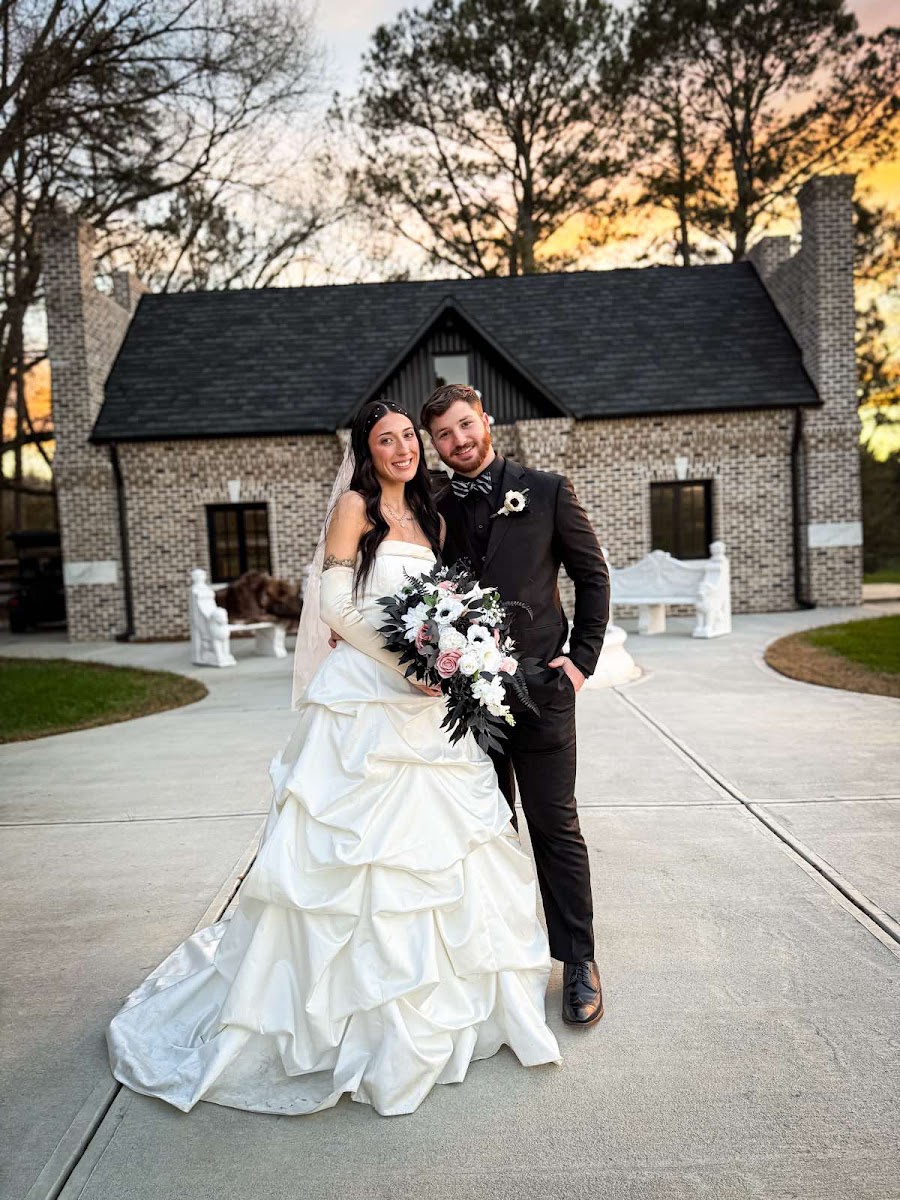
The turn onto Reese Road in Newborn feels like stepping back into the Georgia your grandmother remembers. The pavement narrows. Split-rail fences begin to line both sides. Then, just past the bend where the asphalt turns to gravel, Beautiful Beginnings Farm announces itself — not with gates or signage demanding attention, but quietly, the way a true farm should. Twenty acres of rolling pasture unfold before you, punctuated by the kind of renovated barn that makes every Pinterest board look amateur by comparison. White marble glints in the sunlight near the tree line — that’s the fountain, the newest ceremony site, which somehow manages to feel both palatial and perfectly at home in rural Morgan County. Two donkeys graze near the fence line, utterly unbothered by the fact that they’re about to photobomb someone’s wedding portraits. This is not a venue trying to cosplay as a farm. This is an actual working property that happens to host some of the most thoughtfully designed weddings between Atlanta and Augusta. Poppy has received 6 inquiries for Beautiful Beginnings Farm wedding flowers, and each time we make the 50-mile drive east from Atlanta, we understand why couples fall for this place — it offers the rare combination of authentic rural charm and genuinely modern infrastructure, all wrapped up in the kind of Southern hospitality that can’t be faked.
About Beautiful Beginnings Farm
Beautiful Beginnings Farm sits in the heart of Morgan County, equidistant from Atlanta and Augusta on what locals call the “sweet spot” of Georgia’s back roads — far enough from the interstate to feel like a true escape, close enough to Covington and Madison (both about 10-15 miles away) that your guests won’t need a GPS miracle to find it. The property spans 20 acres of pasture, mature hardwoods, and landscaped lawns, with four distinct ceremony sites and one climate-controlled pavilion that serves as both indoor ceremony backup and primary reception space. This is a family-owned operation, helmed by David and Lisa, who aren’t just owners but active participants in every wedding that takes place here. They live on the property, which means they genuinely care about the details — not in a hovering way, but in the way you’d want someone to care about the place where you’re getting married.
The architectural story here is one of thoughtful renovation rather than ground-up construction. The main pavilion is a recent transformation — what was once a working farm building now features exposed brick walls, soaring ceilings with string lighting already installed, farm-style windows that flood the space with Georgia sunlight, and a brick dance floor that photographs beautifully without feeling overly precious. The space is climate-controlled with both heating and air conditioning, which in Georgia is not a luxury but a necessity, and the modern lighting system means your photographer won’t be fighting with yellow incandescents from 1987. The arched entrance with its flanking windows gives the pavilion an almost chapel-like quality without any religious connotations — it’s an architectural exclamation point that also happens to be an ideal frame for floral installations.
Outside, the property reveals itself in layers. The Green Lawn by the Barn is exactly what it sounds like — a wide, flat expanse of freshly mowed grass with the renovated barn as backdrop, classic and unfussy. The Fountain Ceremony Site is the newest addition and the most dramatic: a white marble fountain set against a backdrop of brick architecture that looks like it was transplanted from a Tuscan villa, all positioned at the edge where manicured lawn meets native forest. The Fireplace Ceremony Site offers a covered outdoor option with rustic beams, a handcrafted stone fireplace large enough to actually use in cooler months, and a chandelier that dangles overhead like something from a French countryside château. Each space has a distinct personality, but they all share a common thread: they’re built environments that work with the landscape rather than against it.
Logistically, Beautiful Beginnings Farm is about 50 miles east of Atlanta — an hour’s drive in normal traffic, which makes it accessible for metro Atlanta couples seeking a countryside setting without requiring their guests to take a full vacation day. The venue is self-contained, with on-site parking, a golf cart available for shuttling guests from parking to ceremony sites, and crucially for florists, excellent vendor access. David and Lisa coordinate directly with vendors and explicitly welcome outside professionals, which means we’re not navigating byzantine preferred vendor lists or paying kickbacks to get through the gate. Load-in is straightforward, with vehicle access to the pavilion and cart access to the ceremony sites. The property offers weekend packages that include Friday evening through Sunday morning access, giving us ample time for setup without the stress of same-day installation rushes.
One detail worth noting: the venue prohibits liquor (though wine and beer are permitted), which affects the overall vibe but rarely impacts floral decisions. What does impact our designs is the venue’s generous decorative support — David and Lisa provide an extensive collection of props including mason jars, whiskey barrels, antique doors, farm-style decor, burlap products, and various vessels at no extra charge, which can either supplement our floral work or occasionally create visual clutter if not thoughtfully integrated. We always recommend couples coordinate their decorative vision with us before accepting every offered prop; sometimes less is more, especially when Beautiful Beginnings Farm wedding flowers are doing the heavy lifting.
Event Spaces & Floral Opportunities
The Pavilion
Capacity: 146 seated
Setting: The Pavilion is Beautiful Beginnings Farm’s primary reception space and indoor ceremony backup, and it represents the venue’s sweet spot between rustic nostalgia and contemporary function. The room is defined by its exposed brick walls — not the thin decorative veneer you see in some renovations, but substantial masonry that gives the space genuine texture and warmth. Farm-style windows march along the walls, tall and generous with light, framed in dark wood that contrasts beautifully with the whitewashed ceiling beams. String lighting is already installed overhead, casting that warm Edison-bulb glow that every couple wants but that often requires expensive rentals elsewhere. The dance floor is brick laid in a herringbone pattern, bordered by concrete that’s been polished smooth. Eight farm-style tables with benches and five round banquet tables with chairs come with the space, which gives you flexibility in table arrangements. The arched entrance with its flanking arch windows functions as a built-in focal point — couples often use this as their ceremony backdrop when weather drives them indoors, or as the dramatic entrance to the reception when the ceremony happens outside.
Floral approach: The Pavilion’s architecture does so much visual work on its own that Beautiful Beginnings Farm wedding flowers here should enhance rather than overwhelm. The brick walls read warm — think terracotta, rust, burnt sienna — which means florals in cooler tones (whites, creams, soft blues, lavenders) create beautiful contrast, while warmer tones (peaches, corals, burgundies) harmonize with the existing palette. For the farm-style tables with benches, we favor low, lush garland runners rather than traditional centerpieces — imagine a continuous ribbon of seeded eucalyptus, Italian ruscus, and olive branches running the length of each table, punctuated every few feet with clusters of Quicksand roses, white ranunculus, and café au lait dahlias. This approach keeps sightlines clear for conversation while giving each table substantial floral presence. For the round tables, consider compote-style arrangements in brass or copper vessels that echo the string lights overhead — garden roses (Patience, Keira, Juliet), spray roses, astilbe, and trailing jasmine vine, mounded generously but kept under 14 inches to maintain that low profile.
The arched entrance is your hero opportunity. If you’re using this as your ceremony backdrop, a full arch installation makes a statement — we’d build this asymmetrically with mixed greenery (eucalyptus, olive, smilax), large blooms concentrated at the base and one shoulder (hydrangeas, garden roses, football mums), and delicate trailing elements (jasmine, passion vine) spiraling up and around the arch. If this is functioning as your reception entrance, a pair of large urns flanking the doorway — overflowing with seasonal branches, lisianthus, stock, and textured foliage — creates a threshold moment. The brick dance floor is beautiful on its own and needs no floral intervention, though a sweetheart table positioned nearby can be dressed with a low, lush arrangement that becomes a focal point during dinner. The farm-style windows let in gorgeous natural light during daytime events, which means delicate flowers like sweet peas, ranunculus, and garden roses will photograph beautifully here without harsh shadows.
Green Lawn by the Barn
Capacity: 146 seated
Setting: This is Beautiful Beginnings Farm’s most traditional ceremony site — a wide, flat expanse of lawn that’s mowed to putting-green precision, with the renovated barn serving as architectural backdrop. The setup is straightforward: bench-style seating arranged in rows on either side of a central aisle, with the wedding arch positioned at the far end so the barn’s weathered wood siding and white trim create a picture-perfect frame. The lawn is generous enough to accommodate 146 guests comfortably with room for a side aisle and photographer movement. Because this is genuinely flat terrain (a rarity in hilly Georgia), your guests won’t be balancing on a slope during the ceremony, and your aisle runner won’t be fighting gravity. The barn itself is not just a scenic backdrop but a legitimate structure — recently renovated with fresh paint and authentic architectural details that photograph like a dream. Mature trees provide dappled shade at the edges of the lawn, and the surrounding property gives you that pastoral view without any distracting elements (no visible power lines, no neighbor’s shed, no highway noise).
Floral approach: The barn backdrop is so visually strong that your ceremony arch needs to either complement it without competing (think organic, asymmetrical installations that feel like they grew there) or go big enough to hold its own as a separate statement piece. For the former approach, we’d build a wooden hexagonal arch or simple arbor and dress it asymmetrically with a wild, garden-style mix: lots of greenery (willow eucalyptus, olive branches, trailing jasmine), large focal flowers clustered at one base corner (white hydrangeas, Patience roses, white lisianthus), and smaller blooms (sweet peas, spray roses, waxflower) scattered throughout as if they wandered in from a nearby meadow. For the latter approach — making the arch a statement on its own terms — consider a full circular moongate-style installation, densely covered in greenery and blooms, large enough (7-8 feet diameter) that it becomes the primary focal point and the barn simply recedes into a complementary background.
The aisle itself can go several directions. A simple white fabric runner keeps things classic and protects heels from sinking into turf. Alternatively, lanterns or shepherd’s hooks with hanging arrangements every few rows add dimension without obstructing views. For a more organic look, consider loose petals scattered down the aisle — we’d use a mix of colors rather than a single tone to create that just-picked wildflower effect. The benches can be dressed minimally with sprigs of greenery or small bouquets tied with ribbon at the ends of every other row. One smart budget move: if you’re planning to repurpose ceremony flowers at the reception, keep the arch installation modular — build in sections that can be broken down and transformed into entrance installations or repurposed onto the pavilion’s arched doorway.
The Fountain Ceremony Site
Capacity: 146 seated
Setting: This is Beautiful Beginnings Farm’s newest and most elegant ceremony location, and it represents a departure from the rustic-barn aesthetic that defines much of the property. The centerpiece is a white marble fountain — substantial, multi-tiered, with water flowing from the top basin down through lower levels, creating both visual and auditory interest. Behind the fountain stands a brick building that the venue describes as “palace-style,” and while that might sound like hyperbole, the structure genuinely reads as more European manor house than Georgia barn — symmetrical windows, warm brick in shades of rust and amber, architectural details that suggest permanence and craft. The ceremony setup positions white chairs in rows facing the fountain, with the brick building as backdrop. The site straddles the border between manicured lawn and natural forest edge, which means you get both cultivated elegance and the organic texture of native trees providing partial shade. Some areas receive full sun, others dappled shade, which creates interesting light play throughout the day and offers flexibility in guest comfort.
Floral approach: The white marble fountain is both gift and challenge — it’s so visually striking that you don’t need much, but it also invites creative floral integration. Consider floating arrangements: large blooms like hydrangeas, garden roses, or peonies (when in season) floating in the fountain basins, with submerged greenery creating depth. This only works if the fountain will be turned off during the ceremony (water movement will disturb floating florals), so confirm with the venue. If the fountain stays running, focus your floral energy on the fountain’s perimeter — urns or pedestals positioned on either side, overflowing with white and cream blooms (white roses, white lisianthus, white hydrangeas) that echo the marble, accented with silvery foliage (dusty miller, eucalyptus) and trailing greenery (smilax, ivy) that softens the hard edges.
The brick building backdrop doesn’t need floral intervention — it’s doing its job as architectural anchor. Instead, consider your aisle treatment as the secondary floral moment. Because this site has the most formal aesthetic of all Beautiful Beginnings Farm ceremony spaces, your aisle florals can lean more structured: matching arrangements on pedestals every few rows, or lanterns with floral collars (tight clusters of blooms and greenery encircling the lantern base), or even a continuous low hedge of potted plants (boxwood, ferns) lining the aisle to create a defined path. The transition from lawn to forest edge offers an opportunity for a “wild” corner installation — a large ground-level arrangement positioned where ceremony space meets trees, built to look like it emerged naturally from the woodland floor, using lots of foliage, branches, and blooms in shades that blend lawn and forest (whites, creams, sage greens, soft yellows).
The Fireplace Ceremony Site
Capacity: 146 seated
Setting: This is Beautiful Beginnings Farm’s all-weather ceremony solution and its most romantic space. The site is a covered outdoor patio featuring a large handcrafted stone fireplace as the ceremony backdrop — not a decorative insert, but a genuine wood-burning fireplace substantial enough to provide actual warmth during cooler months. Above, rustic wood beams span the ceiling, and a chandelier (iron and crystal, vintage farmhouse style) hangs overhead, adding unexpected elegance to the rustic setting. The brick patio provides a solid surface for seating — no mud, no uneven ground, no chairs sinking into turf. The covered roof means rain is a non-issue, and the open sides allow for airflow and natural light while still providing weather protection. The space sits close to the pavilion, making it logistically convenient for transitioning from ceremony to reception. The fireplace, when lit, creates both visual warmth and a subtle scent of woodsmoke that adds to the ambiance.
Floral approach: The fireplace is your obvious focal point, and the mantel provides a ready-made installation surface. For spring and summer weddings when you won’t be using the fireplace for heat, consider a full mantel installation: a generous garland of mixed greenery (seeded eucalyptus, olive branches, Italian ruscus) running the length of the mantel, with clusters of seasonal blooms (garden roses, ranunculus, sweet peas, spray roses) integrated throughout, and trailing elements (jasmine vine, smilax) cascading over the mantel edge. Add in pillar candles at varying heights interspersed with the florals for dimension. For fall and winter weddings when the fireplace will be lit, keep florals off the mantel itself to avoid heat damage — instead, flank the fireplace with large urns or baskets overflowing with seasonal elements: branches with autumn leaves or evergreen boughs, mixed with chrysanthemums, dahlias, or amaryllis depending on season, plus berries, pinecones, and other textural accents.
The chandelier overhead can be gently dressed with greenery — a loose wreath of smilax or ivy with a few blooms tucked in — but avoid making it too heavy or obstructing the light. The rustic beams are best left alone; they’re providing enough architectural interest. For the ceremony itself, consider low arrangements at the fireplace base rather than a traditional arch — the fireplace IS your arch, so build your floral moments around it rather than competing with it. The brick patio means you can use heavier vessels and installations without worrying about stability; this is a good space for substantial urns, vintage wooden crates, or even repurposed whiskey barrels (venue provides these) filled with florals. The covered setting protects delicate blooms from direct sun and rain, which expands your flower options — sweet peas, ranunculus, and anemones that might wilt in direct Georgia sun will thrive here.
Bridal Suite/Honeymoon Suite
Setting: A converted barn apartment serving dual purpose as getting-ready space and overnight accommodation. The space is fully furnished with areas suitable for hair and makeup, hanging the dress, and capturing detail shots. The barn conversion retains architectural character — exposed beams, wood paneling — while providing modern amenities.
Floral approach: This space doesn’t require significant floral investment, but a few strategic pieces elevate the getting-ready photos considerably. A small, elegant arrangement for the main table or countertop — perhaps a low, lush mix of blooms from the bridal bouquet palette in a vintage brass or copper vessel — gives the photographer something beautiful to work with for detail shots of jewelry, invitation suite, perfume bottles, and other small items. We often create a smaller “shadow bouquet” that echoes the bride’s actual bouquet but in a vessel rather than handheld, which can be photographed alongside the real bouquet or used as a styling element throughout the morning. Consider a simple greenery garland for the mirror or a hanging installation near the window where the dress will be photographed. The key is restraint — you’re creating photo opportunities, not decorating a reception space. Encourage your photographer to capture the bridal bouquet against the barn’s wooden elements, the rustic texture provides beautiful contrast to delicate blooms.
Wedding Flower Ideas for Beautiful Beginnings Farm
Southern Garden Romance
This concept embraces Georgia’s garden heritage with a palette drawn from traditional Southern landscapes but executed with modern sensibility. Start with a foundation of white and cream — David Austin roses (Patience, Keira, Ivory Spray), white lisianthus, white ranunculus, and white sweet peas when available. Layer in soft peach and blush tones with garden roses (Juliet, Keira, Romantic Antike), spray roses, and peach stock. Add depth with greenery that actually grows in Georgia: magnolia leaves (the underside with its rusty-brown backing adds gorgeous texture), smilax vine, variegated pittosporum, and seeded eucalyptus. Textural accents include peach hypericum berries, jasmine vine (which grows wild throughout the South), and occasional sprigs of lavender for scent and color variation. Vessels should feel collected rather than matched — antique brass compotes, weathered ceramic urns, mercury glass, and some of the venue’s provided mason jars used sparingly and elevated with creative groupings. This palette works beautifully in all four ceremony spaces but particularly shines in the Pavilion, where the soft colors contrast with the warm brick, and on the Green Lawn, where it reads as organic and garden-grown against the barn backdrop.
Wildflower Meadow
This concept leans into the farm’s rural setting with arrangements that look like they were gathered from fields surrounding the property. The palette is varied and vibrant rather than controlled — mix sunflowers (both the classic large variety and smaller, multi-headed teddy bear sunflowers), zinnias in shades of pink, coral, and magenta, purple lisianthus, blue delphinium, yellow solidago, and white daisies. For greenery, use what actually grows in Georgia meadows: native grasses, Queen Anne’s lace (or its cultivated cousin ammi), goldenrod foliage, and wheat stalks in late summer. Vessels should be casual and rustic: wooden crates, galvanized buckets, vintage milk jugs, and mason jars (here, they’re appropriate). The overall effect should feel loose, organic, and abundant — stems at varying heights, no two arrangements exactly alike, blooms appearing to spill naturally from containers as if just gathered. This concept is ideal for the Green Lawn ceremony (it complements the barn’s rustic character perfectly) and works well in the Pavilion for couples seeking a more relaxed, bohemian reception aesthetic. The Fountain site is the one space where this concept doesn’t quite fit — the formal architecture calls for something more refined.
Autumn Harvest
This concept is specifically designed for September through November weddings and celebrates Georgia’s agricultural heritage. The palette is warm and rich: burgundy dahlias (Arabian Night, Black Beauty), rust-colored chrysanthemums, orange ranunculus, peach roses (Vuvuzela, Free Spirit), and coral garden roses (Romantic Antike). Add depth with seasonal elements that actually appear on Georgia farms: ornamental corn, wheat bundles, burgundy hypericum berries, burgundy amaranthus, and if available, actual cotton stems (Georgia’s historic cash crop). For greenery, incorporate oak leaves, magnolia, eucalyptus in copper tones, and maple branches when leaves are turning. Textural elements include mini pumpkins, pomegranates, figs, and pinecones. Vessels lean rustic and substantial: the venue’s provided whiskey barrels, vintage wooden crates, aged copper urns, and terracotta pots. This palette is stunning at the Fireplace Ceremony Site when the fire is lit — the warm tones and the flickering flame create an incredibly romantic atmosphere. In the Pavilion, these colors harmonize beautifully with the brick walls and string lighting, creating an enveloping warmth that feels perfect as days grow shorter.
Seasonal Considerations
Georgia’s climate is humid subtropical, which means hot, humid summers and mild winters with occasional cold snaps. Understanding seasonal bloom availability and weather patterns is crucial for Beautiful Beginnings Farm wedding flowers.
Spring (March-May): Spring in Morgan County is glorious — temperatures range from the 60s to low 80s, humidity is manageable, and everything is blooming. This is peak season for many locally grown flowers including tulips (early spring), peonies (late spring, though Georgia’s heat can end peony season earlier than northern states), ranunculus, anemones, sweet peas, and snapdragons. Spring also brings abundant foliage — flowering branches like dogwood and cherry are available early in the season. The Green Lawn and Fountain sites are ideal for spring ceremonies; the weather is comfortable and the surrounding landscape is lush and green. Watch for pollen — Georgia has notoriously heavy pollen seasons that can coat outdoor surfaces in yellow-green dust; plan to have the venue hose down ceremony spaces the morning of outdoor events. For florals, spring’s moderate temperatures mean even delicate blooms like sweet peas and ranunculus will hold up outdoors. Late May can start feeling quite warm, so hydrate your floral installations well and consider ceremony start times before 5pm to avoid peak heat.
Summer (June-August): Georgia summers are hot (high 80s to mid-90s) and humid, with frequent afternoon thunderstorms. This is the most challenging season for outdoor weddings and for florals. Heat-tolerant blooms become essential: zinnias, sunflowers, celosia, gladiolus, and hydrangeas (when kept well-hydrated) perform best. Roses can struggle in peak summer heat unless they’re properly conditioned and hydrated. The Pavilion’s climate control makes it valuable for summer events — consider moving the ceremony indoors or to the covered Fireplace site rather than risking outdoor spaces in July and August heat. For outdoor ceremonies, late afternoon or evening start times (6pm or later) are crucial for guest comfort. Florally, keep arrangements in water as long as possible before placement, use floral tubes for boutonnieres and corsages rather than wiring directly, and avoid delicate blooms like sweet peas and ranunculus entirely. The Fountain site’s partial shade makes it the best outdoor summer option if couples insist on an open-air ceremony. Summer does offer abundant locally grown options — this is peak season for Georgia sunflower farms, and zinnia varieties are plentiful and affordable.
Fall (September-November): Fall is Beautiful Beginnings Farm’s prime season. Temperatures drop to the comfortable 60s and 70s, humidity decreases, and the surrounding trees begin their color change. This is ideal weather for all four ceremony sites, and the Fireplace location becomes particularly appealing as temperatures cool. Fall brings exceptional bloom availability: dahlias are at peak season and in a staggering variety of colors and forms, chrysanthemums in every hue, asters, celosia, marigolds, and continued availability of roses and hydrangeas. Locally, sunflowers remain available through early fall. This is the perfect season for incorporating seasonal elements like ornamental corn, pumpkins, gourds, wheat bundles, and harvested branches with turning leaves. The only weather consideration is potential for cold fronts — November in Georgia can occasionally dip into the 40s at night, which is worth considering for evening ceremonies. The Pavilion’s heating system handles this easily. For florals, fall’s moderate temperatures mean almost anything goes; even delicate blooms will perform well, and hardier varieties like dahlias and chrysanthemums are nearly indestructible.
Winter (December-February): Georgia winters are mild by national standards but can be unpredictable. Temperatures typically range from the 40s to 60s, with occasional dips below freezing and rare snow or ice events. The Fireplace Ceremony Site becomes the star of winter weddings — a lit fireplace, guests wrapped in blankets (venue can provide or couples can offer pashminas), and the cozy covered setting create an atmosphere that feels romantic rather than merely cold-weather pragmatic. The Pavilion’s heating ensures comfortable receptions. Winter bloom availability shifts to amaryllis, camellias (which actually grow in Georgia), evergreens, holly with berries, and continuing availability of roses, carnations, and chrysanthemums. Winter is also when imported blooms become more affordable — anemones, ranunculus, and tulips arrive from South American growers. For design, lean into seasonal elements: evergreen garlands, pinecones, birch branches, magnolia leaves, and berries create lush, textured arrangements without relying solely on blooms. Winter is Beautiful Beginnings Farm’s slowest season, which sometimes means better venue availability and pricing — worth considering for budget-conscious couples who don’t mind cooler weather.
Poppy’s Expert Take
The arch question requires strategy. Beautiful Beginnings Farm offers four ceremony sites, which means couples often struggle with how much to invest in ceremony florals versus reception florals. Here’s our recommendation: treat your ceremony arch or focal point as a modular installation that can be repurposed. For the Green Lawn or Fountain sites, build your arch in sections that can be broken down post-ceremony and transformed into entrance installations flanking the Pavilion’s arched doorway, or into a sweetheart table backdrop. This approach maximizes your floral investment — guests see the installation twice, in two different contexts, which makes it feel like you’ve decorated more extensively than you actually have. Coordinate timing with your photographer to capture the arch in both locations. This only works if you have adequate flip time (45 minutes minimum), so discuss logistics with the venue and your coordinator early in planning.
The Pavilion’s string lights are your friend and your competitor. Those installed Edison bulbs create beautiful ambient lighting for evening receptions, casting everything in warm, flattering tones. But they also mean your centerpieces need to work at multiple times of day. An arrangement that looks perfect in afternoon sunlight streaming through the farm-style windows might disappear or look muddy under evening string lights. Our solution: incorporate elements with reflective qualities (white or light-colored blooms, dusty miller’s silvery foliage, touches of metallic vessels) and avoid deep, dark colors that will read nearly black under amber lighting. If your heart is set on burgundy or deep purple florals, increase the quantity and intersperse with lighter tones so the dark blooms don’t vanish once the sun sets.
The venue’s prop collection requires coordination, not accumulation. David and Lisa generously offer couples access