
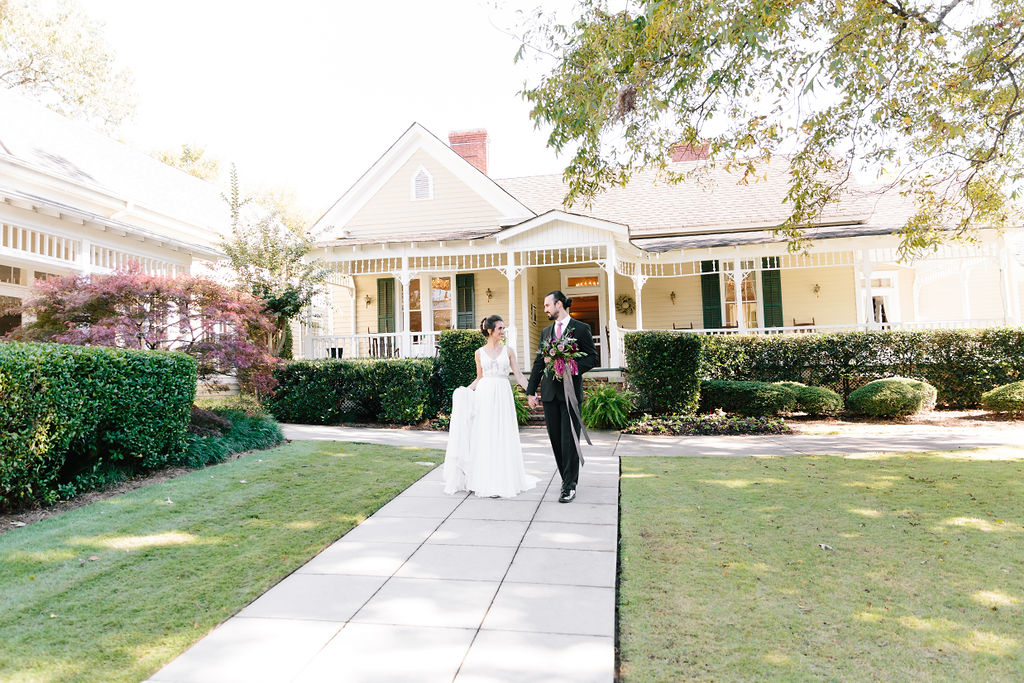
You exit I-85 and within minutes the highway sprawl falls away. South Peachtree Street in downtown Norcross is a proper Main Street — antique storefronts with awnings, sidewalk cafés, the kind of tree-lined blocks that appear on postcards about small-town Georgia. Then the street curves and 173 Carlyle House announces itself: a cheerful yellow and white cottage with a wrap-around porch, sitting on two manicured acres that feel impossibly spacious this close to Atlanta. The original structure dates to the 1800s, and you can tell. Not because it feels frozen in time, but because it has that quality of permanence that only comes from more than a century of weddings, gatherings, and celebrations soaked into the walls. Behind the historic house, the property unfolds — magnolia trees a hundred years old, their glossy leaves catching afternoon light, sprawling lawns that could accommodate a garden party for 200, and then the grand ballroom, a modern addition that somehow honors rather than competes with the heritage architecture. The first time Poppy delivered 173 Carlyle House wedding flowers here, we understood immediately why couples fall for this place: it offers the intimacy of a historic home and the scale of a grand estate, all within 20 minutes of downtown Atlanta. We have designed flowers for 4 weddings on this property, and each time, the venue’s duality — historic and polished, intimate and expansive — shapes how we approach the florals.
About 173 Carlyle House
173 Carlyle House occupies a rare position in the Atlanta wedding market: a venue that genuinely honors its 1800s roots while offering the infrastructure and elegance that modern weddings require. The original yellow and white cottage, listed on the National Register of Historic Places as part of Norcross’s historic downtown district, serves as the heart of the property. This is not a house museum. The five rooms inside — parlors, dining rooms, and gathering spaces with original millwork and fireplaces — function as intimate cocktail spaces where guests can wander between the ceremony and reception. The wrap-around porch, with its turned columns and Southern charm, doubles as both a photo backdrop and a functional space for drinks and conversation during golden hour.
The property extends across two full acres, which in a town 20 miles from downtown Atlanta feels like an estate. The grounds are meticulously maintained, with sweeping lawns suitable for outdoor ceremonies, garden paths that wind beneath century-old magnolia trees, and a sprawling paved terrace that serves as the venue’s most versatile space. That terrace — quick-drying, accommodating tents if weather turns, large enough for both ceremony rows and reception tables — is one of 173 Carlyle House’s smartest features. It offers the romance of an outdoor celebration without the logistical headaches that come with soft grass or unpredictable terrain.
The grand ballroom is the venue’s showpiece. With capacity for up to 400 seated guests, soaring ceilings that reach 20 feet in places, glistening hardwood floors that photographers love, and multiple crystal chandeliers casting warm light across the space, this room can hold a true Southern celebration. The aesthetic leans classic rather than trendy — think timeless elegance rather than industrial chic or rustic barn. This is a ballroom where your grandmother would feel comfortable and your Instagram-savvy cousin would find a dozen perfect angles. The chandeliers, in particular, are floral opportunities. They are not overly ornate, which means greenery garlands or subtle floral accents can elevate them without overwhelming the room’s inherent sophistication.
Logistically, 173 Carlyle House operates as a full-service venue. They provide in-house catering through award-winning chef William Janousek, with menus ranging from $75 to $150 per person depending on selections. Bar services start around $12.50 per person, and couples can opt for everything from cash bars to full open bars with signature cocktails. The venue welcomes outside vendors — including florists — though they require certificates of insurance, which Poppy provides as standard practice. Load-in is straightforward, with dedicated vendor access and a coordinative events team that communicates timing and logistics clearly. On-site parking is included, and valet or shuttle services are available for larger guest counts. For Poppy’s design and delivery teams, the 20-mile drive from our Atlanta studio is manageable, and the venue’s proximity to I-85 makes it accessible for guests traveling from across the metro area or from out of state.
Norcross itself adds to the appeal. This is not a suburban office park wedding venue with a corporate hotel next door. The downtown district, walkable and lined with locally-owned restaurants, boutiques, and a surprising number of good coffee shops, gives wedding weekends a destination feel without requiring guests to drive hours into rural Georgia. Couples often host rehearsal dinners at nearby establishments, and out-of-town guests enjoy the small-town charm that is increasingly rare this close to a major city.
Event Spaces & Floral Opportunities
Grand Ballroom
Capacity: 400 seated
Setting: This is 173 Carlyle House’s anchor space, and it earns that status. The ballroom is grand without being cavernous — high ceilings create a sense of occasion, but the room’s proportions keep it from feeling cold or impersonal. Crystal chandeliers punctuate the ceiling in a symmetrical arrangement, each one substantial enough to command attention but refined enough not to dominate. The hardwood floors gleam, reflecting candlelight and the soft glow from those chandeliers during evening receptions. Walls are painted in warm neutrals — soft ivory and barely-there taupe — which means florals in nearly any palette will read beautifully here. Large windows along one wall let in natural light during daytime events, and the room’s layout accommodates everything from ceremony seating (with a quick flip to reception) to a traditional dinner-and-dancing setup.
Floral approach: The chandeliers are your starting point. We frequently drape them with Italian ruscus garlands interwoven with trailing jasmine vine, keeping the greenery soft and romantic rather than heavy. For weddings with more dramatic aesthetics, consider adding clusters of Quicksand roses, white lisianthus, and blush ranunculus at intervals along the garland, creating floral moments that draw the eye upward without blocking the light. Centerpieces on guest tables should be either low and lush (8-10 inches tall, mounded garden roses, spray roses, and textured foliage in compote-style vessels) or elevated on clear glass risers to keep sightlines open. The ballroom’s scale allows for a dramatic altar arrangement if you are hosting your ceremony here — think a 6-foot-wide installation featuring Cafe au Lait dahlias, burgundy amaranthus, white hydrangea, and magnolia foliage in a low horizontal arrangement on a draped table or vintage credenza. The entrance to the ballroom is prime real estate for a statement installation: twin 5-foot urns flanking the doorway, overflowing with seasonal branches, hydrangea, garden roses (Juliet and Patience are favorites), and trailing greenery, signal the transition from cocktails to the main event. The warm neutral walls and hardwood floors mean you can push color here — deep plum, burnt orange, and emerald green all photograph stunningly in this space — or keep it soft and romantic with blush, ivory, and champagne tones.
Garden Terrace
Capacity: Flexible depending on layout; accommodates ceremony seating for 200+ or reception tables
Setting: The garden terrace is 173 Carlyle House’s Swiss Army knife — a sprawling paved outdoor space that dries quickly after rain, accommodates tents if weather turns unpredictable, and works for ceremonies, cocktail hours, or full receptions. The pavement is a warm gray stone, and the terrace is bordered by the historic house on one side and magnolia trees and landscaped gardens on the others. There is no built-in ceremony backdrop here, which means you are starting with a blank canvas. For couples who want an outdoor celebration without the complications of soft grass, uneven terrain, or the risk of sinking heels, this terrace delivers.
Floral approach: For ceremonies on the garden terrace, we recommend a freestanding arch or chuppah as your focal point. A wooden hexagonal arch draped with smilax garlands, clusters of white and blush garden roses (Patience, O’Hara, Quicksand), white delphinium, and trailing jasmine creates a romantic, garden-inspired backdrop that frames the couple without competing with the surrounding magnolias and historic architecture. Aisle markers can be simple and elegant — shepherd’s hooks with hanging arrangements of roses, lisianthus, and greenery, or low arrangements in vintage brass vessels placed every other row. If you are hosting cocktail hour on the terrace, scatter arrangements across high-tops and lounge areas: bud vases with single stems of lisianthus or spray roses on each cocktail table, and larger arrangements on the bar. For a reception setup here, consider the terrace’s openness as an opportunity for substantial centerpieces — tall arrangements on gold candelabras or clear glass cylinders, elevated to 30 inches, allow guests to see across the space while creating a lush, abundant feeling. Because the terrace connects visually to the historic house, florals here should feel Southern and classic: magnolia leaves incorporated into greenery, soft color palettes of peach, blush, and cream, and an organic, garden-gathered aesthetic rather than ultra-modern minimalism.
Historic Front Porch
Capacity: Not a primary event space; functions as a transitional and photo area
Setting: The wrap-around porch on the original 1800s cottage is pure Southern charm. Yellow clapboard siding, white columns, and a painted wood floor set the scene. This porch is most often used during cocktail hour, as a spot for signature drinks or appetizers, and as a prime location for couple portraits and family photos. The architecture does most of the heavy lifting here — the porch is photogenic on its own — but florals can elevate it from charming to unforgettable.
Floral approach: Garlands along the porch railing are the classic move, and they work beautifully here. We recommend a base of lemon leaf or Italian ruscus, interwoven with clusters of garden roses (Romantic Antike, Juliet, and Keira for a soft peachy-pink palette), white lisianthus, and trailing smilax. Keep the garland asymmetrical and organic rather than perfectly uniform — this is a historic house, not a hotel ballroom, and the florals should feel gathered and natural. At the porch entrance, consider a pair of substantial arrangements in aged terra cotta or ceramic urns: overflowing with hydrangea, roses, and seasonal foliage, these anchor the porch visually and create a clear floral moment for photos. If the porch is hosting a bar or appetizer station, add small arrangements to those surfaces — low and lush, so they do not block the bartender’s line of sight or interfere with service, but substantial enough to carry the floral story through this transitional space. Because the porch is covered, you have more flexibility with delicate blooms here than you would in full sun on the terrace. Ranunculus, anemones, and even peonies (in season) will hold up beautifully in the shade.
The Original House
Capacity: Five intimate rooms; not a primary seating space but ideal for cocktail hour
Setting: Step inside the original 1800s structure and you are in a different world. These five rooms — parlors, a dining room, a sitting room — feature original millwork, fireplaces with carved mantels, and the kind of cozy, layered charm that only comes from a century-plus of history. During cocktail hour, guests drift through these spaces, drinks in hand, taking in the details. Some venues’ historic buildings feel off-limits, like museum exhibits you can look at but not touch. This house invites you in. The rooms are furnished with a mix of vintage and classic pieces, and the scale is intimate enough that even a few thoughtful floral touches make a significant impact.
Floral approach: Each room is an opportunity for a distinct floral moment, and we recommend treating them as such rather than repeating the same arrangement five times. In the main parlor, a dramatic mantelpiece installation — asymmetrical, cascading with jasmine vine, garden roses, lisianthus, and seasonal foliage, accented with pillar candles in varying heights — becomes a focal point for photos and conversation. In the dining room, a low arrangement on the table (Cafe au Lait dahlias, Quicksand roses, white veronica, and dusty miller) honors the room’s more formal tone. Smaller arrangements on side tables and consoles throughout the house — bud vases, compote bowls with a handful of blooms, vintage vessels filled with spray roses and eucalyptus — create continuity without overwhelming the space. The key here is restraint and variety. These rooms already have personality; the florals should enhance rather than compete. We also recommend using vintage or antique-style vessels rather than modern glass cylinders — brass bowls, ceramic crocks, even silver mint julep cups for smaller arrangements. The aesthetic should feel like these florals have always been here, part of the house’s ongoing story rather than decorations imported for the day.
Manicured Grounds
Capacity: Flexible; can accommodate 200+ for outdoor ceremony or reception
Setting: Two acres of lawn, gardens, and mature trees create a landscape that feels expansive and serene. The 100-year-old magnolia trees are the stars here — their glossy, oversized leaves and twisting branches provide natural architecture and shade. The grounds are beautifully maintained, with flowering beds, stone pathways, and enough open lawn space to host a tent, ceremony seating, or a garden-style reception. For couples who want an outdoor celebration that feels estate-like rather than park-like, these grounds deliver.
Floral approach: When the ceremony takes place on the lawn beneath the magnolias, let the trees do most of the work. A simple arch or chuppah — wood or wrought iron, dressed with minimal greenery and a few statement blooms — honors the natural beauty without competing with it. Aisle markers can be as simple as shepherd’s hooks with hanging arrangements or lanterns with small floral accents. For a reception on the grounds, consider the setting when planning centerpieces. If tables are under a tent, you have more flexibility with height and structure. If tables are in open air, keep arrangements low and sturdy — nothing that will topple in a breeze. Incorporate magnolia foliage directly into your centerpieces as a nod to the surrounding trees: Cafe au Lait dahlias, white hydrangea, Quicksand roses, and those glossy magnolia leaves in low bowls or compotes create a look that feels cohesive with the landscape. For a more dramatic outdoor installation, consider a flower wall or large-scale urn arrangements flanking the entrance to the tent or reception area. The grounds’ open space can handle big gestures that would overwhelm an indoor room, so if you have been dreaming of 6-foot urns overflowing with hydrangea, roses, and trailing amaranthus, this is the place.
Bridal Suite
Capacity: Not a guest space; functions as getting-ready room for wedding party
Setting: Spacious, well-lit, and designed specifically for wedding day preparations. This is not an afterthought room or a repurposed office. The suite offers ample space for hair and makeup stations, mirrors for getting dressed, and natural light that photographers appreciate for detail shots of the dress, shoes, bouquets, and jewelry.
Floral approach: The bridal suite does not need elaborate florals, but a few thoughtful touches make a difference in photos and in the overall getting-ready experience. A small arrangement on a side table or dresser — soft and romantic, with blooms pulled from the bridal bouquet palette — creates a cohesive look in detail shots. Think Juliet roses, white ranunculus, blush astilbe, and trailing jasmine vine in a simple glass or ceramic vessel. We also recommend a getting-ready bouquet: a small, informal arrangement that the bride and bridesmaids can hold during candid moments while they are in robes or getting hair and makeup done. This is not the structured bridal bouquet she will carry down the aisle, but rather a loose, garden-style handful of blooms that looks natural in photos. For brides who want an extra detail, consider a floral hair piece for getting-ready photos — a comb or clip with a few blooms and greenery that can be removed before the ceremony or worn throughout the day.
Wedding Flower Ideas for 173 Carlyle House
Southern Magnolia Garden
This concept takes its cues directly from the property’s century-old magnolia trees and the surrounding gardens. The palette is soft and rooted in classic Southern florals: white, ivory, blush, peach, and the deep green of magnolia foliage. Centerpieces feature Cafe au Lait dahlias (those massive, cream-colored blooms with blush undertones), Juliet and Patience garden roses, white hydrangea, peach stock, and sprigs of magnolia leaves clipped directly from the property (with the venue’s permission). Arrangements sit in aged ceramic or terra cotta vessels — nothing too modern, nothing too metallic. The bouquets lean loose and garden-gathered, with ranunculus, sweet peas (in season), lisianthus, and trailing jasmine vine. For the ceremony, a wooden arbor draped with smilax and magnolia foliage, accented with clusters of white and peach roses, frames the couple without overwhelming the natural backdrop. This style works beautifully on the garden terrace for an outdoor ceremony, transitions seamlessly into the historic house for cocktail hour, and feels at home in the grand ballroom for the reception. It is quintessentially Southern without veering into cliché — romantic, elegant, and deeply connected to the landscape.
Crystal Ballroom Romance
This concept is designed specifically for couples hosting their ceremony and reception in the grand ballroom, and it leans into the room’s inherent elegance. The palette is soft and luminous: ivory, champagne, blush, and the palest lavender, with touches of silver-green foliage. We use blooms that shimmer in candlelight and reflect the glow from the crystal chandeliers: white phalaenopsis orchids, Quicksand and Sahara roses, white lisianthus, champagne-colored spray roses, and dusty miller. Centerpieces are elevated on clear glass or mercury glass risers, lifting the florals to 24-30 inches so they feel substantial without blocking sightlines. The chandeliers are dressed with smilax garlands interwoven with white lisianthus and blush spray roses. For the ceremony altar (if hosting in the ballroom), a low horizontal arrangement on a draped table features white hydrangea, Patience roses, white delphinium, and silver-green eucalyptus in a symmetrical, classic composition. The entrance to the ballroom gets a pair of tall arrangements in silver or mercury glass urns: cascading with hydrangea, roses, and trailing amaranthus, they announce the transition from cocktails to dinner. This style is sophisticated, timeless, and designed to enhance rather than compete with the ballroom’s existing beauty. It photographs luminously and feels special without being over-the-top.
Garden Estate Jewel Tones
For couples who want color — real, saturated, unapologetic color — this concept delivers. The palette draws from garden florals in their most dramatic shades: deep burgundy, burnt orange, plum, marigold, and touches of emerald green foliage. We use Black Baccara and Tess roses (those nearly-black burgundy blooms), burgundy dahlias (Rip City, Black Jack), marigold-hued ranunculus, burnt orange tulips (in season), plum-toned scabiosa, and burgundy amaranthus. Arrangements sit in brass or bronze vessels — compote bowls, vintage urns, and low bowls with patina. The effect is rich, warm, and utterly distinct from the soft blush-and-ivory aesthetic that dominates Southern weddings. This palette works particularly well in the fall, when the magnolia leaves on the property start to show bronze undertones and the late afternoon light has that golden, amber quality. For the ceremony on the garden terrace, a hexagonal arch draped with burgundy amaranthus, clusters of marigold and burgundy blooms, and deep green foliage creates a dramatic focal point against the historic yellow cottage. Centerpieces on guest tables are lush and overflowing, with dahlias, roses, ranunculus, and trailing greenery spilling over the edges of bronze compote bowls. This style is for couples who want their florals to make a statement, who are not afraid of color, and who want their wedding to feel bold and memorable rather than safe and expected.
Seasonal Considerations
Atlanta’s climate is humid subtropical, which means hot, humid summers, mild winters, and spectacular spring and fall seasons that define the wedding calendar here. Each season brings distinct opportunities and challenges for 173 Carlyle House wedding flowers.
Spring (March-May): This is Atlanta’s most celebrated wedding season, and for good reason. Temperatures are mild — mid-60s to mid-70s — and the humidity has not yet arrived in full force. Local blooms are abundant: tulips, daffodils, hyacinths, peonies (late April through May), ranunculus, anemones, and early garden roses. The magnolia trees on the property are often in bloom in March and April, their oversized white flowers releasing a sweet, lemony fragrance that fills the grounds. For spring weddings, lean into the season’s natural abundance. Tulips in every shade from pale blush to deep burgundy, peonies (Sarah Bernhardt, Coral Charm, Duchess de Nemours), and ranunculus in sherbet colors create that fresh, garden-gathered look that defines spring. Be mindful of pollen — magnolia blooms are heavy pollen producers, and some guests may have allergies. If hosting an outdoor ceremony beneath the magnolias in peak bloom, consider keeping floral installations minimal and letting the trees be the star. Spring rain is common, so have a plan for the garden terrace or grounds: the venue’s quick-drying pavement and tent options provide solid backup.
Fall (September-November): Fall is Atlanta’s second prime wedding season. Temperatures cool into the 70s and 60s, humidity drops, and the light takes on that golden quality photographers dream about. Local dahlias are at their peak, and the variety available — from Cafe au Lait to deep burgundy Black Jack — is staggering. Chrysanthemums, marigolds, zinnias, and late-season garden roses (Juliet, Keira, Tess) are abundant. Fall color palettes can range from soft and muted (taupe, mauve, dusty rose, and sage green) to bold and saturated (burnt orange, burgundy, plum, and marigold). The magnolia trees on the property remain green through early fall, and by November their leaves take on bronze undertones that photograph beautifully. This is the season to lean into textured, organic arrangements with dahlias, roses, amaranthus, and seasonal foliage. Fall also brings cooler evenings, which means outdoor ceremonies and cocktail hours on the garden terrace are comfortable for guests, and delicate blooms like ranunculus and anemones (which struggle in summer heat) are back in play.
Winter (December-February): Atlanta winters are mild compared to the rest of the country — average temperatures in the 40s and 50s, occasional freezes but rarely sustained cold. For florals, this is the season of amaryllis, camellias, hellebores, evergreens, and imported blooms like anemones and ranunculus. Winter weddings at 173 Carlyle House often take place entirely indoors, with ceremony and reception in the grand ballroom, which lends itself to dramatic, romantic florals. Deep jewel tones (burgundy, emerald, plum) or classic winter whites and silvers work beautifully. Evergreen garlands on the chandeliers, arrangements with pine, cedar, and eucalyptus, and accents like pinecones or berry branches bring seasonal texture without feeling overly Christmas-themed. Amaryllis — those dramatic, oversized blooms in red, white, or burgundy — make stunning statement pieces in tall arrangements or on mantels in the historic house. Winter light in Georgia is softer and lower, which means golden hour comes earlier, and outdoor photos on the grounds (even without a ceremony there) have a romantic, moody quality that is hard to replicate in other seasons.
Poppy’s Expert Take
The chandeliers are non-negotiable floral real estate. The grand ballroom’s crystal chandeliers are the room’s defining feature, and leaving them untouched is a missed opportunity. Even a simple garland of Italian ruscus or smilax, draped loosely and secured with clear wire, transforms the space from elegant to enchanting. If your budget allows, add floral clusters at intervals — three or five points along each garland — using blooms pulled from your centerpiece palette. The key is to keep the garland soft and organic rather than stiff and uniform. We install these the morning of the wedding, and they hold beautifully through evening receptions. Avoid anything too heavy or overly floral; you want to enhance the chandeliers, not obscure them.
Magnolia leaves are your secret weapon. The property’s 100-year-old magnolia trees produce glossy, oversized leaves that elevate any arrangement. We incorporate them directly into centerpieces, bouquets, and garlands as a nod to the surrounding landscape. The venue typically allows us to clip a reasonable amount of foliage (with advance permission from the events team), and those leaves — free, local, and deeply connected to the property — add texture and that distinctly Southern aesthetic. The underside of magnolia leaves is a soft brown, so you can flip some to show that side for contrast. They hold up beautifully out of water and photograph with a richness that standard greenery lacks.
Plan for the porch as a photo moment, not just a pass-through. Couples often underestimate how much time they and their guests will spend on the historic front porch. This is where the photographer will take couple portraits, where the wedding party gathers for candids, and where guests naturally congregate with drinks during cocktail hour. A garland along the railing and substantial arrangements flanking the entrance turn this space from charming to unforgettable. If your budget is tight, prioritize the porch entrance florals over smaller details inside the historic house — the porch is where the photos will happen, and it is the transition point guests experience multiple times throughout the day.
The garden terrace needs a focal point for outdoor ceremonies. Because the terrace is paved and open, there is no natural ceremony backdrop — no arbor, no architectural feature, nothing built-in. This blank canvas quality is wonderful for customization, but it means you must provide the focal point. A freestanding arch or chuppah is essential, and it should be substantial enough to read against the historic house and magnolia trees behind it. Flimsy arches or minimalist metal frames get lost in the landscape. We recommend a wooden hexagonal arch or a traditional rounded arbor, dressed with enough greenery and florals to create presence without looking overloaded. The arch should be anchored securely — the terrace can be breezy — and positioned to take advantage of the best light and backdrop.