
Designing flowers for 1020 86th St is a study in scale and environmental awareness. You are competing with the massive engineering of the Verrazano Bridge and the vast, rolling greens of a historic 125-year-old course. Success here requires a split strategy: high-stability, weather-resistant ground installations for the expansive outdoor areas and sophisticated, chandelier-complementary designs for the indoor ballroom.
The venue’s dual nature—the wind-swept exposure of the patio and the traditional structure of the ballroom—means your floral plan must be as functional as it is aesthetic. We approach this space by leaning into its historic Brooklyn roots while ensuring every stem is secured against the Atlantic breeze.
The Spaces
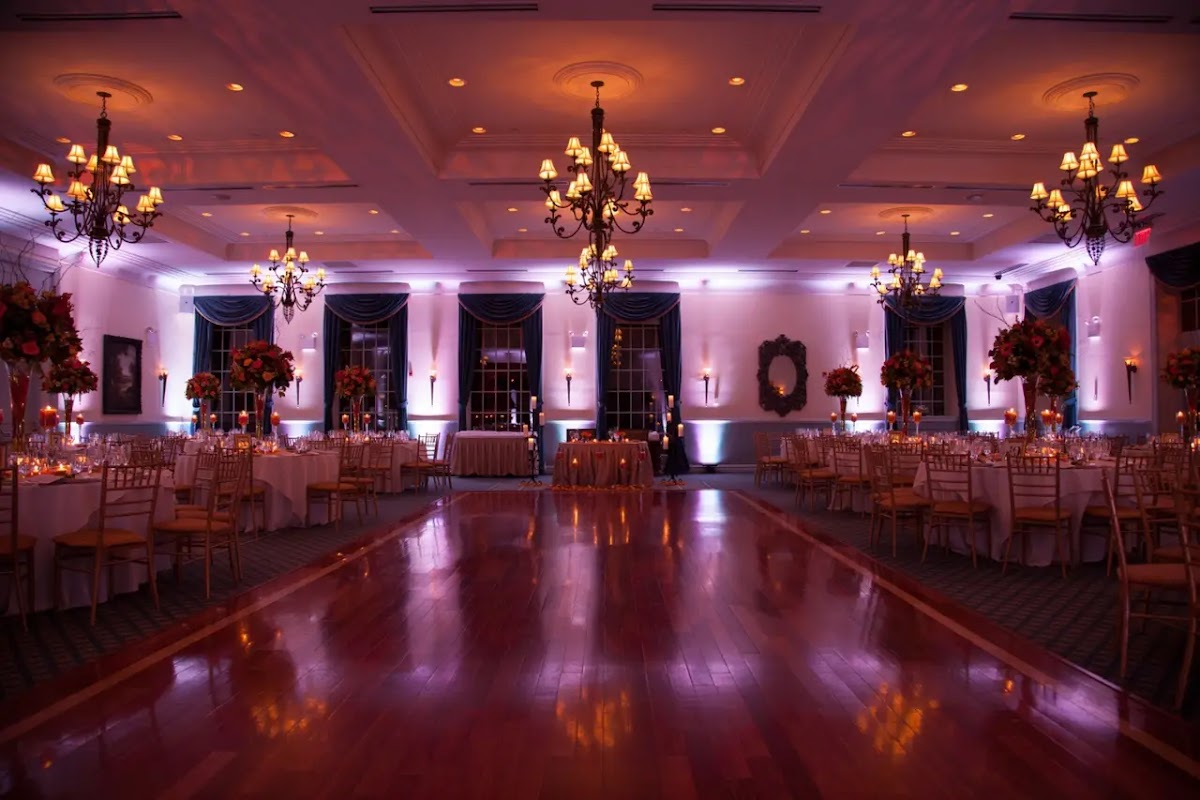
Grand Ballroom
This is a classic, high-capacity space designed for traditional receptions. With a neutral color palette and gold accents, it serves as a blank canvas, but the sheer size of the room (seating up to 330) means small arrangements will simply disappear.
- What works: Elevated centerpieces on slender gold stands. These draw the eye upward toward the chandeliers and fill the vertical void without blocking cross-table conversation.
- Skip: Short, airy bud vases. In a room this large, they look like an afterthought.
- Watch out: The heavy drapery and existing wall sconces. Ensure your floral palette doesn’t clash with the warm, golden undertones of the room’s permanent fixtures.
- Budget hero move: Add lush floral “collars” or greenery vines to the base of the existing chandeliers to create a high-impact focal point for the dance floor.
Outdoor Patio
The patio offers some of the most dramatic views in Brooklyn, but it is notoriously exposed. When the wind picks up off the water, lightweight decor becomes a liability.
- What works: Low-profile, weighted arrangements. If using farm tables, long greenery garlands with tucked-in blooms stay put better than footed bowls.
- Skip: Tall, top-heavy glass vases. They are a tipping hazard on the patio.
- Watch out: Direct sun. This space can get hot, and delicate blooms like hydrangeas or sweet peas will wilt before the cocktail hour ends.
- Budget hero move: Focus your budget on a singular, massive floor-based installation at the patio entrance that serves as a photo backdrop, rather than spreading thin across the vast railing.
Golf Course Ceremony
The rolling hills and bridge backdrop provide the primary decor. Your job is to frame the view, not compete with it.
- What works: Ground-anchored floral “nests” or asymmetrical floor crescents. These look organic to the landscape and won’t blow over in a gust.
- Skip: Traditional four-post chuppahs or arches unless they are heavily weighted with sandbags or staked into the turf.
- Watch out: Sightlines. Guests are here for the view; ensure your ceremony flowers don’t obscure the bridge for those seated in the back rows.
- Budget hero move: Use two large, statement-making urns on pedestals that can be easily moved from the ceremony site to the ballroom entrance after the vows.
What Works at 1020 86th St
Weighted mechanics are non-negotiable. Between the ocean breeze and the open golf course, outdoor arrangements must be anchored. We use heavy ceramic or stone vessels and internal weights to ensure centerpieces stay on the tables.
Monochromatic palettes with high contrast. The green of the golf course is a dominant visual. To make flowers pop, we recommend crisp whites and creams, or bold, saturated tones like burgundy or deep ochre. Pastel palettes can sometimes look washed out against the bright green turf and blue sky.
Architectural framing. The brick facades and stone pathways are beautiful assets. Instead of bringing in artificial structures, we prefer to “grow” flowers up the brickwork or line the stone paths with lush, low-lying floral hedges.
Classic, polished styling. This venue leans traditional. While we love an garden-style arrangement, the ballroom specifically calls for a certain level of “finish.” Think clean lines, intentional placements, and premium focal flowers like garden roses and ranunculus.
Repurposing with purpose. Because the walk from the outdoor ceremony sites to the ballroom is significant, plan for arrangements that are easily transportable. Ground nests used at the altar can be moved to the front of the sweetheart table or the base of the cake table.
Budget Guide
| Tier | Investment | Floral Strategy |
|---|---|---|
| Essentials | $1,750 - $3,500 | Focus on high-impact personal flowers and a pair of statement urns for the ceremony that move to the ballroom. |
| Sweet Spot | $4,000 - $7,500 | Full wedding party florals, a grounded ceremony installation, and a mix of high/low centerpieces in the ballroom. |
| Full Experience | $8,000 - $12,000 | Lush ceremony “meadows,” greenery enhancements for the ballroom chandeliers, and premium blooms throughout. |
| Statement | $15,000+ | Full-scale floral arches, immersive entrance installations, and dense, flower-heavy tablescapes for 300+ guests. |
The character of 1020 86th St is defined by its history and its views; your floral budget should prioritize the spaces where guests will linger the longest, specifically the ballroom tables and the ceremony focal point.
Tips
Prioritize hardy, wind-resistant stems for any outdoor elements. Tropicals, roses, and thick-stemmed greenery like ruscus or eucalyptus will survive the patio conditions far better than delicate spring blooms.
Coordinate your load-in with the golf course schedule. This is an active course; floral teams need to be efficient and mindful of the venue’s logistics to ensure a seamless setup without interrupting club members.
Use the bridge as your North Star. When designing the ceremony layout, orient the floral focal point slightly off-center to the bridge’s towers to create a balanced, professional photograph.
Don’t ignore the cocktail hour. With the patio’s high capacity, a few well-placed, heavy-duty arrangements on the bar and high-top tables bridge the design gap between the ceremony and the reception.
Ask about rigging points in the ballroom. If you want a hanging installation, the existing chandeliers are the most cost-effective anchor points, but they require specific mechanical knowledge to execute safely.